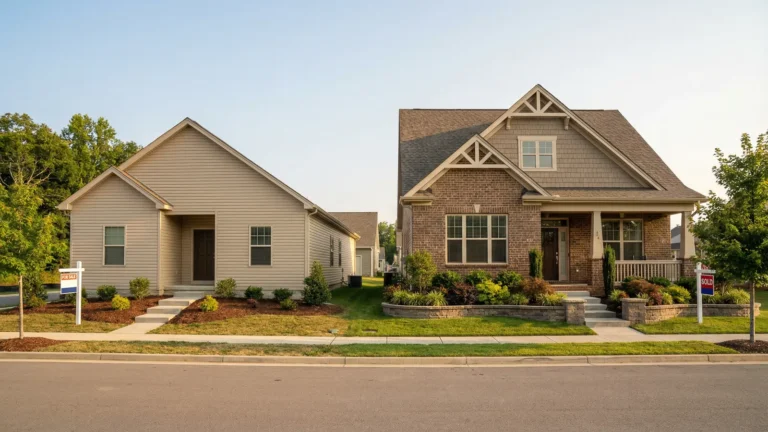
Georgia Dream program 2026 guide

Georgia Dream program 2026 guide
The Georgia Dream program gives first-time home buyers in Georgia up to $10,000 toward their down payment and closing costs, and up to $12,500 for public protectors, educators, nurses, and households with a member living with a disability. The assistance is a zero-interest deferred loan: no monthly payment, nothing due until you sell, refinance, or move out (georgia.gov, retrieved August 2026).
The program got a major overhaul effective July 8, 2026, and most of what buyers read about it online is now wrong in a way that costs them money. The income limit for the Atlanta metro jumped to $137,555 for a one or two person household and $158,188 for three or more. The maximum sales price rose to $625,000 (Georgia DCA, program information effective July 8, 2026). Under the old limits, a two-income couple earning $97,000 combined was over the line. Today that couple qualifies with more than $40,000 of headroom. If a lender turned you away in 2024 or 2025, your file deserves a second look.
I have watched buyers hear about Georgia Dream from a friend and assume it sounds too good to be real. It is real. The money exists. The application process is straightforward if you work with a participating lender who handles volume. The catch is that not every lender participates, not every property qualifies, and the timeline requires coordination that trips up buyers and agents who have not been through it.
What Georgia Dream provides
| Assistance option | Who it serves | Amount |
|---|---|---|
| Standard | Any eligible first-time buyer | 5% of purchase price or $10,000, whichever is less |
| PEN | Protectors, educators, nurses and other healthcare workers | 6% of purchase price or $12,500, whichever is less |
| CHOICE | Households with a member who has an eligible disability | 6% of purchase price or $12,500, whichever is less |
Source: Georgia DCA, Georgia Dream loan program, retrieved August 2026.
The assistance funds as a second mortgage at zero interest with no monthly payments. Repayment waits until you sell the home, refinance it, or stop living in it (georgia.gov, retrieved August 2026). The first mortgage is a 30-year fixed rate loan and works with FHA, USDA-RD, VA, and conventional products, so you are not forced into a single loan type (Georgia DCA). The rate itself is set by DCA and changes periodically; a participating lender quotes you the current one.
Run the numbers on a $350,000 home with an FHA loan. The 3.5% down payment is $12,250. Standard assistance covers $10,000 of it. Your down payment from savings: $2,250, plus closing costs, and builders routinely cover most of those on new construction. The program does require a minimum of $1,000 of your own money in the purchase (georgia.gov, retrieved August 2026).
2026 income limits and price caps

| Where you buy | Max income, 1-2 person household | Max income, 3+ | Max sales price |
|---|---|---|---|
| Atlanta metro | $137,555 | $158,188 | $625,000 |
| Athens MSA | $118,152 | $135,875 | $525,000 |
| Rest of Georgia | $101,700 | $116,955 | $475,000 |
Source: Georgia DCA, effective July 8, 2026. The Atlanta metro row covers the counties where most of our buyers shop: Fulton, Cherokee, Forsyth, Gwinnett, Cobb, and the rest of the MSA.
Household income means all wage earners in the home, not just the borrower on the mortgage. It includes overtime, bonuses, and recurring side income. I see this calculation trip up buyers every spring, though the direction has flipped: under the old limits the combined number disqualified moderate two-income couples, and under the 2026 limits most of them are back in. There is also a liquid asset cap most articles skip: you cannot hold more than $20,000 or 20% of the sales price (whichever is greater) in liquid assets immediately after closing (georgia.gov, retrieved August 2026). The program is aimed at buyers who need the help, not buyers parking savings.
The $625,000 price cap changes which communities work. Under the old $375,000 limit, Georgia Dream buyers were boxed into a thin slice of entry-level inventory. At $625,000 the program reaches the base pricing in most active new construction communities in Cherokee, Forsyth, Gwinnett, and large parts of Fulton. That is a different program than the one your lender may remember.
Who counts as a first-time buyer
Georgia Dream defines a first-time buyer as someone who has not owned a principal residence in the past three years, or someone buying in certain designated areas of Georgia where the requirement is waived (georgia.gov, retrieved August 2026). Sold your condo in 2023 and have been renting since? You qualify in 2026. The home must be your primary residence. No investment properties, no second homes.
Repeat buyers and veterans have their own lane now. The July 2026 overhaul added three sibling products under the Georgia Dream umbrella (Georgia DCA, retrieved August 2026):
| Product | First-time requirement | Income limit (1-2 / 3+) | Max price | Down payment help |
|---|---|---|---|---|
| Georgia Dream | First-time only | $137,555 / $158,188 | $625,000 | Yes |
| Peach Select VA | First-time and repeat | $137,555 / $158,188 | $625,000 | No |
| Peach Plus | First-time and repeat | $206,333 / $237,282 | $725,000 | Yes |
| Peach Advantage | First-time and repeat | Up to 150% of area median income | $725,000 | Yes |
A veteran buying a second home, or a repeat buyer earning $190,000, now has a DCA-backed option. Ask the lender to price all four; the right fit depends on your income, your service history, and the house.
Using Georgia Dream on new construction
This is where most agents lose the thread, and where buyers leave real money on the table.
Georgia Dream works for new construction. A buyer can contract on a to-be-built home with a production builder, use the Georgia Dream first mortgage and the assistance second, and close when the home is complete. The friction is timing. New construction closings in metro Atlanta run six to ten months from contract to keys depending on the builder and product type, while a mortgage rate lock covers a much shorter window. The lock has to happen in the final stretch before completion, which requires the participating lender to track the construction timeline and coordinate with the builder’s closing department.
I have paired Georgia Dream financing with new construction purchases in communities across Cherokee and Forsyth counties. The process works when three things line up: the lender has closed Georgia Dream loans on new construction before (not all have), the builder’s sales team understands assistance timelines and will not pressure the buyer into a conventional lock too early, and the buyer’s agent is managing the communication between both sides.
The math on a real example: a $365,000 new construction home, FHA loan, 3.5% down is $12,775. Standard assistance covers $10,000 of it. A builder closing cost credit (common right now) absorbs most of the rest of the cash to close. The buyer brings a few thousand dollars to a $365,000 house. Our first-time home buyer guide for Atlanta walks through every financing path and how each interacts with builder incentives.
How to apply, step by step
The application runs through a Georgia Dream participating lender, not through DCA directly. DCA publishes the participating lender list on its site. The average process takes about 60 days from application to closing on an existing home; new construction stretches that to the builder’s timeline (georgia.gov, retrieved August 2026).
- Complete homebuyer counseling. Required for every Georgia Dream loan, through an approved workshop, individual counseling, or an online course. Do this first; lenders will not process the application without it.
- Pre-qualify with a participating lender. Pick one that closes Georgia Dream volume, and for a new build, one that has closed it on new construction. Volume is what keeps the funding timeline from blowing up a closing date.
- Shop inside the limits. Your agent verifies the property and price fit before you write the offer, not after.
- The lender reserves your funds with DCA and locks the first mortgage on DCA’s current rate.
- Close. The assistance second funds at the table alongside your first mortgage, one extra set of documents.
A buyer’s agent who has coordinated Georgia Dream closings shortens the learning curve for everyone at the table.
Frequently asked questions
Is the Georgia Dream program worth it?
For most eligible buyers, yes, and the math is checkable. The assistance is $10,000 to $12,500 at zero interest with no monthly payment. The tradeoff is a second lien: when you sell or refinance, it gets repaid from your proceeds. You are trading a slice of future equity for cash you need now at no carrying cost. The cases where it is not worth it are buyers holding enough liquid savings to breach the asset cap anyway, or buyers whose target home sits over the price limit.
Do I have to repay the down payment assistance?
Yes, eventually. It is a deferred zero-interest loan, not a grant. Nothing is due monthly. Repayment happens when you sell, refinance, or stop living in the home (georgia.gov, retrieved August 2026).
Can I use Georgia Dream to build or buy new construction?
Yes. The program funds new construction purchases through the same participating lenders. The rate lock timing takes coordination on a to-be-built home, which is why the lender’s new construction experience matters.
What credit score do I need?
DCA requires applicants to meet mortgage loan credit requirements, and the underlying loan (FHA, VA, USDA-RD, or conventional) sets the floor. A participating lender can tell you where your file stands in one conversation.
What if I earn too much for Georgia Dream?
Look at Peach Plus: income limits of $206,333 for a one or two person household and $237,282 for three or more, a $725,000 price cap, down payment help included, and no first-time requirement (Georgia DCA, retrieved August 2026).
Does my whole household’s income count, or just mine?
The whole household’s. Every wage earner in the home counts toward the limit, including overtime, bonuses, and recurring side income, whether or not they are on the mortgage.
Schedule a first-time buyer consultation with Velocity. If you want to know whether Georgia Dream fits your situation, or whether Peach Plus or another program works better for the community you are targeting, call us at 678-278-9798 or book online. We run the income, asset, and price limit numbers before your first showing.
Written by Itanza Johnson, Managing Broker at Velocity Real Estate. Georgia Tech industrial engineering graduate. Former Division Sales Manager at John Wieland Homes and VP of Sales and Marketing at Stonecrest Homes. $600M+ in cumulative residential sales across metro Atlanta.
Thinking about buying or selling in metro Atlanta?
Velocity Real Estate has closed more than $600M in new construction and resale across 19 metro Atlanta neighborhoods. Start with a conversation, not a commitment.
Book a consultationCall 678-278-9798