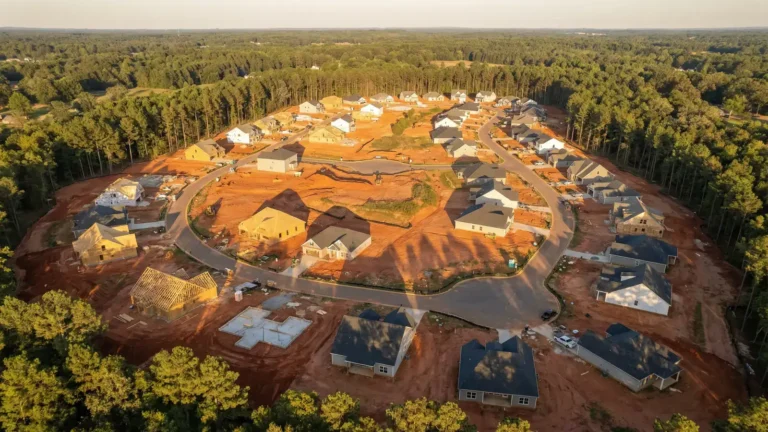
New home warranty guide for Georgia

New home warranty guide for Georgia
Your new construction home warranty in Georgia follows a tiered structure: one year of full coverage, two years on major systems, and ten years on structural components. That sounds comprehensive on paper. In practice, the boundaries between those tiers are where most buyers lose money, miss deadlines, and end up paying out of pocket for repairs the builder should have covered.
I have helped buyers file warranty claims with every major builder operating in metro Atlanta. Some builders handle claims efficiently. Others require documentation, escalation, and a level of persistence most homeowners are not prepared for. The difference between a smooth warranty experience and a frustrating one usually comes down to knowing exactly what each tier covers and acting before the coverage window closes.
This article breaks down the actual coverage, the gaps, and the 11-month inspection strategy that protects your investment. If you are still in the buying process, the complete guide to buying new construction in Atlanta covers the full timeline from contract to close.
The three tiers of Georgia new construction warranties
Georgia does not have a state-mandated warranty statute for new homes the way some states do. The warranty you receive comes from the builder, either through the builder’s own warranty program or through a third-party warranty company like 2-10 Home Buyers Warranty, StrucSure, or Maverick. The structure is industry-standard, but the specific terms vary by builder.
Year one: the workmanship warranty
The first year covers workmanship and materials across the entire home. Drywall cracks, paint defects, cabinet alignment, grout issues, trim separation, door adjustments, minor plumbing leaks, HVAC calibration problems. If something was installed incorrectly or a material fails during normal use within the first 12 months, the builder is responsible.
This is the broadest coverage you will ever have. And it expires fast.
Builders typically schedule a 30-day walkthrough and sometimes a 6-month check-in. These are opportunities to document issues, but they are not your only opportunities. Most builder warranties allow you to submit claims throughout the year. The catch is that you have to submit them. Builders are not inspecting your home proactively after closing.
I had a buyer in an Ashton Woods home in Alpharetta who did not report a slow bathroom drain until month 13. The drain had been sluggish since month three. The builder declined the claim because it was outside the one-year window. A $45 drain issue became a $380 plumber visit. Timing matters.
Years one through two: the systems warranty
The second tier covers major mechanical systems: plumbing, electrical, HVAC, and sometimes the plumbing fixtures themselves (depending on the builder’s warranty document). This coverage runs concurrently with the first year, so during months one through twelve you have both workmanship and systems coverage. After month twelve, only the systems coverage remains.
What counts as a “system” versus “workmanship” matters more than most buyers realize. A loose faucet handle is workmanship (year one only). A leaking supply line behind the wall is a plumbing system issue (covered through year two). A thermostat that was programmed incorrectly is workmanship. A compressor that fails is a system defect.
The distinction sounds technical, but the dollars involved are significant. An HVAC compressor replacement runs $2,500 to $4,500 in the Atlanta market. If that failure happens in month 14, the systems warranty covers it. If the builder tries to classify it as a workmanship issue and deny coverage, you need documentation showing it is a mechanical failure, not an installation error that should have been caught in year one.
Years one through ten: the structural warranty
The ten-year warranty covers structural defects: foundation, load-bearing walls, roof structure, floor joists, and beams. This is the warranty that protects against the catastrophic failures, foundation settlement that cracks walls, roof trusses that sag, floor systems that develop excessive deflection.
Structural claims are rare in new construction built to current Georgia building code. But when they happen, the repair costs are enormous. Foundation work in north Georgia’s red clay soil can run $8,000 to $25,000 depending on the scope.
Most ten-year structural warranties are administered by third-party companies, not the builder. That means the claim process goes through the warranty company, which sends its own inspector, applies its own standards, and makes its own determination. The builder’s opinion is secondary. I have seen structural claims where the builder acknowledged the issue but the warranty company’s inspector disagreed on the severity. Get your own structural engineer’s report (typically $400 to $600) before filing.
What the warranty does not cover
Every builder warranty has an exclusions section. Read it before you need it, not after.
Common exclusions across Georgia builders include normal settling (hairline drywall cracks under 1/16 inch, minor nail pops), cosmetic damage you caused after closing, landscaping and grading issues that result from homeowner modifications, and damage caused by failure to maintain the home (not changing HVAC filters, not managing gutters, not addressing drainage).
The grading exclusion catches Atlanta-area homeowners frequently. Georgia’s clay soil moves. Builders grade the lot to direct water away from the foundation. If you add a patio, a garden bed, or a retaining wall that changes the drainage pattern, the builder’s warranty on water intrusion may be void. I always recommend buyers photograph the original grading at closing and document any changes they make to the lot.
The 11-month inspection: your most valuable deadline
The single most important action a new construction homeowner in Georgia can take is scheduling a professional home inspection in month 11.

Not month 12. Month 11.
Here is why. The inspection identifies every workmanship and material defect before the one-year warranty expires. You submit the inspection report to the builder as a formal warranty claim list. The builder then has the remaining weeks of the warranty period to address the items. If you wait until month 12 to schedule the inspection, the report may not be ready until month 13, and every item on it falls outside the coverage window.
A thorough 11-month inspection costs $350 to $500 for a typical 2,500-to-3,500-square-foot home in the Atlanta area. The inspector checks attic insulation and ventilation, crawl space or slab conditions, exterior caulking and flashing, HVAC performance, plumbing pressure and drainage, electrical panel and outlet function, windows and doors for proper operation, and drywall for cracks, nail pops, and tape separation.
The report typically identifies 15 to 40 items. Some are cosmetic (nail pops, minor drywall cracks). Some are significant (HVAC ductwork disconnected in the attic, improperly flashed window that will leak). All of them are the builder’s responsibility if documented before month 12.
How to file warranty claims that get results
Filing a warranty claim is straightforward. Getting it resolved requires documentation and follow-up.
Most major builders in metro Atlanta use an online portal or email system for warranty submissions. Pulte uses MyPulte. Toll Brothers uses a dedicated warranty email. Smith Douglas and Meritage have online portals. Smaller builders may use a general email or phone line.
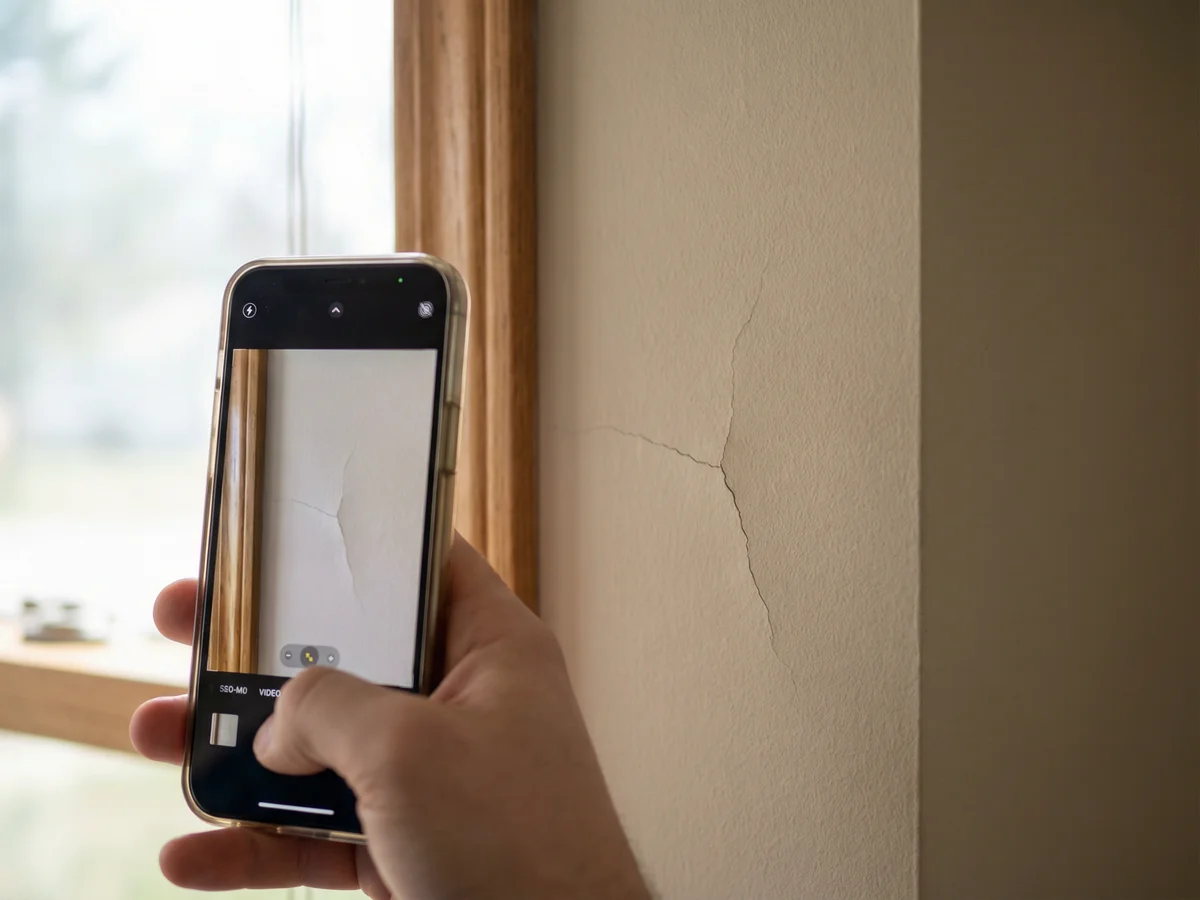
For every claim, include dated photographs, a written description of the issue, the location in the home, and when you first noticed it. The date you first noticed the problem matters because some builders will argue that a defect reported at month 11 actually appeared at month 14. Your dated photos eliminate that argument.
Follow up every verbal conversation with a written email restating what was discussed and agreed upon. If a builder’s warranty coordinator tells you on the phone that they will send a plumber on Tuesday, send an email that evening: “Confirming our conversation today that a plumber is scheduled for Tuesday, March 12, to address the leak under the master bath vanity.” That email becomes your paper trail if the appointment does not happen.
I walk my buyers through the claim process before closing, not after. Knowing the builder’s submission method, typical response timeline, and escalation contacts (construction manager, then VP of construction, then division president) gives buyers confidence to advocate for the repairs they are entitled to.
Builders who consistently handle warranty claims well in the Atlanta market include Toll Brothers, David Weekley, and Ashton Woods. Builders where I have seen buyers need more persistent follow-up include some of the higher-volume production builders where the warranty department manages hundreds of open claims simultaneously. Having a buyer’s agent who represents you during the warranty period means you have someone who already has the builder contacts and knows the escalation path.
The connection between warranties and inspections during construction
Your warranty protection starts at closing, but the issues your warranty will cover often originate during construction. A pre-drywall inspection catches structural, plumbing, electrical, and HVAC issues before the walls close up. Items caught at pre-drywall are fixed as part of construction, not as warranty claims. That distinction matters because warranty repairs are almost always less thorough than construction-phase corrections.
A framing member that is notched too deeply for a plumbing run, for example, is easy to sister and reinforce before drywall. After drywall, the same repair requires cutting open the wall, reinforcing the member, repairing the drywall, and repainting. The builder will do a functional repair under warranty, but it will never look as clean as the original construction.
Understanding your new construction timeline helps you schedule inspections at the right milestones. The pre-drywall inspection, the pre-closing inspection, and the 11-month inspection form a three-point quality assurance system that catches defects at each stage.
What happens when the warranty expires
After ten years, you have no builder warranty coverage. Georgia’s statute of repose for construction defects runs eight years from the date of substantial completion for most claims, with some exceptions for fraud or willful concealment. That means even after the warranty expires, you may have legal recourse for defects the builder knew about and concealed. But that is a legal action, not a warranty claim, and the burden of proof shifts to you.
For the practical homeowner, the transition from warranty coverage to self-responsibility is gradual. Year one coverage expires and you start paying for cosmetic repairs. Year two coverage expires and you start paying for system maintenance and repairs. The ten-year structural coverage provides a long backstop, but if you have maintained the home properly and the foundation and structure are sound at year five, they will almost certainly be sound at year ten.
The homeowners who struggle most after warranty expiration are the ones who never used the warranty during the coverage period. Every nail pop, every drywall crack, every sticky door that went unreported is now a $75 to $300 repair on your own dime.
—
Download the 11-month warranty inspection checklist
I created a two-page 11-Month Warranty Inspection Checklist that covers every system and surface a professional inspector should evaluate before your year-one warranty expires. Use it to prepare for the inspection, track reported items, and follow up with the builder’s warranty department.
Enter your name and email to download the checklist instantly.
[Download: 11-Month Warranty Inspection Checklist], Name + Email
—
Need help reviewing your builder’s warranty document before closing, or preparing for an 11-month inspection? Schedule a warranty review consultation with Velocity and bring your warranty packet.
—
Written by Itanza Johnson, Managing Broker at Velocity Real Estate. Georgia Tech industrial engineering graduate. Former Division Sales Manager at John Wieland Homes and VP of Sales and Marketing at Stonecrest Homes. $600M+ in cumulative residential sales across metro Atlanta.
Thinking about buying or selling in metro Atlanta?
Velocity Real Estate has closed more than $600M in new construction and resale across 19 metro Atlanta neighborhoods. Start with a conversation, not a commitment.
Book a consultationCall 678-278-9798