

Real estate near Roswell Mill historic district

Real estate near Roswell Mill historic district
Real estate near the Roswell Mill historic district puts you within walking distance of the city’s cultural core and one of north metro Atlanta’s most photographed landmarks. The mill ruins, the covered bridge, Vickery Creek Falls, and the surrounding 10 acres of trails are the reason Roswell appears on every “best of Atlanta” list. They’re also the reason property values within a mile of the district have outpaced the Roswell median by 2-3% annually over the past five years.
I’ve sold homes in this pocket of Roswell throughout my career. The neighborhood has a gravity that doesn’t fade with market cycles. When rates spiked in 2023, showing traffic across north Fulton dropped 30-40%. The historic mill area dropped 15%. Buyers still showed up because the location is irreplaceable. You cannot build another Vickery Creek.
The neighborhood around the mill
The Roswell Mill historic district sits along Vickery Creek (a tributary of the Chattahoochee River) between Sloan Street and Mill Street, about a quarter-mile south of Canton Street. The surrounding residential area is a mix of original Roswell homes (many dating to the 1930s-1960s), renovated cottages, and newer infill construction that blends with the district’s character.
Roswell Historic District proper (the residential blocks between Canton Street and the creek) features primarily resale homes on lots ranging from 0.2 to 0.8 acres. Prices range from $475,000 for a 1,500-square-foot cottage to $1.2M+ for renovated or custom-built homes on larger parcels. Architectural styles include bungalows, Colonials, and a handful of Greek Revival homes on Mimosa Boulevard. The City of Roswell’s Historic Preservation Commission reviews exterior modifications to homes within the designated historic boundary, which adds a layer of design oversight that preserves character but limits renovation speed.
Mimosa Boulevard and Magnolia Street form the spine of the residential district closest to the mill. These streets have mature oak and magnolia canopy, sidewalks, and a walking rhythm that feels distinctly different from subdivisions 3 miles up GA-9. I bring buyers here on foot. You have to walk it to understand the appeal. The street noise is minimal. The tree cover is continuous. And Canton Street’s shops and restaurants are a 5-minute walk north.
Newer infill projects have filled vacant and teardown lots within a half-mile of the mill. Monte Hewett Homes and Peachtree Residential have both completed projects in the $700,000-$950,000 range on these infill lots. The new builds typically follow Roswell’s design guidelines (front porches, pitched roofs, brick or stone accents) and sit on 0.15-0.25 acre lots. These are not traditional “new construction communities” with model homes and sales offices. They’re one-off or small-cluster builds marketed through MLS and local brokerages.
Canton Street: the walkability anchor
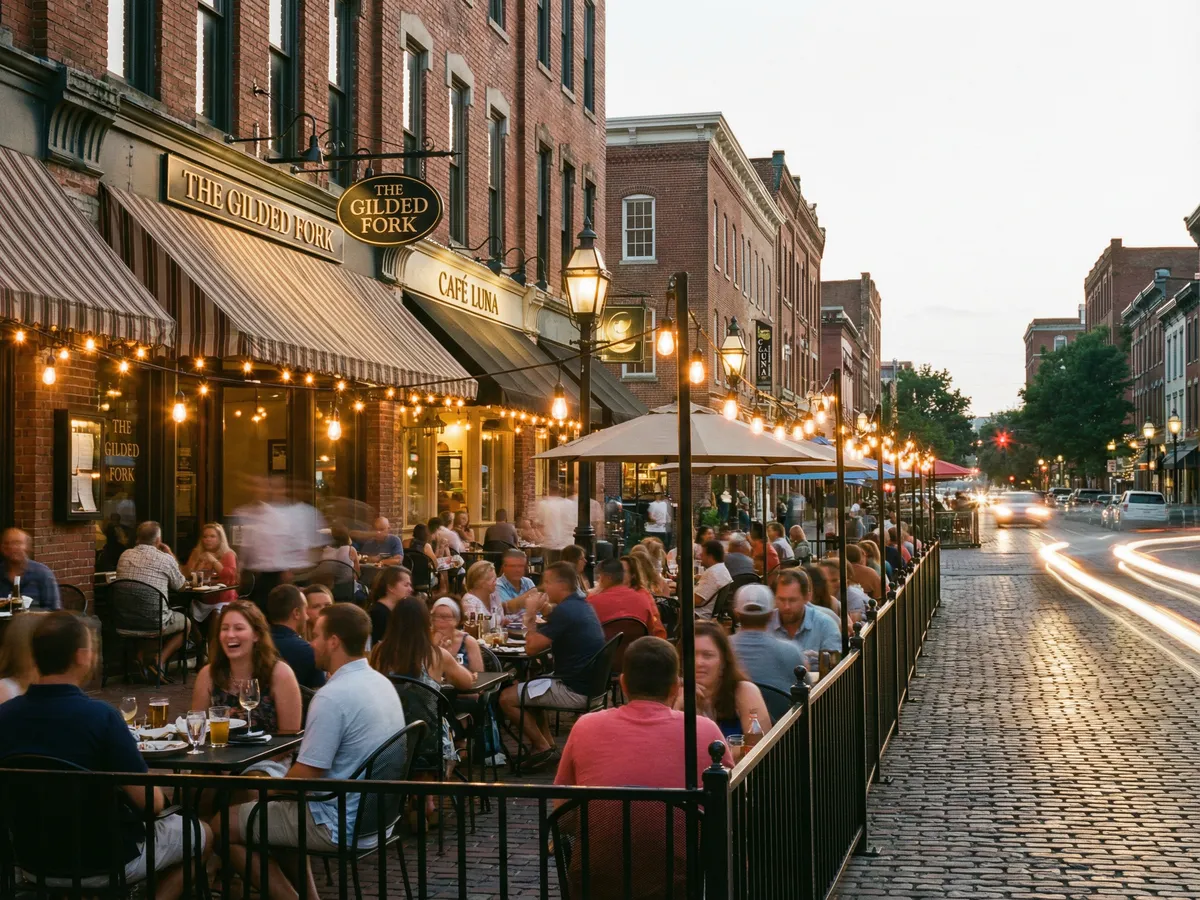
Canton Street is to Roswell what Avalon is to Alpharetta, but organic rather than developer-planned. The street runs north-south through downtown Roswell and has accumulated 50+ restaurants, shops, and galleries over the past two decades.
Restaurants within a 10-minute walk of the mill district: Table and Main (Southern fine dining), Osteria Mattone (Italian), Little Alley Steak, The Mill Kitchen and Bar (which sits in a converted mill building on the creek), Roux (Cajun), and Swallow at the Hollow (dive bar with excellent wings). The dining density on Canton Street per linear foot rivals Buckhead or Virginia-Highland, but the parking is easier and the atmosphere is less pretentious.
The restaurants drive a weekend economy that supports the real estate. Friday and Saturday nights, Canton Street has foot traffic from 6 p.m. to midnight. During the summer, street festivals and live music events close sections to vehicles. This isn’t a town center that’s “coming soon” or “in development.” It’s been built over 20 years of organic commercial growth.
Buyers who tell me they want the Avalon lifestyle but at lower prices usually end up on Canton Street. The experience is comparable. The real estate around it costs 15-20% less.
What makes this area different from the rest of Roswell
Three things separate the mill district from Roswell’s suburban neighborhoods further north (the areas around Holcomb Bridge or GA-92).
First, lot character. Lots in the historic area are irregular. They follow old property lines, creek banks, and streets that were laid out before anyone planned a subdivision. That irregularity creates visual diversity: no two blocks look the same. Some lots are deep and narrow. Others are wide and shallow. Homes face different angles to the street. This variety is the opposite of a master-planned community, and it appeals to a specific buyer who values character over consistency.
Second, walkability. The mill district is genuinely walkable. You can walk to coffee (Land of a Thousand Hills), to dinner (Table and Main), to a trail (Vickery Creek), and to a park (City Hall Park) without getting in a car. GreatWalkScore rates the mill district area at 62, which is exceptional for a suburban Georgia location. Most Roswell neighborhoods score 15-25.
Third, the appreciation floor. Historic districts in metro Atlanta have shown more downside resistance than non-historic neighborhoods during every market correction since 2001. During the 2008-2012 downturn, the mill district area experienced a 12% peak-to-trough decline. The Roswell median dropped 22%. During the 2023 rate shock, mill-area prices were flat. Broader Roswell dipped 3-4%. The floor is higher because the supply is permanently constrained (no new land to develop, historic preservation limits teardowns), and the buyer pool includes lifestyle-motivated purchasers who are less rate-sensitive.
Commute from the mill district
The historic district sits in the center of Roswell, about 2 miles east of GA-400 (Exit 7, Holcomb Bridge Road).
GA-400 south to Buckhead: 20-25 minutes off-peak, 35-50 in morning rush.
GA-400 south to Perimeter Center (Dunwoody): 12-15 minutes.
GA-400 north to Alpharetta tech corridor: 12-15 minutes.
Canton Street to MARTA (North Springs): 18 minutes south on GA-400. Park at North Springs, ride to Midtown in 22 minutes.
The commute advantage from the mill district versus the Chattahoochee River corridor (south Roswell) is modest: about 3-5 minutes shorter to GA-400. The real advantage is the concentration of daily errands within walking distance, which eliminates car trips that eat into evenings and weekends.
Buying near the mill district: what to consider
Inventory is thin. Homes within a half-mile of the mill come to market at a rate of 8-12 per quarter, compared to 35-45 for greater Roswell. When a well-priced home lists in the historic core, it moves in under two weeks. Set up FMLS alerts for 30075 ZIP and narrow to streets within the historic boundary. I flag these listings for clients who have told me the mill district is their target zone.
Also expect older infrastructure. Homes built before 1970 may have original plumbing, outdated electrical panels, and foundation issues related to clay soil and mature tree root systems. A thorough inspection is critical, and I recommend inspectors who specialize in older homes (not the same inspectors who handle new construction). Budget 1-3% of purchase price for immediate maintenance on homes that haven’t been recently renovated.
For a full overview of Roswell neighborhoods and current market data, visit the Roswell neighborhood page. Ready to explore real estate near the Roswell Mill? Schedule a tour with Velocity or call 678-809-5860.
—
Written by Itanza Johnson, Managing Broker at Velocity Real Estate. Georgia Tech industrial engineering graduate. Former Division Sales Manager at John Wieland Homes and VP of Sales and Marketing at Stonecrest Homes. $600M+ in cumulative residential sales across metro Atlanta.
Thinking about buying or selling in metro Atlanta?
Velocity Real Estate has closed more than $600M in new construction and resale across 19 metro Atlanta neighborhoods. Start with a conversation, not a commitment.
Book a consultationCall 678-278-9798


