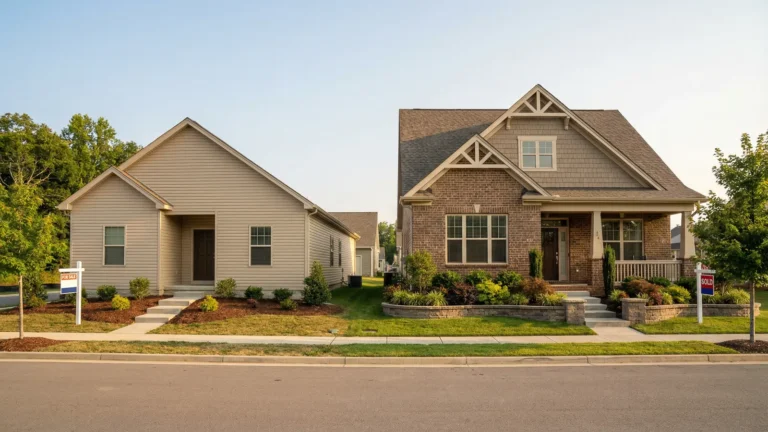
New construction property taxes in Georgia

New construction property taxes in Georgia
New construction property taxes in Georgia catch most buyers off guard in the second year of ownership. The county assesses your home at land-only value during construction and through most of year one. When the reassessment hits in year two or three, your property tax bill can triple. On a $500,000 new construction home in metro Atlanta, that means your monthly escrow payment jumps $400 to $500. Velocity Real Estate walks every new construction buyer through this math before they sign a contract, because the sticker shock hits hardest when you’re not expecting it.
Your lender calculates your initial escrow deposit based on the tax bill that exists when you close. If you close on a newly built home in Cherokee County and the lot was assessed at $150,000, your first-year property taxes run somewhere around $2,100 to $2,400. Your monthly escrow reflects that number. Then the county reassesses the property at its full improved value, and your annual tax bill climbs to $7,000 or $8,000. Your mortgage servicer runs an escrow analysis, finds the shortage, and adjusts your payment upward. That adjustment letter arrives with no warning for buyers who didn’t plan for it.
Why new construction property taxes surprise Georgia buyers
The confusion starts with how Georgia counties assess new construction differently from existing homes. When you buy a resale home, the tax record already reflects the full value of the land and the structure. The county has been assessing that property for years. Your lender pulls the most recent tax bill, builds it into your escrow, and your monthly payment stays predictable from day one.
New construction works differently. The lot sits on the tax rolls at its land-only value until the county catches up to the fact that someone built a house on it. Georgia counties reassess property values on January 1 of each year based on what existed on the property as of that date. If your home was under construction on January 1 and you closed in June, the county’s assessment still reflects the land value (or a partial construction value) for that entire tax year. Your first property tax bill looks deceptively low.
Land-only assessment in year 1 vs. full assessment in year 2-3
Here’s the timeline that trips people up. Say you close on a $500,000 new construction home in Forsyth County in August 2026. On January 1, 2026, the home was still being framed. The county assessed the property based on what existed at that point: a lot worth $140,000 to $160,000, maybe with some partially completed construction value added. Your 2026 tax bill reflects that lower number. Your lender uses that bill to set your escrow.
On January 1, 2027, the county sees a completed $500,000 home. The reassessment jumps to the full fair market value. Georgia assesses property at 40% of fair market value for tax purposes, so your assessed value goes from roughly $60,000 (40% of the land) to $200,000 (40% of $500,000). Your 2027 tax bill reflects the full assessed value, and your escrow needs to cover the difference.
The gap between those two numbers is where the payment shock lives.
How escrow shortages hit your monthly payment
Your mortgage servicer reviews your escrow account annually. When the new tax bill arrives and it’s $5,000 higher than what your escrow collected, the servicer has two problems to solve. First, they need to increase your monthly escrow deposit to cover the higher ongoing tax bill. Second, they need to recover the shortage from the previous year when your escrow didn’t collect enough.
Federal law (RESPA) allows the servicer to spread the shortage recovery over 12 months. So your monthly payment increase includes both the higher ongoing escrow amount and the shortage payback. On a $5,000 annual tax increase, your monthly payment jumps roughly $415 for the ongoing taxes plus another $80 to $100 per month for the shortage recovery. That’s close to $500 per month in total for the first year after reassessment.
Some servicers offer the option to pay the shortage in a lump sum. If you can write a check for $1,200 to $1,500 to cover the shortage, your monthly increase drops to just the ongoing escrow adjustment. That’s still $400 or more per month, but it eliminates the shortage surcharge.
Property tax rates by county in metro Atlanta
The size of your tax increase depends on where you buy. Georgia doesn’t have a single statewide property tax rate. Each county, city, and school district sets its own millage rate, and those rates stack. The total millage rate determines how much you pay per $1,000 of assessed value.
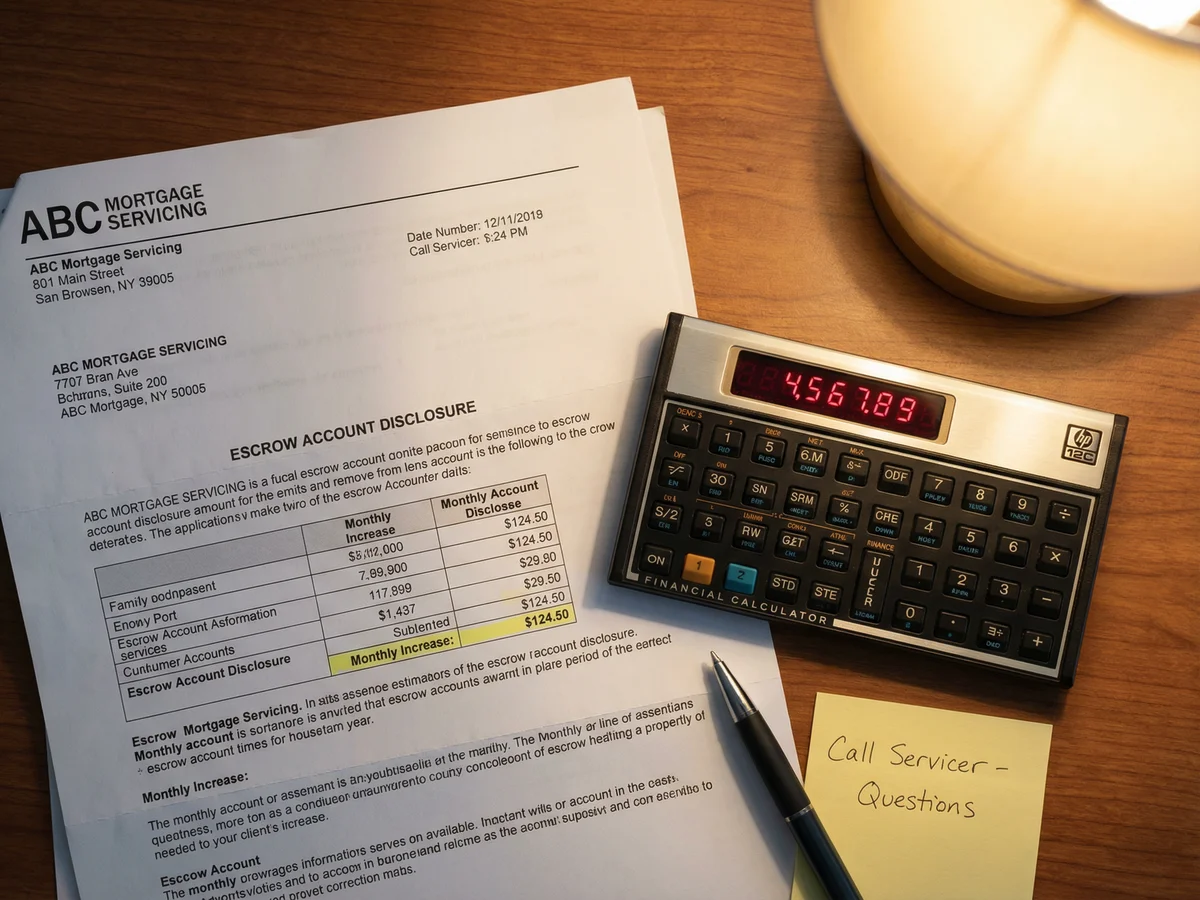
Fulton, Cherokee, Forsyth, and Gwinnett County tax rate comparison
Fulton County carries the highest combined millage rates in the metro area, running 34 to 38 mills depending on which city and school district overlap your property. A $500,000 home in unincorporated north Fulton with a 36-mill rate and the standard Georgia homestead exemption produces an annual tax bill around $6,800 to $7,200 at full assessment. In the city of Alpharetta or Roswell, the city millage adds another layer.
Cherokee County runs lower, typically 28 to 32 mills total. That same $500,000 home in Cherokee produces a tax bill around $5,200 to $6,000. Cherokee’s lower rate is one reason Canton, Holly Springs, and Woodstock attract new construction buyers who are watching their monthly budget closely. The difference between Cherokee and Fulton can mean $100 to $150 per month in property taxes on the same price point home.
Forsyth County sits in the 25 to 28 mill range, making it one of the lowest-taxed counties in the north metro corridor. A $500,000 home in Cumming or south Forsyth generates an annual tax bill of roughly $4,600 to $5,400. Forsyth’s combination of strong schools and lower taxes explains why builders have concentrated so much new construction inventory there over the past five years.
Gwinnett County falls in the middle at 30 to 34 mills. A $500,000 home in Dacula or the Johns Creek-adjacent portions of Gwinnett runs $5,600 to $6,400 annually. Gwinnett’s rates vary more than other counties because the school district millage fluctuates with bond referendum cycles.
How to estimate your year 2 tax bill
The calculation is straightforward once you know the inputs. Take your home’s expected fair market value at completion. Multiply by 0.40 (Georgia’s assessment ratio). Subtract any applicable homestead exemptions. Multiply the result by your county’s total millage rate, expressed as a decimal.
For a $500,000 home in Cherokee County with a 30-mill rate and a standard $10,000 homestead exemption off assessed value:
$500,000 x 0.40 = $200,000 assessed value. Minus $10,000 homestead exemption = $190,000 net assessed value. $190,000 x 0.030 = $5,700 annual property tax.
Compare that to the year-one bill based on land-only value of $150,000: $150,000 x 0.40 = $60,000. Minus $10,000 = $50,000. $50,000 x 0.030 = $1,500.
The jump from $1,500 to $5,700 hits in a single year. That’s $350 per month in additional escrow, plus shortage recovery on top.
Run this calculation before you sign the purchase contract. Not after. Your lender won’t do it for you. They quote the payment based on current taxes, and current taxes on new construction are artificially low.
How to appeal your property tax assessment in Georgia
Georgia gives property owners the right to appeal their assessed value. For new construction, an appeal makes sense when the county’s assessed value exceeds what comparable homes actually sold for in your area. Counties sometimes overshoot on new construction because they use the builder’s list price or contract price without accounting for builder incentives, closing cost credits, or market adjustments.
Deadline and process for Fulton County appeals
Georgia law gives you 45 days from the date on your assessment notice to file an appeal. The notice typically arrives between April and June, depending on the county. Miss that window and you’re locked into the assessed value for the full tax year.
The process starts with a written appeal to your county’s Board of Tax Assessors. You need to state why you believe the assessed value is too high and provide supporting evidence. The strongest evidence for new construction appeals is closed comparable sales data from GAMLS or FMLS showing that similar homes in your community or nearby communities sold for less than the county’s assessed fair market value.
In Fulton County, the Board of Assessors reviews your appeal and issues a decision. If you disagree with their decision, you can escalate to the Board of Equalization, which holds a hearing where you present your evidence in person. Beyond that, you can appeal to Superior Court, but most residential disputes resolve at the Board of Equalization level.
Cherokee, Forsyth, and Gwinnett follow the same general process with the same 45-day deadline. Filing procedures and hearing schedules vary by county. Cherokee County has historically been faster to schedule hearings than Fulton, which can take three to four months to get on the calendar.
When an appeal is worth filing vs. when it isn’t
An appeal is worth filing when you have solid comparable sales data showing the county overvalued your home by 10% or more. On a $500,000 home, a 10% reduction in assessed value saves roughly $600 to $700 per year in taxes. Over five years, that’s $3,000 to $3,500. The appeal costs nothing to file and takes a few hours of preparation.
An appeal is not worth the effort when the county’s assessed value closely matches recent sales in your community. If your neighbor’s identical floor plan sold for $510,000 last month and the county assessed your home at $505,000, you don’t have a case. The county will point to that comp and deny the appeal.
New construction buyers have one specific advantage in appeals. If the builder offered you significant incentives (closing cost credits, rate buydowns, upgrade packages), your effective purchase price was lower than the contract price. A $500,000 contract with $20,000 in builder incentives means you effectively paid $480,000. Some counties will consider that argument. Others won’t. Fulton County assessors have been inconsistent on this point, so the outcome depends on who reviews your file.
File the appeal anyway if you’re within 10% of a reasonable argument. The worst outcome is a denial, and you’ve lost nothing but time.
What Velocity tells every new construction buyer about taxes
I started building property tax projections into every new construction buyer consultation after a client in Cherokee County called me in a panic. She’d closed on a $475,000 home in Holly Springs the previous August. Her monthly payment was $2,840, right in line with her budget. Ten months later, she got a letter from her mortgage servicer saying her payment was increasing to $3,290. That’s $450 per month she hadn’t planned for. Her escrow had been based on the lot’s $135,000 assessed value, and the county had just reassessed the completed home at $470,000.
She could afford the increase, but just barely. And she was frustrated because nobody, not her lender, not the builder’s sales agent, had mentioned this would happen.
That conversation changed how I handle every new construction transaction. Now, before a buyer writes an offer, we run the year-two tax projection together. We pull the county’s current millage rate, calculate the assessed value based on the contract price, factor in the homestead exemption, and show the buyer exactly what their payment will look like after reassessment. We also build a savings plan: setting aside the difference between the year-one escrow and the projected year-two escrow into a separate account each month, so when the adjustment hits, the money is already there.
It takes 15 minutes during the consultation. It prevents a $450-per-month surprise 10 months into ownership.
—
Download: Georgia new construction property tax budget worksheet (2 pages)
This two-page worksheet walks you through the year-two tax projection for any new construction home in metro Atlanta. Page one calculates your estimated annual tax bill using your county’s millage rate, your contract price, and applicable exemptions. Page two builds a monthly savings plan to prepare for the escrow adjustment. Enter your name and email to download the worksheet.
[Download the property tax budget worksheet]
GHL tag: Lead: Topic Checklist
—
Next steps
Property taxes are one piece of the financial picture for new construction buyers. For the full decision framework, including builder incentives, construction timelines, warranty coverage, and closing costs, read the complete guide to buying new construction in Atlanta. If your budget is tight, the breakdown of home affordability in metro Atlanta shows how taxes, insurance, and HOA fees interact with your mortgage payment. And if you’re still early in the process and trying to understand new construction timelines in Atlanta, that article covers the build schedule from contract to closing.
First-time buyers navigating all of this at once should start with the first-time home buyer guide for Atlanta, which puts each cost category in context.
Ask Velocity about property tax planning for your new construction purchase. Call 678-278-9798 or schedule a consultation.
—
Itanza Johnson is the Managing Broker at Velocity Real Estate in Roswell, Georgia. She holds a Georgia real estate broker license and an industrial engineering degree from Georgia Tech. Her background includes Division Sales Manager at John Wieland Homes and VP of Sales and Marketing at Stonecrest Homes, with $600M+ in cumulative residential and new construction sales across metro Atlanta.
Thinking about buying or selling in metro Atlanta?
Velocity Real Estate has closed more than $600M in new construction and resale across 19 metro Atlanta neighborhoods. Start with a conversation, not a commitment.
Book a consultationCall 678-278-9798