How to price a resale home against new construction

How to price a resale home against new construction
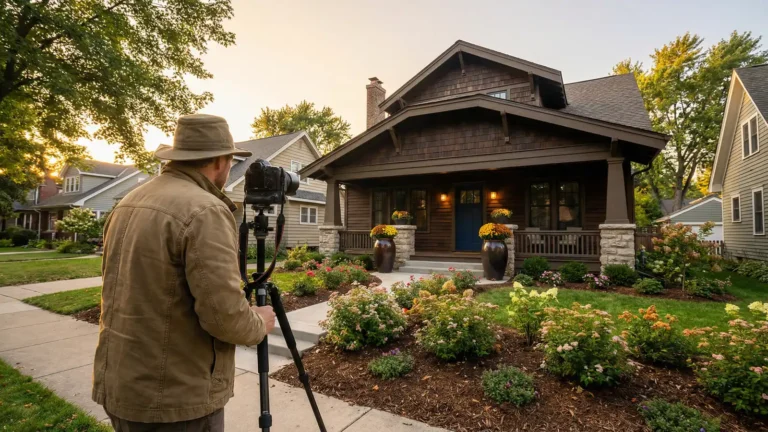
A seller in Alpharetta asked me last October why her 8-year-old home wasn’t getting offers after two weeks on the market. The house was in excellent condition. Updated kitchen, hardwood floors, landscaped yard backing to a creek buffer with mature trees. Listed at $565,000. The comparable sales supported the price.
The problem was three miles south, where Ashton Woods had 22 homes available starting at $549,900 with $15,000 in closing cost credits and a 5.25% rate buydown for the first two years. Her buyer pool was walking through model homes with quartz counters, new appliances under warranty, and a move-in date guaranteed by contract. Her 8-year-old home, no matter how well maintained, was competing against the psychological pull of “brand new.”
Learning to price a resale home against new construction in Atlanta requires understanding what builders are actually offering, not just their base prices.
What buyers compare (and what they don’t tell you)
Buyers shopping in the $450K to $700K range in north metro Atlanta are almost always comparing resale and new construction simultaneously. They may not mention it to your listing agent. But they’re doing it on their phones between showings, pulling up Ashton Woods, Toll Brothers, Pulte, and Smith Douglas listings on the drive home from your open house.
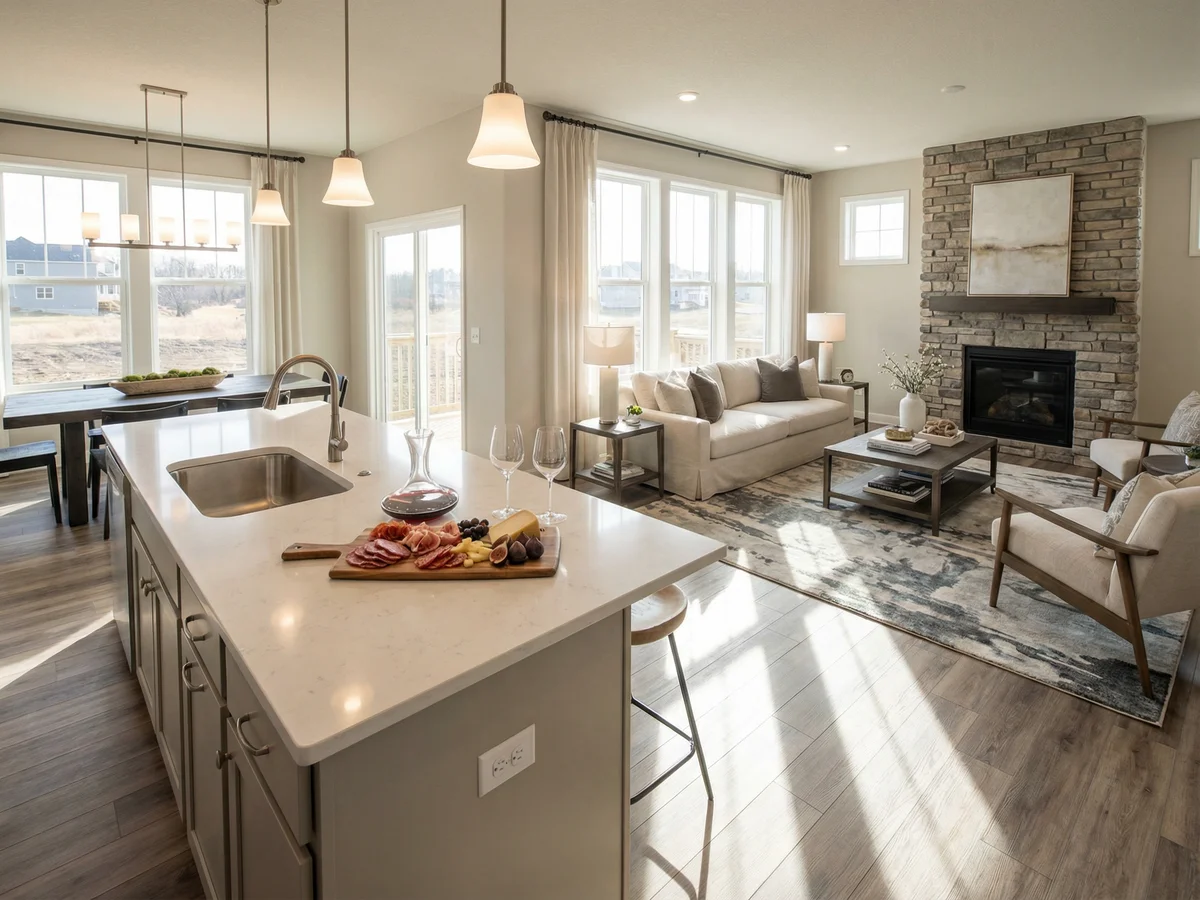
Here’s what they compare, in the order that matters most to their decision:
Monthly payment, not purchase price. A new construction home at $560,000 with a builder-subsidized rate of 5.25% produces a lower monthly payment than a resale home at $540,000 with a market rate of 6.75%. Buyers do this math on their mortgage calculator before they ever call an agent. Your resale price needs to account for the payment gap, not just the sticker price.
Condition certainty. New construction comes with a builder warranty (typically one year on workmanship, two years on systems, ten years on structural). A resale home comes with an inspection report listing 15 to 40 items that “may need attention.” Even minor items create anxiety. The buyer wonders what the inspector missed. That anxiety has a price, and it’s usually $5,000 to $15,000 in repair credits or price reduction requests during negotiation.
Customization. Buyers who choose new construction get to pick finishes, sometimes floor plans. Resale buyers inherit someone else’s taste. Your espresso cabinets and oil-rubbed bronze hardware might be exactly wrong for the buyer walking through. New construction lets them choose white shaker cabinets and brushed nickel. That choice has psychological value even when the actual cost difference is negligible.
How builder incentives change your pricing math
I track builder incentive packages across 40+ active communities in our coverage area. Right now (spring 2026), the typical incentive package in the $450K to $650K range includes $10,000 to $20,000 in closing cost credits, a temporary rate buydown (2-1 or 3-2-1 structure), and $5,000 to $15,000 in design center upgrades.
On a $550,000 new construction home, that incentive stack is worth $25,000 to $50,000 in effective value to the buyer. Your resale listing at $550,000 is competing against a new home that effectively costs $500,000 to $525,000 when you factor in the incentive package.
Here’s where my builder background changes the analysis. Builders rarely drop base prices. I watched this play out over years at John Wieland Homes and Stonecrest Homes. Base price reductions trigger appraisal problems for the eight families who already closed in Phase 1. So builders increase incentives instead. The sticker price stays the same. The effective price drops. If you’re pricing your resale listing by looking only at the builder’s listed base price, you’re missing the real competitive position.
The adjustment is specific: for every dollar of builder incentive available in competing communities, your resale listing needs to offset roughly 60 to 70 cents of that value through either a lower price, a seller concession, or a condition premium.
The condition premium strategy
Condition premium is the one advantage resale sellers hold over new construction, and most agents don’t use it properly.
A resale home with mature landscaping (8 to 15-year-old trees, established flower beds, full sod versus the builder’s standard seed-and-straw lot) has a tangible daily-life advantage. Drive through any new construction community that’s been open for 18 months. The lots look bare. Young trees staked with wire. Patchy grass. No shade.
A resale home in an established neighborhood also has completed infrastructure: the community pool is built (not “coming in Phase 3”), the commercial corridor is developed (the grocery store exists, the restaurants are open), and the HOA reserves are funded rather than projected.
Quantify these advantages. The landscaping premium on a 10-year-old home with mature hardwoods in Roswell or Milton runs $8,000 to $15,000 compared to a new lot. The established-community premium (completed amenities, known HOA fees, proven school assignment) adds another $5,000 to $10,000 in buyer value.
When I price a resale listing against new construction, I build a comparison sheet that shows the buyer exactly how these premiums offset the builder’s incentive stack. The buyer sees the net position, not just two price tags. That changes the conversation from “new is cheaper” to “here’s what the total cost of ownership looks like at month 12, month 36, and month 60.”
The upgrades that don’t add value (and the ones that do)
Sellers often ask whether they should renovate before listing to compete with new construction finishes. The answer depends entirely on which upgrades and at what cost.
Upgrades that add measurable value against new construction: updated kitchen hardware and lighting ($500 to $1,500), fresh interior paint in neutral tones ($2,000 to $4,000 for a full house), and new carpet or LVP in secondary bedrooms ($2,000 to $4,000). These upgrades remove the “dated” objection at a fraction of a full renovation cost.
Upgrades that rarely return their cost: full kitchen remodel ($30,000 to $60,000 for a return of $15,000 to $25,000 in sale price), pool installation ($40,000 to $70,000 for a return that depends entirely on the buyer’s preference), and bathroom additions ($20,000 to $35,000 in markets where existing bath count is already adequate).
I had a seller in Johns Creek spend $42,000 renovating her master bathroom six months before listing. The renovation was beautiful. It added approximately $12,000 to the appraised value. She would have been better served spending $4,000 on paint, hardware, and landscaping, then pricing $10,000 below her nearest new construction competitor with the remaining $28,000 in her pocket.
Pricing the gap correctly
The formula I use for pricing resale against new construction in metro Atlanta:
Start with the builder’s effective price (base price minus incentive value). Add your condition premium (landscaping maturity, completed infrastructure, known HOA costs). Subtract the warranty gap ($3,000 to $5,000 for the peace of mind new construction warranty provides). Subtract any finish-level gap (dated kitchens, older HVAC systems, original windows).
The number you land on is your competitive price ceiling. List at or slightly below that number, and you capture the buyers who are comparing both options. List above it, and those buyers default to new construction because the monthly payment math doesn’t work in your favor.
That Alpharetta seller I mentioned at the beginning? We adjusted her price from $565,000 to $539,900, added a $5,000 closing cost credit to match part of the builder’s incentive stack, and staged the home to emphasize the mature landscaping and established neighborhood. She received multiple offers within 10 days and closed at $548,000.
She netted more at $548,000 with a strategic price than she would have at $565,000 with 60 days on market and a price reduction. The pricing acknowledged the competition. The market rewarded the honesty.
Velocity’s home selling services include a builder incentive analysis for every resale listing in a submarket with active new construction. The competitive position changes monthly as builders adjust their packages, and your pricing strategy needs to move with it.
—
Download the resale vs new construction pricing worksheet
The Velocity Real Estate Resale vs New Construction Pricing Worksheet is a 3-page fillable PDF that walks you through the pricing comparison step by step. It includes fields for builder incentive tracking, condition premium calculation, and a net position summary you can share with your agent. Enter your name and email to get the worksheet delivered to your inbox.
[Download: Resale vs New Construction Pricing Worksheet], Name + Email Form
GHL Tag: Lead: Journal Download
—
Written by Itanza Johnson, Managing Broker at Velocity Real Estate. Georgia Tech industrial engineering graduate. Former Division Sales Manager at John Wieland Homes and VP of Sales and Marketing at Stonecrest Homes. $600M+ in cumulative residential sales across metro Atlanta.
Thinking about buying or selling in metro Atlanta?
Velocity Real Estate has closed more than $600M in new construction and resale across 19 metro Atlanta neighborhoods. Start with a conversation, not a commitment.
Book a consultationCall 678-278-9798