Wood frame vs. brick construction in Atlanta

Wood frame vs. brick construction in Atlanta
Brick vs wood frame homes in Atlanta is one of the first questions I hear from relocation buyers, and the answer usually surprises them. A buyer from Tampa or Houston walks into a new construction community in Alpharetta, sees wood framing going up everywhere, and immediately worries about build quality. They’re used to CMU block construction in Florida or full brick in parts of Texas. Georgia builds differently, and the reasons have nothing to do with cutting corners.
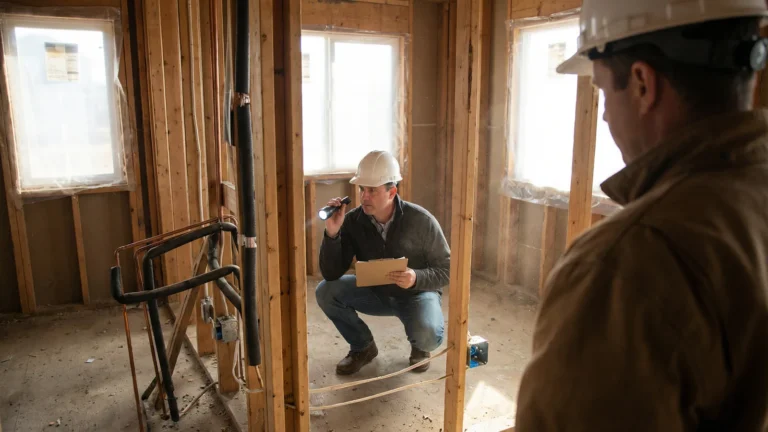
I’ve walked hundreds of new construction sites across metro Atlanta over the past 15 years. The framing material on the exterior tells you almost nothing about the structural integrity of the home. What actually determines build quality happens behind the walls, underneath the slab, and in the details most buyers never think to check.
This article breaks down the three exterior construction types you’ll find in Atlanta’s new construction market, explains what “4-sided brick” really means (the answer will change how you evaluate listings), and covers what actually matters for long-term structural quality in Georgia’s climate and soil conditions.
Why Atlanta builds differently than Florida and Texas
Climate, soil, and building code differences
Florida’s building code evolved around hurricane wind resistance. Coastal Florida requires concrete block (CMU) construction because block walls handle sustained 150+ mph winds better than wood framing. That code requirement shaped what Florida buyers think of as “standard” construction. When they relocate to Georgia, they interpret wood framing as a downgrade.

It’s not.
Georgia’s building codes (International Residential Code with state amendments) are engineered for a different set of risks. Metro Atlanta sits in a moderate seismic zone, gets occasional tornado activity, and deals with freeze-thaw cycles that don’t exist in south Florida. Wood frame construction handles seismic movement better than rigid masonry because it flexes. A wood-framed wall absorbs lateral force. A solid masonry wall cracks.
Texas is more complicated. Dallas and San Antonio have heavy brick traditions, but Houston builds with a mix of brick veneer and Hardie board over wood framing, similar to Atlanta. Texas buyers from the DFW corridor are the ones who notice the difference most. They grew up in neighborhoods where every home had four full brick walls. Moving to a community in Canton or Holly Springs where homes have brick on the front and Hardie board on the sides feels wrong to them. It’s not wrong. It’s a different regional building standard driven by different soil, climate, and material cost factors.
Georgia’s red clay soil is the other variable that changes the construction equation. More on that in the foundation section below.
What “4-sided brick” actually means (it’s still wood frame)
Here’s the fact that resets the entire conversation: nearly every “brick” home in metro Atlanta is a wood-framed home with brick veneer on the outside. The listing says “4-sided brick.” The MLS entry says “brick.” The builder’s marketing says “full brick exterior.” All of that means brick veneer over a wood-framed structure.
True structural brick (also called load-bearing masonry) uses brick as the actual wall structure. The bricks hold up the roof. You see this in historic buildings, pre-1950s homes, and some commercial construction. In residential new construction across metro Atlanta? Structural brick is virtually nonexistent. I can count on one hand the number of truly load-bearing masonry homes I’ve seen built in the past decade in our coverage area.
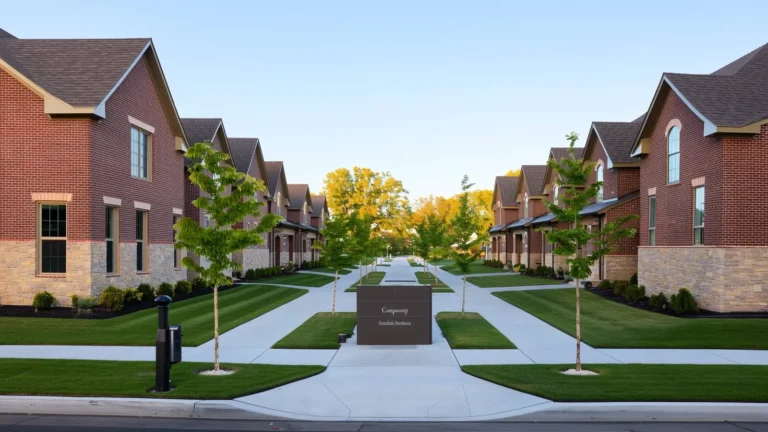
So when the MLS says “4-sided brick” on a home in Johns Creek or Milton, it means the builder applied a single wythe of brick veneer to all four exterior walls, with a 1-inch air gap between the brick and the wood-framed wall behind it. The wood frame carries all the structural load. The brick is a cladding material, a weatherproofing layer, and an aesthetic choice.
Does that make the brick meaningless? No. Brick veneer adds thermal mass, reduces exterior maintenance, and holds up well in Georgia’s climate. But it’s not the structural difference that buyers from Florida and Texas assume it is.
Construction type comparison for Atlanta new homes
Wood frame with brick veneer (most common)
This is what 60% to 70% of new construction homes in north metro Atlanta use, at least on the front elevation. The builder frames the house entirely in wood (2×4 or 2×6 lumber, sometimes with engineered lumber for headers and beams), wraps the exterior in house wrap (Tyvek or similar), installs a drainage plane, and then masons apply brick veneer to one, two, three, or all four sides depending on the community’s architectural standards and the buyer’s budget.

The HOA covenants in many communities dictate minimum brick coverage. A community like The Manor in Alpharetta requires 4-sided brick. A community in Canton might require brick on the front only. The number of brick sides is an aesthetic and HOA compliance decision, not a structural one.
Who this works for: Buyers who want the traditional Atlanta suburban look with lower long-term exterior maintenance. Brick veneer doesn’t need painting, rarely needs repairs, and has a 50+ year lifespan in Georgia’s climate without significant degradation.
Cost impact: Brick veneer adds $8 to $14 per square foot of wall area compared to siding alternatives. On a 3,000-square-foot home, going from front-only brick to 4-sided brick adds roughly $25,000 to $40,000 to the build cost, depending on the brick selection and labor rates.
Wood frame with Hardie board or stucco
Hardie board (fiber cement siding) has become the most common non-brick exterior in metro Atlanta new construction over the past eight years. You’ll see it in communities from Woodstock to Dacula, especially in the $350,000 to $550,000 price range where builders are managing per-unit costs. The product is durable, fire-resistant, and comes in profiles that mimic wood lap siding, board-and-batten, or shake.
Stucco shows up less frequently than it did a decade ago. Atlanta’s relationship with stucco is complicated. Improperly installed stucco on wood-framed homes caused moisture intrusion problems in hundreds of homes across north metro Atlanta in the 2000s and 2010s. Builders who still use stucco in 2026 typically install it over a proper rain screen system with enhanced flashing. The product itself isn’t the problem. The installation details are what matter.
Who this works for: Buyers focused on value and modern aesthetics. Hardie board offers design flexibility that brick doesn’t (you can mix profiles, colors, and textures on a single elevation). Maintenance is minimal: repaint every 12 to 15 years. Stucco works for buyers who want a Mediterranean or transitional architectural style, provided the builder uses current installation standards.
Cost impact: Hardie board runs $5 to $9 per square foot of wall area installed. Stucco runs $6 to $10. Both are cheaper than brick veneer and faster to install, which is partly why builders in the mid-price range favor them.
Full masonry (rare and expensive)
True load-bearing masonry, where the brick or stone is the structural wall, is rare in residential new construction anywhere in Georgia. You’ll find it in custom estate homes on multi-acre lots, typically in the $1.5M+ range. The construction timeline is longer (masonry walls go up slower than framing), the cost premium is substantial, and the structural engineering requirements add to the budget.
For luxury new construction in communities across Milton and Buckhead, the exterior might look like full stone or brick, but the structure behind it is engineered wood framing with stone or brick veneer. The look is indistinguishable from true masonry to anyone who isn’t inside the wall cavity.
Who this works for: Custom build clients with large budgets and specific aesthetic requirements who are willing to extend the construction timeline by 60 to 90 days for masonry wall construction.
Cost impact: Full masonry residential construction runs 25% to 40% more than comparable wood-framed homes with veneer exteriors.
Side-by-side comparison
| Factor | Wood frame + brick veneer | Wood frame + Hardie board | Full masonry |
|---|---|---|---|
| Structural system | Wood frame | Wood frame | Masonry walls |
| Exterior maintenance | Minimal (repoint mortar every 25-30 years) | Repaint every 12-15 years | Minimal (repoint every 25-30 years) |
| Fire resistance | Good (brick exterior is non-combustible) | Good (fiber cement is non-combustible) | Excellent |
| Insect resistance | Wood frame requires termite treatment | Wood frame requires termite treatment | Higher natural resistance |
| Cost per sq ft (wall area) | $8-$14 | $5-$9 | $18-$28 |
| Typical price range in Atlanta | $450K+ (4-sided) | $350K-$600K | $1.5M+ custom |
| Resale perception | Strong in established suburbs | Increasingly accepted | Premium niche |
| Construction timeline impact | Standard | Standard | Adds 60-90 days |
What actually matters for structural quality in Georgia
Termite bonds and why they’re non-negotiable
Georgia is one of the highest-risk states for subterranean termite activity in the country. The warm, humid climate and clay-heavy soil create ideal conditions for Formosan and Eastern subterranean termites. Every new construction home in metro Atlanta should have a termite pretreatment applied to the soil before the slab is poured and a transferable termite bond from a licensed pest control company.
The termite bond is more important than the exterior material on your walls. A wood-framed home with an active termite bond and annual inspections will outlast a brick home where the owner let the bond lapse. The bond covers treatment costs if termites are detected and, depending on the policy, may cover repair costs for structural damage. Typical termite bond renewals run $200 to $350 per year. Skipping it to save $300 is one of the worst financial decisions a Georgia homeowner can make.
When I walk a new construction site with buyers, one of the first things I check is the termite pretreatment documentation. Was the soil treated before the slab pour? Which product was used? Is the bond transferable to the new owner? These details matter more than whether the home has three sides of brick or four.
Foundation considerations in Georgia’s red clay soil
Georgia’s red clay is expansive soil. It swells when wet and shrinks when dry. That expansion and contraction cycle puts stress on foundations year after year. The foundation design and site preparation matter far more than the cladding material bolted to the exterior.
Most new construction in metro Atlanta uses one of two foundation types: slab-on-grade or full basement. Slab-on-grade is common in communities south of I-285 and in flatter terrain. Full basements are standard in the hillier terrain of north Fulton, Cherokee, and Forsyth counties, where the grade change across the lot makes a basement the logical choice.
What to look for in either foundation type: proper grading that directs water away from the foundation walls, functioning gutters and downspouts with extensions that discharge at least four feet from the foundation, and (on basement homes) a waterproofing membrane on the exterior of the below-grade walls. A pre-drywall inspection catches most foundation and framing issues before the walls are closed up.
Foundation cracks in Georgia red clay are common and usually cosmetic in the first few years as the home settles. Hairline cracks in the basement walls or garage slab don’t indicate structural failure. Horizontal cracks, stair-step cracks through mortar joints, or cracks wider than 1/4 inch warrant professional evaluation by a structural engineer, not a general home inspector.
How to evaluate construction quality regardless of exterior material
The exterior material is the part of the home everyone can see. The parts that determine whether a home performs well for 30 years are mostly hidden. When I tour new construction communities with buyers (especially those relocating from states with different building traditions), I redirect the conversation from “how many sides of brick” to these five factors:
The framing lumber grade and moisture content. Lumber that was stored improperly or installed too wet will warp, twist, and create nail pops in drywall within the first two years. Walk through the framing stage and look for lumber with excessive checking (surface cracks) or visible cupping.
The quality of the air sealing and insulation. Georgia adopted the 2015 International Energy Conservation Code with amendments. Builders are required to meet air sealing standards at windows, doors, penetrations, and rim joists. Spray foam at the rim joist and properly installed batt insulation in exterior walls make a bigger difference in your energy bills and comfort than whether the exterior is brick or siding.
The HVAC system sizing. An oversized HVAC unit short-cycles, fails to dehumidify properly, and creates uneven temperatures throughout the house. In Georgia’s humid summers, proper HVAC sizing is critical. Ask the builder for the Manual J load calculation. If they can’t produce one, that’s a red flag.
The window quality and installation. Windows are the weakest point in any wall system, regardless of the exterior material. Look for double-pane low-E windows with a U-factor below 0.30 and proper flashing at the window openings. Poor window installation causes more water intrusion problems in Georgia homes than the choice between brick and siding.
The builder’s warranty terms. Georgia requires a one-year builder warranty on workmanship, two years on systems (plumbing, electrical, HVAC), and ten years on structural components. Some builders offer extended structural warranties through third-party providers like 2-10 Home Buyers Warranty. Read the warranty document before you sign the purchase agreement. The warranty tells you what the builder stands behind and what they don’t.
So does it matter if your home has three sides of brick or four? For resale value in communities where the HOA requires 4-sided brick, yes. For structural integrity and long-term performance? The framing, foundation, air sealing, HVAC, and windows matter more. A well-built wood-framed home with Hardie board siding will outperform a poorly built home with 4-sided brick every time.
—
Download: Construction Quality Evaluation Worksheet
Touring new construction communities and not sure what to look for beyond the surface finishes? The Velocity Real Estate Construction Quality Evaluation Worksheet gives you a structured checklist for evaluating build quality at every stage, from lot selection through final walkthrough. The worksheet covers framing quality indicators, foundation red flags, HVAC sizing verification, window and air sealing checkpoints, and warranty comparison fields. One to three pages. Print it and bring it to your next builder tour.
Enter your name and email to download the worksheet.
—
What to do next
If you’re relocating to Atlanta from Florida, Texas, or any state where the construction standards look different from what you’re used to, the best thing you can do is tour active construction sites at multiple stages. Seeing a home at framing, pre-drywall, and completion gives you a clear picture of what’s behind the finished walls. Read the complete guide to buying new construction in Atlanta for the full process, from builder selection through closing. If you’re exploring specific communities, the guide to living in Alpharetta covers one of the most active new construction submarkets in the metro area.
Schedule a new construction tour with Velocity to see construction quality firsthand. We walk job sites with buyers every week and can show you exactly what separates solid construction from shortcuts, regardless of what’s on the outside of the walls.
—
Written by Itanza Johnson, Managing Broker at Velocity Real Estate. Georgia Tech industrial engineering graduate. Former Division Sales Manager at John Wieland Homes and VP of Sales and Marketing at Stonecrest Homes. $600M+ in cumulative residential sales across metro Atlanta.
Thinking about buying or selling in metro Atlanta?
Velocity Real Estate has closed more than $600M in new construction and resale across 19 metro Atlanta neighborhoods. Start with a conversation, not a commitment.
Book a consultationCall 678-278-9798