Pre-construction homes in Atlanta

Pre-construction homes in Atlanta
Pre-construction homes in Atlanta give buyers a way to lock in pricing, choose a lot, and select finishes months before a home is complete. For buyers watching new construction communities across metro Atlanta, the reservation window is where the real financial advantage lives. Velocity Real Estate tracks pre-construction releases across north metro Atlanta and connects buyers with Phase 1 pricing before communities hit the MLS or show up on Zillow.
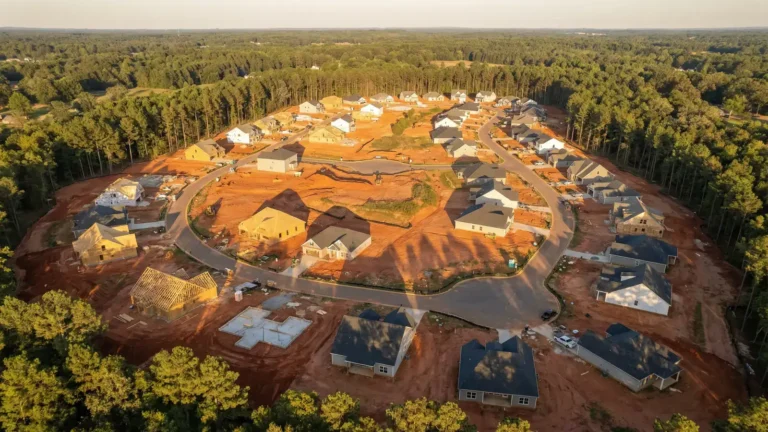
Here’s what most buyers don’t realize until it’s too late: by the time a new construction community has a model home you can walk through, the best lots are spoken for and base prices have already moved up once or twice. The buyers who captured the lowest pricing reserved their homes when the community was still a cleared lot with a sales trailer parked on it.
This article breaks down how pre-construction reservations work in the Atlanta market, what Phase 1 pricing actually means in dollar terms, and how to position yourself to access communities before the general public knows they exist.
What pre-construction means in Atlanta’s new home market
Pre-construction is the period between when a builder announces a new community and when the first homes are completed. In metro Atlanta, this window typically runs 8 to 14 months depending on the builder, product type, and permitting timeline in that municipality. During this window, buyers can reserve a homesite, select a floor plan, and begin the design center process while the home exists only on paper.
The distinction matters because pricing during pre-construction is almost always lower than pricing at delivery. Builders price early lots to generate momentum, prove absorption to their lenders, and fund the infrastructure buildout (roads, utilities, amenity construction) that makes the community viable. Those first 10 to 20 contracts are the financial foundation the entire project rests on.
Not every builder handles pre-construction the same way. National builders like Toll Brothers and Ashton Woods tend to release lots in defined phases with published pricing. Regional builders sometimes run a quieter process, accepting reservations through their preferred agents before making any public announcement. In both cases, timing is the variable that determines whether a buyer gets access.
How community phases work and why Phase 1 matters
Most new construction communities in the Atlanta market release lots in phases. Phase 1 might include 20 to 40 homesites. Once those are under contract or a certain percentage hits a threshold (usually 60 to 70% sold), the builder releases Phase 2 with adjusted pricing.
The phased approach serves two purposes for the builder. First, it controls inventory risk. A builder doesn’t want 150 unsold lots sitting with carrying costs. Second, it creates a pricing escalation structure that rewards early buyers and protects the appraisal values of homes already under contract. If a buyer in Phase 1 paid $485,000 and the builder drops Phase 2 to $470,000, the Phase 1 buyer’s appraisal is now at risk. Builders avoid that scenario by only moving prices upward.
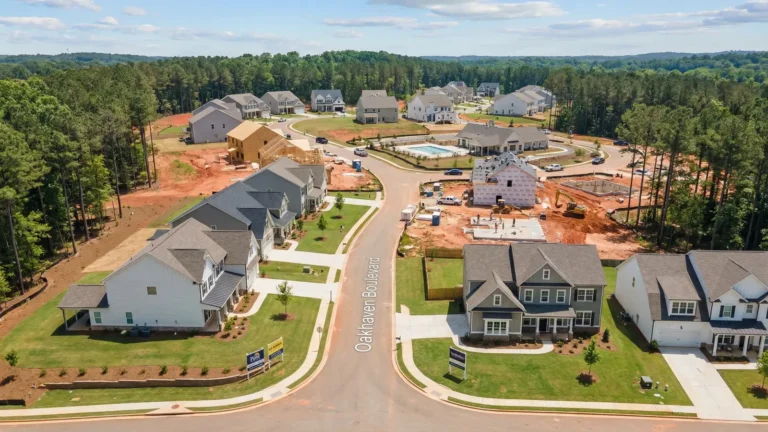
Phase 1 buyers get first pick of lot positions. Corner lots, cul-de-sac lots, lots backing to tree buffers or greenspace. Those premium positions carry lot premiums ranging from $5,000 to $40,000 in north metro Atlanta communities, and they sell first. By Phase 2, the remaining lots often back to other lots, face the street with less privacy, or sit adjacent to the community entrance where traffic is heavier.
Reservation deposits and what they lock in
A reservation deposit in the Atlanta market typically ranges from $2,000 to $10,000, depending on the builder and price point. This deposit holds a specific lot for a defined period, usually 30 to 60 days, while the buyer completes financing pre-approval and reviews the purchase agreement.
What the deposit locks: the lot number, the base price for that lot, and sometimes a specific floor plan. What it does not lock: structural options pricing, design center selections, or the builder’s right to adjust certain material specifications if supply chain conditions change.
Some builders make reservations fully refundable during the initial holding period. Others apply the reservation deposit toward earnest money once the purchase agreement is signed, making it refundable only under the contract’s contingency terms. I always review the reservation agreement line by line with my buyers before any money changes hands. The language around refundability varies enough between builders that assumptions get expensive.
How pricing escalates through community phases in Atlanta
The pricing escalation from Phase 1 to later phases is not a marketing gimmick. It follows a predictable pattern driven by the builder’s cost basis, market absorption data, and competitive positioning within the submarket.


A typical escalation pattern in north metro Atlanta works like this: Phase 1 base prices are set 3 to 7% below what the builder expects to sell the same floor plan for 12 months later. Each subsequent phase adjusts upward by $10,000 to $25,000 on the base price. Lot premiums increase as the community fills in and remaining lots become scarcer. Design center pricing holds steadier, but builders tighten incentive packages as demand proves out.
The cumulative effect is significant. On a $500,000 base price home, a buyer who reserves in Phase 1 versus Phase 3 can see a total price difference of $35,000 to $60,000 when you combine base price increases, reduced incentives, and higher lot premiums on the remaining inventory.
Real examples of Phase 1 vs. Phase 3 price differences
I tracked a community in south Forsyth County through its full build-out last year. Phase 1 released at a $465,000 base for the most popular four-bedroom plan. By Phase 3, that same plan started at $512,000. The builder had also reduced the closing cost incentive from $15,000 to $7,500 and eliminated the included appliance upgrade that Phase 1 buyers received.
A buyer who reserved in Phase 1 paid $465,000 with $15,000 in closing cost credits and a $4,200 appliance package included. A buyer who walked in during Phase 3 paid $512,000 with $7,500 in closing costs and bought their own appliances. The total cost difference: roughly $59,700 for the same floor plan, same square footage, different lot position.
That’s not unusual. I see similar patterns in Cherokee County, along the GA-400 corridor, and in the newer communities popping up in Dawson and Barrow counties where land costs are still low enough for builders to offer aggressive Phase 1 pricing.
How Velocity provides pre-construction access
Accessing pre-construction pricing requires knowing about a community before the general market does. Builders announce new communities through a handful of channels: their corporate websites, broker email lists, land acquisition announcements at local HBA meetings, and direct outreach to agents who have a track record of bringing qualified buyers.
Velocity Real Estate sits on several of those lists because of the firm’s history in new construction sales. My years as a Division Sales Manager at John Wieland Homes and VP of Sales and Marketing at Stonecrest Homes built relationships with builders who still call when they’re planning a new community in the Atlanta metro. Those relationships are the access point.
Builder relationships and early notification lists
When a builder plans a new community in Forsyth, Cherokee, Fulton, or Gwinnett County, the pre-marketing phase starts 60 to 90 days before the public launch. During that window, the builder finalizes pricing, selects floor plans for the community, and starts building the VIP interest list. Agents on the builder’s preferred list get the community details, pricing sheets, and lot maps before the “Coming Soon” sign goes up.
I maintain active relationships with over a dozen builders operating in north metro Atlanta. When a new community enters pre-marketing, my buyers get the lot map and pricing sheet within 48 hours of the builder releasing it to their agent network. That head start matters. In a community releasing 25 Phase 1 lots, the best 8 to 10 positions can be reserved within the first two weeks.
Velocity’s pre-construction notification list works simply. You tell us your target areas, price range, and must-have features. When a community matching those criteria enters pre-marketing, you hear from us before the builder’s website goes live.
Risks of buying pre-construction (and how to manage them)
Pre-construction buying carries real risks that deserve honest discussion. The home doesn’t exist yet. You’re committing money based on floor plan renderings, spec sheets, and a lot map that shows where your house will sit relative to neighbors who also haven’t been built.
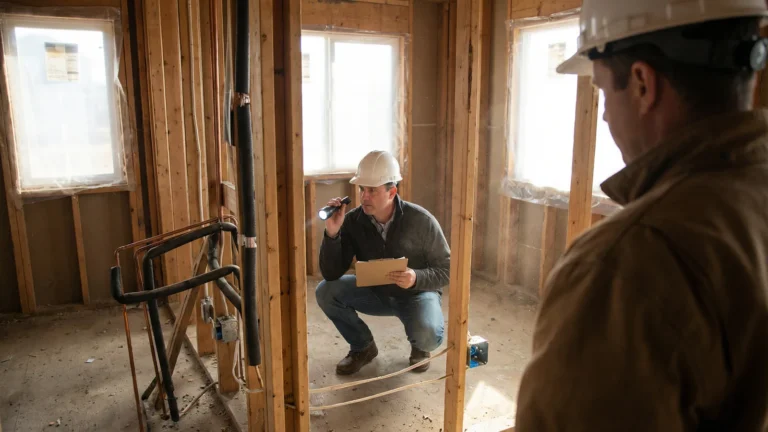
Construction timelines in metro Atlanta run 6 to 12 months for most production builders. During that window, interest rates can move, personal circumstances can shift, and the builder can encounter permitting delays, material shortages, or subcontractor scheduling issues that push the closing date.
The financial risk is real but manageable with the right contract structure. Mortgage rate locks typically cover 60 to 90 days. If your home takes 9 months to build, your initial rate lock will expire well before closing. Extended rate lock programs exist (some covering up to 360 days) but they carry upfront costs, usually 0.5 to 1.5% of the loan amount. I walk every pre-construction buyer through the rate lock math before they sign a reservation.
What’s locked in vs. what can change during construction
The purchase agreement locks in: base price, lot selection, structural options selected at contract, and the builder’s warranty terms.
What can change: the estimated completion date (most Georgia builder contracts include a 60 to 90 day extension clause), certain material specifications if the builder’s supplier changes product lines, and the final closing cost figures which depend on title fees, taxes, and lender charges calculated at closing.
Design center selections happen 30 to 90 days after contract execution, depending on the builder’s construction timeline. Prices for countertops, flooring, lighting, and fixtures are set at the time of your design center appointment, not at contract. If quartz countertop pricing increases between your contract date and your design appointment, you pay the higher price.
That clause catches buyers off guard. I flag it on page one of every pre-construction contract review.
Who benefits most from pre-construction buying in Atlanta
Pre-construction works best for buyers with timeline flexibility and financial stability. The ideal pre-construction buyer has a current living situation that doesn’t require an immediate move (a lease with a flexible end date, or a home they can sell on their own timeline), mortgage pre-approval with a lender who offers extended rate lock options, and clarity on the neighborhood and school district they want.
Relocation buyers moving to Atlanta from out of state are strong pre-construction candidates when their start date is 6 or more months out. They can select a community, reserve a lot, and complete design selections remotely. By the time they relocate, the home is nearing completion.
Move-up buyers in north metro Atlanta also benefit, especially those selling in established neighborhoods where resale inventory is tight. The pre-construction timeline gives them a window to list and sell their current home while the new one is being built, avoiding the double-move problem.
First-time buyers with stable employment and no home to sell have the cleanest path. No contingencies, no coordination between two transactions. Just a straightforward reservation, construction period, and closing.
Pre-construction is a harder fit for buyers who need to move within 90 days, buyers whose financing situation may change during the build period, or anyone uncomfortable with the uncertainty of construction timelines. Those buyers are better served by spec homes (homes the builder started without a buyer) or move-in-ready inventory.
—
Download the pre-construction reservation checklist
The Velocity Real Estate Pre-Construction Reservation Checklist (2 pages) walks through every question to ask before signing a reservation agreement, every document to collect, and the timeline milestones to track during construction. Enter your name and email to get the checklist delivered to your inbox.
[Download the checklist →]
—
Next steps
Pre-construction buying is one piece of the larger new construction process. For a full walkthrough of every stage, from lot selection through closing day, read the complete guide to buying new construction in Atlanta. If you’re ready to start exploring specific communities, learn more about Velocity’s pre-construction reservation services. For buyers already evaluating a builder’s offer, our guide on how to negotiate with a builder in Atlanta covers incentive structures and contract terms. And if construction timelines are your main concern, new construction timelines in Atlanta breaks down what to expect month by month.
To get on Velocity’s pre-construction notification list and receive early access to Phase 1 pricing in metro Atlanta communities, contact us here.
Itanza Johnson is the Managing Broker at Velocity Real Estate, a boutique new construction real estate firm based in Roswell, Georgia. With a background in industrial engineering from Georgia Tech and executive-level experience at John Wieland Homes and Stonecrest Homes, Itanza brings a systems-driven approach to helping buyers, sellers, and builders across metropolitan Atlanta.
Thinking about buying or selling in metro Atlanta?
Velocity Real Estate has closed more than $600M in new construction and resale across 19 metro Atlanta neighborhoods. Start with a conversation, not a commitment.
Book a consultationCall 678-278-9798