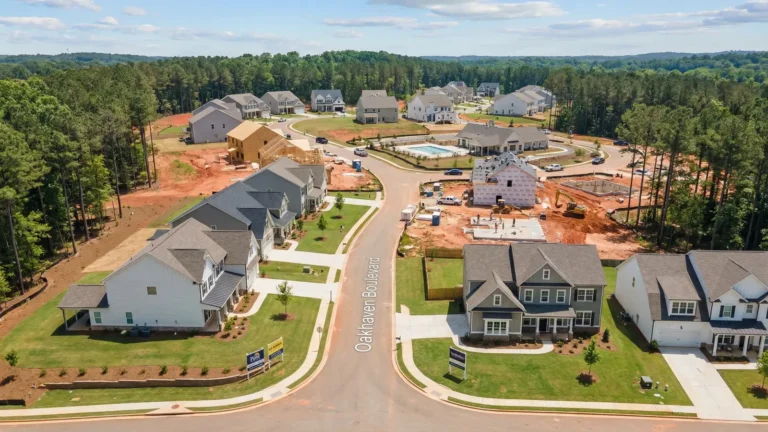
Living in Roswell, GA: charm meets modern living

Living in Roswell, GA: charm meets modern living
A couple relocated from Denver last spring. They had a budget, two school-aged kids, and a single requirement that kept shrinking their options: walkability. Not walkable-to-a-park walkability. They wanted the kind of place where you could leave the car in the garage on a Saturday morning and walk to breakfast, a bookstore, and a playground before noon. Their agent in Colorado had suggested Buckhead. A colleague at work pushed Decatur. Neither fit the budget or the yard size they needed.
I pulled up Canton Street on a map and sent them a pin. Within 48 hours they had booked flights to Atlanta.
Living in Roswell GA is one of those rare suburban propositions where the phrase “you can walk to it” actually holds up. The city sits 22 miles north of downtown Atlanta along GA-400, occupying a stretch of north Fulton County between Alpharetta to the north and Sandy Springs to the south. Population sits around 94,000 as of 2025, making it the eighth-largest city in Georgia. Those numbers matter because Roswell carries enough density to support a real downtown with restaurants, shops, and civic events, but enough residential spread to keep neighborhoods quiet on a Tuesday afternoon.
This guide covers what daily life in Roswell looks like across neighborhoods, schools, commute realities, dining, outdoor recreation, and real estate. If you are comparing north Atlanta suburbs, Roswell belongs on the short list for anyone prioritizing walkable dining, river access, and established neighborhoods with mature tree canopy.
The Roswell identity: history, food, and nature
Roswell was incorporated in 1854. The original mill village along Vickery Creek still stands, and the Roswell Historic District covers roughly 640 acres of antebellum homes, churches, and public buildings. That history shapes the character of the city in ways you notice on the ground. Streets curve around old property lines. Lot sizes vary block to block. The built environment has the kind of irregularity that planned subdivisions cannot replicate.
The historical preservation effort extends beyond architecture. Barrington Hall and Bulloch Hall operate as public museums. The Roswell Cultural Arts Center hosts regional theater. The city’s programming calendar runs thick with outdoor concerts, art walks, and seasonal festivals from March through November.
But history is the backdrop, not the headline. The headline for most people considering Roswell is Canton Street.
Canton Street dining and walkable downtown Roswell
Canton Street runs roughly a quarter mile through downtown Roswell, lined on both sides with restaurants, boutiques, coffee shops, and a handful of professional offices occupying converted homes. On a Friday evening in spring, you will wait 30 to 45 minutes for a table at Table & Main or Osteria Mattone. On a Saturday morning, the line at Rumi’s Kitchen wraps past the parking lot by 11:15.
The dining density on Canton Street is unusual for a north Atlanta suburb. Within a six-block stretch, you can find Southern fine dining, wood-fired Italian, Persian, sushi, tapas, Thai, and two bakeries. Three coffee shops operate within a five-minute walk of each other (which matters when one of them has a 20-minute line on Saturday mornings). The restaurant turnover rate is low. Most of the establishments on Canton Street have been there five years or more. That stability tells you the foot traffic supports real revenue, not just hype.
For residents, the practical question is distance. Homes in the neighborhoods immediately east and west of Canton Street (Roswell Village, parts of Founders Walk, and the Historic District) sit within a 10- to 15-minute walk. From the neighborhoods south of Hembree Road, you are driving five minutes or riding a bike eight minutes to reach Canton Street.
The walkable downtown also functions as a real estate price anchor. Homes within a half mile of Canton Street carry a premium of roughly 8 to 12% over comparable homes in east Roswell. I watch this spread quarterly because it tells you how much buyers are willing to pay for proximity to walkable dining and retail. That premium has held steady since 2022, which means the market has priced it in as a structural feature, not a trend.
Roswell Square, at the south end of Canton Street, hosts a weekend farmers market from April through October and is the gathering point for the city’s larger public events.
Chattahoochee River access and outdoor recreation
The Chattahoochee River forms Roswell’s western boundary for roughly seven miles. The Chattahoochee River National Recreation Area operates three access points within city limits: Vickery Creek (at the old Roswell Mill ruins), Don White Park, and the Azalea Drive unit near Riverside Park.

Vickery Creek trails see the heaviest foot traffic. The waterfall at the old mill dam is the most photographed spot in Roswell. Trails run along both sides of the creek, and you can connect to the Riverwalk trail system that extends south toward the Chattahoochee Nature Center. Total connected trail mileage within Roswell exceeds 14 miles.
The Big Creek Greenway connects Roswell to Alpharetta along a paved multi-use path. Weekend cyclists use the Greenway for rides covering 12 miles or more without touching a road. The southern section of the Greenway starts at Old Alabama Road in Roswell and runs north to Windward Parkway in Alpharetta.
Riverside Park offers kayak and paddleboard launches on the Chattahoochee. Outfitters along Azalea Drive rent equipment seasonally, and guided river trips run from May through September. The river section through Roswell is Class I, which makes it accessible for families and first-time paddlers.
For runners and walkers, East Roswell Park provides a paved loop with exercise stations, playgrounds, and sports fields. The park sits on Fouts Road and draws from the neighborhoods along Holcomb Bridge Road and Hembree Road.
The outdoor access in Roswell combines two things you do not always find together in north Atlanta: river recreation and connected trail systems. Commute comparisons often miss this factor. When a buyer tells me they want outdoor access, I ask whether they mean “a park nearby” or “I want to launch a kayak after work on a Wednesday.” In Roswell, the second option is realistic.
Schools in Roswell: Fulton County highlights
Roswell is served by Fulton County Schools. The city sits within the attendance zones of two high schools: Roswell High School and Centennial High School.
Roswell High School enrolls approximately 2,400 students and has operated since 1955. The school’s performing arts and athletics programs draw families who want a large, comprehensive high school environment. The IB (International Baccalaureate) program at Roswell High is one of the longest-running in Fulton County. AP participation rates exceed 40% of the junior and senior classes.
Centennial High School, which opened in 2002, serves the eastern portion of Roswell. Centennial has built a strong reputation in STEM programming, and the school’s robotics team competes nationally. Enrollment runs around 1,800 students. The smaller campus size is a deliberate draw for families who prefer a mid-size high school.
Elementary and middle school zones in Roswell shift depending on the specific neighborhood. The feeder patterns are worth mapping before selecting a home. Northwood Elementary, Roswell North Elementary, Sweet Apple Elementary, Mimosa Elementary, and Hembree Springs Elementary all serve different residential pockets. School zone mapping should happen before the first showing, not after.
I had a buyer last year who toured 11 homes across Roswell before I realized she had been filtering by Centennial High School zone on Zillow but using the wrong boundary map. Two of the homes she loved most actually fed to Roswell High. We pulled the official Fulton County Schools zone locator, re-sorted her list, and eliminated four homes that did not match her actual school preference. That afternoon saved her three weeks of second-guessing.
Property values correlate with school zone reputation in Roswell, though the gap between Roswell High and Centennial High zones is smaller than most buyers expect. The spread runs about 4 to 6% on comparable homes, which is tighter than the Alpharetta vs. Milton school zone premium gap.
East Roswell vs. west Roswell
Roswell splits into two distinct real estate profiles along a rough line running north-south near GA-400.
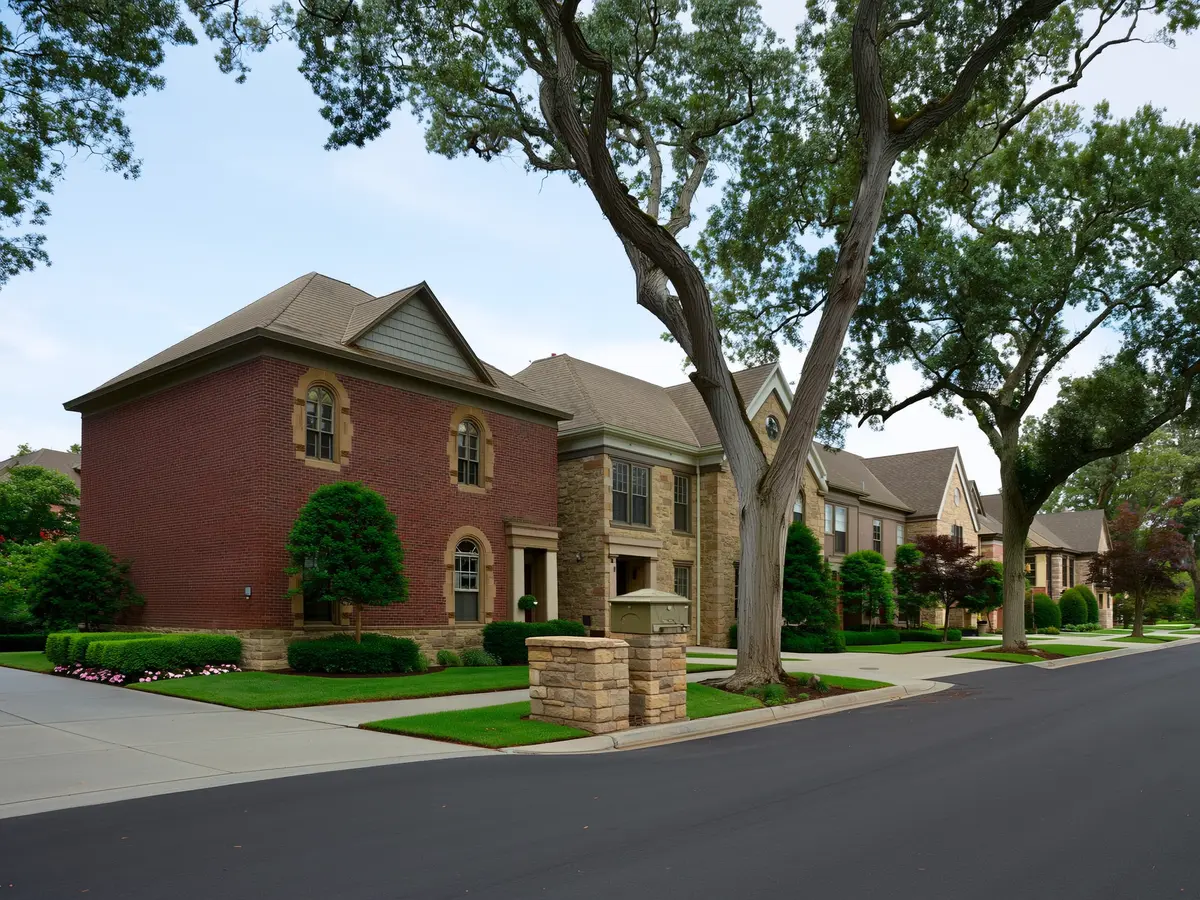
West Roswell includes the Historic District, Canton Street, and the neighborhoods closest to the Chattahoochee River. Home styles lean older (1970s through 1990s ranches and two-stories on larger lots), with pockets of renovated and expanded homes selling in the $600K to $900K range. The tree canopy is dense. Streets are narrow. The character is established and walkable. New construction is limited in west Roswell because the land is largely built out, and the historic overlay district restricts demolition and infill in certain areas.
East Roswell, anchored by Holcomb Bridge Road and the GA-400 corridor, has a different profile. Subdivisions are newer (1990s through 2010s), lots are more uniform, and HOA-governed communities with amenity centers are common. Price points in east Roswell range from $450K for townhomes near Holcomb Bridge to $750K or more for larger single-family homes in communities like Horseshoe Bend and Barrington Shores.
The commute difference between east and west Roswell is real. East Roswell sits closer to GA-400 on-ramps, which shaves five to eight minutes off a southbound morning commute to Perimeter or Midtown. West Roswell residents access GA-400 via Old Alabama Road or Riverside Road, adding that time back.
When a buyer tells me they want to live in Roswell, my first question is always about their daily rhythm. Do you want to walk to dinner twice a week and tolerate a longer commute? West Roswell. Do you want the fastest possible highway access and do not mind driving to Canton Street? East Roswell. The city is small enough that both halves share the same school system, the same parks, and the same ZIP code. But daily life feels different depending on which side of 400 you wake up on.
New construction in and around Roswell
Roswell is a mature city. Unlike Woodstock or Canton, where new communities break ground quarterly, Roswell’s new construction pipeline is limited by available land.
Active new construction within Roswell city limits typically consists of infill projects: small communities of 20 to 60 homes built on repurposed commercial land or assembled parcels. These projects carry premium pricing because they offer new-build features (open floor plans, smart home wiring, energy-efficient systems) inside an established community with mature infrastructure.
In 2025, three infill communities were active within Roswell city limits, with base prices starting in the mid-$600Ks for townhomes and low $700Ks for single-family detached. Absorption rates in these communities ran above 90% before delivery, which tells you the demand for new construction inside Roswell’s borders exceeds supply by a wide margin.
For buyers who want new construction at Roswell-adjacent price points, the communities along the Roswell-Alpharetta border near Mansell Road and Old Alabama Road extend the search radius without changing the school system or commute pattern significantly.
I track every new community that breaks ground within a five-mile radius of Canton Street. The pipeline for 2026 includes two communities on the east side of Roswell, adding approximately 180 lots to a submarket that absorbed 94% of its 2025 inventory before December.
Roswell vs. Alpharetta: which north Atlanta city fits you
Roswell and Alpharetta share a border along Mansell Road and Old Alabama Road. They share GA-400 as the primary commute artery. They share Fulton County Schools. The overlap is significant enough that many buyers start by comparing the two.
The clearest difference is character. Roswell has a historic core that developed organically over 170 years. Alpharetta’s identity centers on the Avalon mixed-use district and the tech employment corridor along GA-400. Both have walkable downtowns, but Roswell’s feels more like a Southern small town and Alpharetta’s feels more like an upscale planned development.
Price-wise, Roswell’s median home sale price in Q4 2025 was $535,000. Alpharetta’s median ran $520,000. The gap is narrower than most people assume. Where the numbers diverge is at the top of the market: Roswell’s luxury inventory (above $1M) is smaller and older, while Alpharetta and neighboring Milton offer more luxury new construction options.
For families, the school decision often drives the choice. Both cities have strong Fulton County schools, but the specific feeder patterns differ. Centennial High School (Roswell) and Alpharetta High School are both well-regarded, and the ranking difference between them is marginal on most assessment metrics.
For commuters headed to Midtown or Buckhead, Roswell is closer by roughly 10 minutes in non-rush-hour traffic. During peak hours, that advantage compresses because both cities funnel onto GA-400. The commute analysis matters more for jobs along I-285 or in Perimeter Center, where Roswell’s southern location creates a meaningful time savings.
What Velocity sees from our Roswell office
Our office is in Roswell. I have watched this market from inside the city for years. What I see consistently is buyers who arrive with assumptions shaped by Zillow searches and leave with a completely recalibrated view of the city once they spend a day walking the neighborhoods.
The biggest misconception is that Roswell is “older” and therefore less desirable than Alpharetta or Johns Creek. The age of the housing stock is real. But the maturity of the infrastructure, the density of dining options, and the river access create a quality-of-life equation that newer suburbs are still building toward. Alpharetta invested heavily in Avalon to create a walkable district. Roswell has had one for decades.
I also notice a pattern with relocation buyers from the Northeast and Midwest. They gravitate toward Roswell because the neighborhood feel reminds them of established suburbs they grew up in. The old trees. The winding roads. The houses that do not all look the same. That emotional connection translates into stronger long-term satisfaction. The buyers I placed in Roswell three and four years ago are overwhelmingly still there. The retention rate in this city is higher than anywhere else in our coverage area.
The other thing I track is rental-to-purchase conversion. Roswell has a healthy rental market, and a significant number of buyers start as renters in the area. They lease for a year, figure out which neighborhoods fit their daily routine, and then buy within a two-mile radius of their rental. That pattern tells you something about Roswell’s hold on the people who live there.
Roswell real estate market data (2026)
Median sale price in Roswell crossed $535,000 in Q4 2025, up 5.8% year over year. Days on market averaged 18 for single-family homes and 14 for townhomes. Active inventory at any given time ran between 180 and 220 listings, which translates to roughly 1.8 months of supply at the current absorption rate.
The price-per-square-foot spread in Roswell ranges from $195 in east Roswell subdivisions to $280 or more for renovated homes near Canton Street. That $85 per-square-foot gap represents the walkability premium, lot character, and renovation quality that west Roswell commands.
Property tax rates in Roswell reflect Fulton County’s millage rate plus the City of Roswell’s millage. The combined effective rate runs approximately 1.1% of assessed value. On a $535,000 home, annual property taxes land between $4,200 and $5,200 depending on the homestead exemption and assessment ratio.
New listings in Roswell peak in March through May and again in September. The spring window is more competitive. The September window produces slightly better pricing for buyers because inventory from the spring season that did not sell creates negotiation room.
—
Download the Roswell Relocation Guide
The Velocity Real Estate Roswell Relocation Guide covers everything in this article plus school zone maps, neighborhood-by-neighborhood pricing data, commute time tables, and a 30-day relocation checklist. Ten pages, printable, and built for buyers who are serious about Roswell.
Enter your name and email to download the guide.
GHL tag: Lead: Roswell Relocation Guide
—
Where to go from here
If Roswell is on your short list, the next step is narrowing from the city level to the neighborhood level. The east vs. west decision is the first filter. School zone is the second. Budget and commute tolerance will handle the rest.
For buyers comparing Roswell against other north Atlanta options, the north Atlanta suburbs comparison guide puts Roswell side by side with Alpharetta, Milton, Woodstock, Canton, and Cumming on price, schools, commute, and new construction availability.
For buyers specifically interested in new construction within or near Roswell, the complete guide to buying new construction in metro Atlanta covers builder selection, contract review, and the timeline from contract to closing.
Schedule a consultation at 678-278-9798 or book online through the Roswell neighborhood page.
—
Written by Itanza Johnson, Managing Broker at Velocity Real Estate. Georgia Tech industrial engineering graduate. Former Division Sales Manager at John Wieland Homes and VP of Sales and Marketing at Stonecrest Homes. $600M+ in cumulative residential sales across metro Atlanta.
Thinking about buying or selling in metro Atlanta?
Velocity Real Estate has closed more than $600M in new construction and resale across 19 metro Atlanta neighborhoods. Start with a conversation, not a commitment.
Book a consultationCall 678-278-9798