Living in Alpharetta, GA

Living in Alpharetta, GA
A family from New Jersey contacted me last March with a relocation timeline of 90 days. Both parents worked in tech, one with a new position at a company headquartered along the GA-400 corridor in Alpharetta. They had narrowed their search to three cities based on school ratings they found online: Alpharetta, Milton, and Johns Creek. Within two days of showing them the area, they stopped asking about Johns Creek and Milton. Alpharetta checked every box on their list, and several boxes they hadn’t thought to create.
Living in Alpharetta GA is a different experience depending on which part of the city you land in. The Windward area on the north end feels distinctly suburban with planned communities, swim-tennis neighborhoods, and proximity to the Verizon Amphitheatre. The Avalon area in the center of the city operates like a small urban district with walkable retail, restaurants, and residential units above street-level shops. Old Milton and the areas south of Windward carry a more established residential character with mature trees, larger lots, and neighborhoods built in the 1990s and 2000s that have aged well.
This guide covers the Alpharetta that exists in 2026: the schools, the commute, the new construction pipeline, the cost of living, and what it actually feels like to run errands and raise kids here on a random Tuesday.
| Alpharetta at a glance | |
|---|---|
| Median home price, all types | $575K+ (FMLS closed sales, 2025) |
| New construction median | About $725K (FMLS, 2025) |
| Property taxes | About 35 mills combined; roughly $7,500 to $8,200 per year on a $575K home after homestead exemption |
| School district | Fulton County Schools |
| Commute to Perimeter | 20 minutes off-peak, 35 to 45 in morning rush |
| HOA range | $75 to $350+ per month by community type |
Why people are moving to Alpharetta
Alpharetta’s population crossed 68,000 in 2025, up from 57,000 in the 2010 census. That growth tracks with two forces: the expansion of the Technology Park corridor and the city’s investment in walkable mixed-use development.

Technology Park Atlanta, centered along Windward Parkway and surrounding streets, houses offices for Microsoft, ADP, Verizon, LexisNexis, Fiserv, and dozens of mid-size tech firms. The corridor employs an estimated 75,000 workers within a four-mile radius. For tech workers relocating from the Bay Area, Seattle, Austin, or the Northeast, Alpharetta offers a fraction of those markets’ housing costs with a commute measured in minutes rather than hours (assuming the workplace is along the GA-400 corridor).
The GA-400 employment corridor
GA-400 runs north-south through the center of Alpharetta and connects directly to the Perimeter business district (20 minutes south without traffic, 35 to 45 minutes during peak hours) and Midtown Atlanta (30 minutes without traffic, 45 to 60 minutes during peak hours). The express lanes on GA-400, which opened in phases between 2017 and 2023, offer a toll-based option that cuts 10 to 15 minutes off the peak-hour commute on most days.
Buyers who work along the GA-400 corridor north of Perimeter have a significant quality-of-life advantage living in Alpharetta. I had a client last year whose office moved from Midtown to the Perimeter area. Her commute dropped from 55 minutes to 18 minutes. She texted me from her driveway: “I just got 74 minutes of my day back.” That kind of math changes how a family functions.
A detailed analysis of commute times from Alpharetta to major employment centers covers GA-400 express lane pricing, MARTA bus connections, and remote work hybrid commute patterns.
Avalon and downtown Alpharetta lifestyle
Avalon is Alpharetta’s centerpiece mixed-use development. Opened in 2014 and expanded through 2020, it combines upscale retail (Anthropologie, lululemon, Apple, Pottery Barn), restaurants (Antico Pizza, Bocado Burger, Oak Steakhouse, Cowboy Chicken), a Regal cinema, a hotel (Hotel at Avalon, Marriott Autograph Collection), and residential units (rental apartments and for-sale townhomes). The development occupies roughly 86 acres at the intersection of Old Milton Parkway and GA-400.
What makes Avalon relevant to home buyers: proximity to Avalon adds a measurable premium to home values. Homes within a one-mile radius of Avalon sell at a 7% to 12% premium over comparable homes in other parts of Alpharetta, based on closed sales data from the past 24 months. That premium reflects walkability. Buyers will pay more for the ability to walk to dinner, coffee, and shopping without starting a car.
Downtown Alpharetta, centered on Milton Avenue and Main Street, has undergone its own transformation. The City of Alpharetta invested $28 million in the Alpharetta City Center project, which added a town green, splash pad, public art installations, and a performance stage. The Thursday farmers market runs from April through October. First Friday events draw 2,000+ people monthly during warm-weather months.
The combination of Avalon and downtown gives Alpharetta something most suburban cities in metro Atlanta lack: two distinct walkable districts within three miles of each other.
Schools in Alpharetta: Fulton County Schools
Schools are the primary driver for roughly 65% of the families I work with in Alpharetta. Fulton County Schools serves all of Alpharetta, and the district’s north Fulton cluster consistently ranks among the top 10% of Georgia school districts by standardized test performance.

Top-rated schools serving Alpharetta
The Alpharetta High School cluster feeds from Haynes Bridge Middle School, Northwestern Middle School, and several elementary schools including Barnwell, Cogburn Woods, Manning Oaks, and New Prospect. Alpharetta High School’s four-year graduation rate exceeded 95% in 2024-2025, with a college-ready benchmark (SAT scores above 1100) hit by approximately 72% of graduates.
Cambridge High School, located on Cogburn Road near the Milton city boundary, serves the northern portions of Alpharetta. Cambridge consistently ranks among Georgia’s top five public high schools by U.S. News and Niche.com ratings. The school offers 30+ AP courses and an International Baccalaureate (IB) diploma program. Cambridge’s attendance zone includes parts of both Alpharetta and Milton, so the school zone boundary matters significantly for buyers in the northern part of the city.
Private school options in Alpharetta include Alpharetta Christian Academy, King’s Ridge Christian School (Milton, but within the Alpharetta commute shed), and several Montessori programs. Georgia’s private school scene in north Fulton is strong, but the public school quality in this area reduces the private school imperative that drives decisions in other metros.
School zone impact on Alpharetta home values
I pulled FMLS data across 340 closed sales in Alpharetta from 2025 and mapped them against school attendance zones. Homes in the Cambridge High School zone sold at a 6% premium over equivalent homes in the Alpharetta High School zone, controlling for square footage, lot size, age, and condition. Both schools are excellent. The premium reflects the national ranking visibility of Cambridge and the IB program.
Zone boundaries shift, and Fulton County redistributed portions of the Alpharetta and Milton zones in 2023. Before you commit to a home based on its school assignment, verify the current zone directly with Fulton County Schools. Do not rely on the listing description or the builder’s sales agent for zone information.
For the full comparison of school districts across north Atlanta suburbs, the supporting article ranks districts by test scores, graduation rates, and program offerings.
Commute and transportation from Alpharetta
Your commute experience from Alpharetta depends entirely on where you work and if you use the GA-400 express lanes.
Commute times from Alpharetta
| Destination | Off-peak | Morning rush |
|---|---|---|
| Perimeter (Dunwoody / Sandy Springs) | 20 minutes | 35 to 45 minutes |
| Buckhead | 25 minutes | 40 to 55 minutes |
| Midtown Atlanta | 30 minutes | 50 to 65 minutes |
| Downtown Atlanta (Five Points) | 35 minutes | 55 to 75 minutes |
| Hartsfield-Jackson airport | 50 minutes | 75 to 90 minutes |
Express lanes are available on the Perimeter run.
GA-400 express lanes and MARTA access
The Peach Pass express lanes on GA-400 run from approximately Windward Parkway south to the I-285 interchange. Tolls vary by time of day (dynamic pricing), ranging from $1.50 off-peak to $8+ during heavy congestion. The express lanes save 10 to 15 minutes on most commute-hour trips.
MARTA bus route 140 (GA-400 Park and Ride) connects the Windward Park and Ride lot to the North Springs MARTA station, where you can transfer to the Gold Line rail to Midtown, Downtown, or the airport. The bus ride takes approximately 25 minutes. Total commute from Alpharetta to Midtown via MARTA bus plus rail: about 55 to 65 minutes door to door, depending on wait times.
For remote and hybrid workers (and that is a growing share of Alpharetta’s resident base), the commute question is increasingly about the two or three days per week when you do go in, not the daily grind. Alpharetta’s co-working options include Industrious at Avalon, Roam Innovative Workplace, and several smaller shared office spaces.
New construction communities in Alpharetta
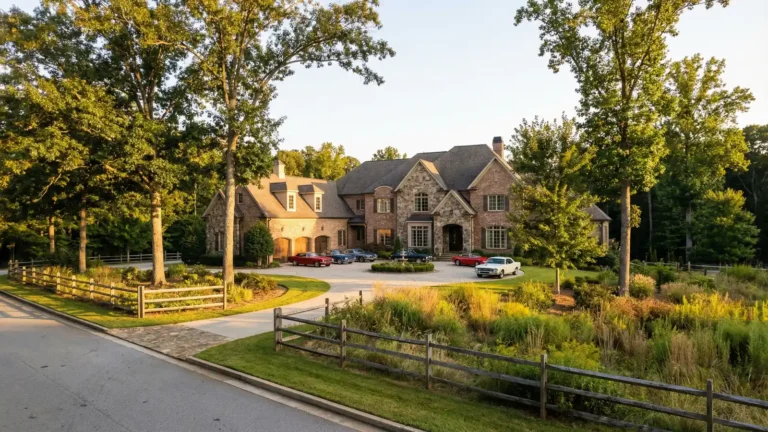
Alpharetta’s new construction market has shifted over the past five years. Available land within the city limits for large-scale single-family communities has thinned. The new construction activity in Alpharetta increasingly falls into three categories: infill communities (10 to 40 lots on repurposed land), townhome developments (higher density, lower price point, walkable locations), and estate-lot custom homes on the remaining large parcels in the northern part of the city near the Milton border.

Active new construction by price range
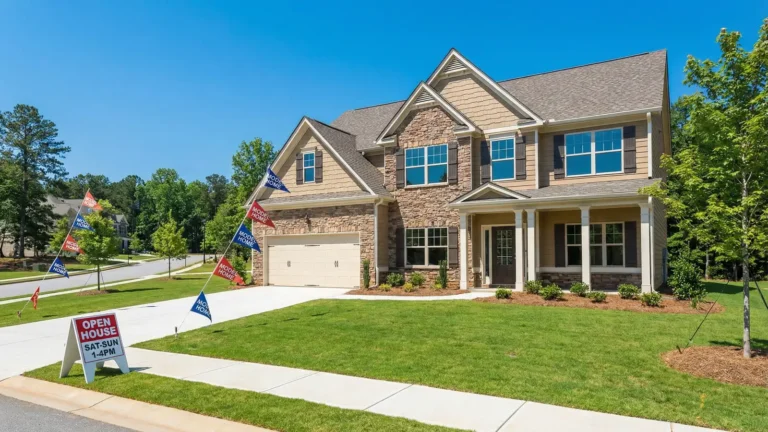
Entry-level new construction in Alpharetta starts in the mid-$400s for townhomes from builders like Toll Brothers, Pulte, and Ashton Woods. These communities target young professionals and downsizers who want the Alpharetta school zone and walkable access to Avalon or downtown without the maintenance responsibility of a single-family home on a full lot.
Single-family new construction in Alpharetta ranges from the mid-$600s (smaller lots, production builders) to $1.2M+ (custom builders on half-acre or larger lots near Milton). The sweet spot of buyer activity runs between $650K and $850K, where buyers get four to five bedrooms, 3,000 to 4,000 square feet, and a finished basement in many communities.
I walked a new community off Kimball Bridge Road last fall that had 22 lots priced from the mid-$700s. The builder released eight lots in Phase 1 and had six under contract within 30 days. That pace, 75% first-month absorption, signals strong demand in the Alpharetta infill segment. Buyers who waited for Phase 2 paid $25,000 more per lot.
For a complete walkthrough of the new construction buying process in Atlanta, the pillar guide covers contracts, inspections, builder selection, and incentive negotiation specific to metro Atlanta.
Cost of living in Alpharetta (2026 data)
Median home prices and property tax rates
The median home price in Alpharetta (all property types) crossed $575K in 2025 based on FMLS closed sales data. New construction median sits higher at approximately $725K. The price per square foot for new construction in Alpharetta averages $195 to $230, depending on builder tier and community.

Fulton County’s property tax millage rate for Alpharetta residents runs approximately 35 mills (combined county, city, school, and special district). On a home with a $575,000 fair market value, the annual property tax bill after Georgia’s homestead exemption comes to roughly $7,500 to $8,200. Georgia assesses property at 40% of fair market value for tax purposes, and the homestead exemption reduces the taxable value further for owner-occupied homes.
HOA fees in Alpharetta’s planned communities range from $75/month (basic swim-tennis neighborhoods) to $350+/month (amenity-rich communities with clubhouses, fitness centers, and staffed front gates). Avalon-area townhomes carry HOA fees in the $250 to $400/month range, reflecting the higher maintenance load of attached housing with shared amenities.
Grocery, dining, and everyday costs
Alpharetta has three Kroger locations, two Publix stores, a Whole Foods at Avalon, a Trader Joe’s on Windward Parkway, and an H Mart (Korean grocery) on Windward Parkway. Grocery costs in Alpharetta track with the broader metro Atlanta average, which runs approximately 2% below the national average according to the BLS Consumer Expenditure Survey.
Dining costs vary dramatically by district. A dinner for two at Avalon’s upscale restaurants (South City Kitchen, Bocca Lupo) runs $120 to $180 with drinks. Lunch at downtown Alpharetta’s local spots (Smokejack BBQ, Ceviche Taqueria, Rumi’s Kitchen) runs $25 to $40 for two. Alpharetta’s dining scene has depth that rivals Buckhead and Midtown in quality without the Buckhead pricing premium.
What it’s actually like to live in Alpharetta
I live and work in the north metro area, and Alpharetta is where I spend more time than any other single city. The texture of daily life here is different from what the demographic data suggests.
Morning drop-off at Cogburn Woods Elementary takes about 12 minutes from the neighborhoods west of Kimball Bridge, including the car line. The Starbucks on Windward Parkway has a drive-through line that wraps around the building by 7:15 a.m., but the one on Old Milton Parkway is manageable until 7:45. The Big Creek Greenway, which runs 8.5 miles from Windward Parkway south to Marconi Drive, fills up with joggers and dog walkers by 7 a.m. on Saturdays and stays busy until dusk. The greenway connects to Alpharetta’s broader trail network and, through extensions, to Roswell’s trail system.
Friday nights at Avalon are a scene. The green space fills with families, the restaurants have 45-minute waits by 6:30, and the parking deck hits capacity by 7. Saturday mornings at the downtown farmers market are calmer. The vendors include local produce farms, Georgia Peach baked goods, handmade soaps, and a flower vendor whose sunflowers are all over Instagram. It is a genuinely good market, not a tourist attraction pretending to be one.
Alpharetta feels suburban in the best sense. Quiet neighborhoods with sidewalks that people actually use. Kids riding bikes to the swim-tennis clubhouse. Lawn services running on predictable weekly schedules. But it also has the commercial infrastructure of a small city: six grocery stores, two urgent care clinics, three pediatric dental offices within a two-mile radius, and enough restaurant variety to eat out three nights a week for a month without repeating.
The missing pieces: Alpharetta does not have the historic walkable downtown that Roswell offers (Canton Street in Roswell is a different animal entirely). The Alpharetta downtown is newer and more intentionally designed. Alpharetta also lacks the rural character and acreage lots that make Milton distinctive. If you want land, horses, and space, Milton is three miles north and a different world.
For a side-by-side comparison, the Alpharetta vs. Milton analysis covers pricing, lot sizes, school zones, and lifestyle differences.
The honest pros and cons of living in Alpharetta
Buyers ask us for the unvarnished version, so here it is, from a team that shows homes here every week.
What Alpharetta gets right. The job base is real: the GA-400 corridor holds one of the largest concentrations of technology employers in the Southeast, and thousands of residents work within a fifteen minute drive of their kitchen. Avalon and downtown Alpharetta give the city two genuine walkable districts, which almost no other north metro suburb can claim. The school reputation draws families from across the country, and resale values have rewarded owners for holding.
What will frustrate you. Price is the first wall: entry to a detached single-family home now generally starts in the mid $500Ks, and lot sizes shrink as you approach the walkable districts. GA-400 at rush hour is the second: the express lanes help, and they cost money every single day you use them. New construction inside the city limits is scarce and sells fast, so buyers wanting new often end up comparing Alpharetta resale against new builds in Cumming, Milton, or Cherokee County. Property taxes on a median home run well into four figures annually, and the HOA fee on an amenity-rich community adds a real monthly line item.
The net. Alpharetta trades affordability for employment access, walkability, and schools. If those three drive your decision, it earns its price. If square footage per dollar drives it, the communities one exit north will make you happier. Our north Atlanta suburbs guide puts the tradeoffs side by side.
Who Alpharetta is best for
Alpharetta works for families with school-age children who want top-rated public schools without paying private school tuition. It works for tech professionals whose offices sit along the GA-400 corridor. It works for buyers who want walkable retail and dining without moving into the city of Atlanta. And it works for buyers in the $500K to $900K range who want new or newer construction in a city with established infrastructure.
Alpharetta is less ideal for buyers who want large lots (one acre or more), buyers who prioritize a lower price point (Cherokee County offers more house for the money), or buyers whose workplace is south of I-285 on the south side of Atlanta (the commute from Alpharetta to south metro is punishing).
The north Atlanta suburbs comparison guide stacks Alpharetta against Milton, Roswell, Woodstock, Canton, Cumming, Johns Creek, and Dunwoody across every metric that matters to relocating buyers.
The Alpharetta market over the next 12 months
Two factors will shape Alpharetta’s real estate market through 2026 and into 2027. The GA-400 corridor keeps the buyer pool deep: the employment base along Windward, Haynes Bridge, and Old Milton is the demand engine, and hybrid work has loosened none of it. And land scarcity inside the city limits keeps constraining new supply, which supports pricing in the existing housing stock. The new construction communities that do open in Alpharetta are smaller (15 to 40 lots versus the 150+ lot communities common in Cherokee and Forsyth counties), and they sell through faster.
Buyers entering the Alpharetta market should expect competition in the $550K to $800K range for move-in-ready resale homes and new construction. The leverage point is on the townhome side, where several new communities have enough inventory to negotiate incentives.
Questions relocating buyers ask about Alpharetta
Is Alpharetta a good place to live?
For buyers who value employment access, walkable districts, and Fulton County schools, yes, and the market agrees: demand has kept Alpharetta among the most competitive submarkets in north metro Atlanta. The honest caveat is cost. You are paying a premium against nearly every neighboring city.
Why is Alpharetta so expensive?
Jobs, land, and schools. The GA-400 tech corridor concentrates high-income employment, the city is largely built out (which caps new supply), and the school reputation keeps relocation demand steady. Scarce supply against steady demand is the whole story.
Is Alpharetta or Milton a better fit?
Different products. Alpharetta offers walkability, restaurants, and employment proximity on smaller lots. Milton offers acreage, equestrian zoning, and quiet at the cost of a longer drive to almost everything. Our Alpharetta versus Milton comparison walks through it decision by decision.
What salary does it take to buy in Alpharetta?
It depends on your down payment and debts, so treat any single number online with suspicion. As an anchor: at a $575K purchase price, most lenders want total housing costs held near a third of gross income. A consultation with a lender, or with us, replaces the internet math with your math.
Does Alpharetta have new construction left?
Yes, and it moves fast. The communities that open inside city limits are small (15 to 40 lots) and sell through quickly, which is why buyers wanting new often cross-shop Cumming, Milton, and Cherokee County. We track every active community and its remaining inventory.
Schedule a consultation with Velocity Real Estate to discuss Alpharetta’s current market. We maintain live data on every active community, recent closed sales, and builder incentive packages in the area. Call 678-278-9798 or book online.
Written by Itanza Johnson, Managing Broker at Velocity Real Estate. Georgia Tech industrial engineering graduate. Former Division Sales Manager at John Wieland Homes and VP of Sales and Marketing at Stonecrest Homes. $600M+ in cumulative residential sales across metro Atlanta.
Thinking about buying or selling in metro Atlanta?
Velocity Real Estate has closed more than $600M in new construction and resale across 19 metro Atlanta neighborhoods. Start with a conversation, not a commitment.
Book a consultationCall 678-278-9798