North Atlanta suburbs: comparison guide

North Atlanta suburbs: comparison guide
The call came on a Thursday afternoon last October. A product manager at a fintech company in Midtown had accepted a hybrid schedule (three days in office, two remote) and wanted to move his family out of their Brookhaven rental. Two kids, ages four and seven. A golden retriever. A budget of $650,000. And a question I hear three or four times a week: “Where should we look in north Atlanta?”
He had already done some research. He could name Alpharetta, Roswell, and Johns Creek. A coworker had mentioned Woodstock. His wife’s college friend lived in Cumming and loved it. He had a spreadsheet with median home prices and school ratings pulled from Zillow and Niche. The spreadsheet was accurate enough to be dangerous, because it was missing the three variables that actually determine whether a north Atlanta suburb works for a specific family: commute tolerance in real traffic (not Google Maps at 10 a.m. on a Sunday), daily-life rhythm (walkable downtown vs. cul-de-sac quiet), and new construction availability at their price point.
This guide is the conversation I have with buyers before the first showing. It covers every major north Atlanta suburb, compares them on the factors that matter past the first year of ownership, and links to detailed community guides for each city. If you already know which suburb interests you, jump to that section. If you are starting from scratch, read the comparison framework first.
Quick comparison matrix for north Atlanta suburbs
Before the city-by-city profiles, here is the high-level view. These numbers reflect Q4 2025 data from GAMLS and FMLS. Commute times represent morning rush hour (7:00 to 8:30 a.m.) to Midtown Atlanta.

| Suburb | Median price | Avg DOM | Commute to Midtown | New construction inventory | Top school rating |
|---|---|---|---|---|---|
| Alpharetta | $520K | 16 days | 45-55 min | Moderate | 8-9/10 |
| Milton | $750K | 22 days | 50-60 min | Limited (luxury) | 9-10/10 |
| Roswell | $535K | 18 days | 40-50 min | Limited (infill) | 8-9/10 |
| Woodstock | $430K | 15 days | 55-70 min | High | 7-8/10 |
| Canton | $395K | 19 days | 60-75 min | Very high | 7-8/10 |
| Cumming | $465K | 17 days | 55-65 min | High | 8-9/10 |
| Johns Creek | $550K | 20 days | 50-60 min | Very limited | 9-10/10 |
| Dunwoody | $490K | 14 days | 25-35 min | Limited | 8/10 |
| Holly Springs | $410K | 14 days | 55-65 min | High | 7-8/10 |
| Sandy Springs | $510K | 15 days | 20-30 min | Moderate (condos/TH) | 7-8/10 |
Those numbers tell part of the story. The rest requires understanding what each suburb actually feels like at 7:30 on a Tuesday morning.
How to read the commute column
Every commute time listed above assumes GA-400 southbound or I-575 to I-75 southbound during the 7:00 to 8:30 a.m. window. The ranges are wide for a reason. A five-minute difference in departure time between 7:10 and 7:15 a.m. on GA-400 can add 12 minutes to the trip. Rain adds 15 to 20%. A fender-bender at the Holcomb Bridge exit adds 25 minutes.
Hybrid workers who commute two or three days per week tolerate longer commutes because the pain is not daily. For five-day-a-week commuters, anything over 50 minutes each way generates regret by month eight. I have tracked this pattern across hundreds of clients over the years. The commute dissatisfaction threshold is real, and it shows up in resale timing. Buyers who exceed their commute tolerance sell within three to four years at a rate almost double those who stay within it.
Schools ranking by suburb
Fulton County Schools serves Alpharetta, Milton, Roswell, Johns Creek, and Sandy Springs. Cherokee County Schools serves Woodstock, Canton, and Holly Springs. Forsyth County Schools serves Cumming. DeKalb County Schools serves Dunwoody.
The Fulton and Forsyth districts consistently rank in the top five in Georgia for standardized test performance. Cherokee has invested heavily in facilities over the past decade and scores above the state average but below Fulton and Forsyth on AP participation and SAT medians. DeKalb is mixed, though Dunwoody’s specific cluster (Dunwoody High School) performs well above the district average.
School ratings drive real estate prices in north Atlanta more than any other single variable. A home in the Cambridge High School zone (Milton) commands a 10 to 15% premium over a comparable home in a lower-rated zone two miles away. That premium is baked into the listing price, not negotiable.
New construction availability by suburb
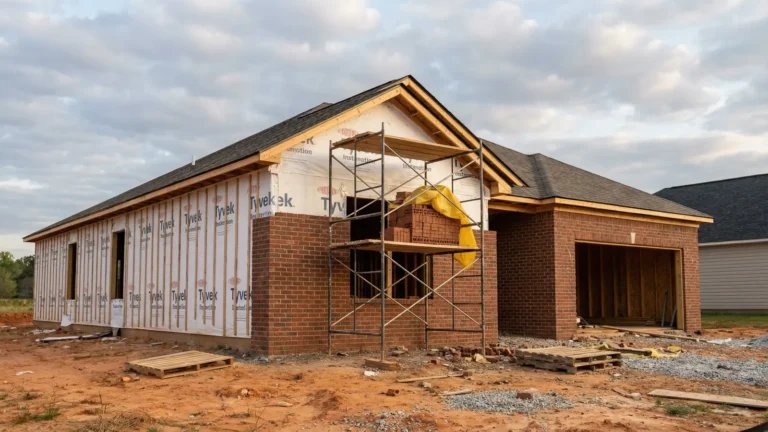
New construction inventory in north Atlanta follows a geographic pattern: the farther from downtown Atlanta, the more available land for new communities. Alpharetta, Roswell, Johns Creek, and Dunwoody are largely built out. New construction in these cities consists of infill projects with 20 to 80 homes, priced at a premium for the location.
Woodstock, Canton, Holly Springs, and Cumming have active pipelines with multiple communities offering 100 to 400+ lots. These suburbs attract national production builders (Pulte, Lennar, Meritage, Smith Douglas, DR Horton) alongside regional builders (Ashton Woods, David Weekley, Peachtree Residential).
Milton’s new construction is concentrated in the luxury segment ($800K and above), with semi-custom and custom builders on larger lots.
Alpharetta: the tech corridor suburb
Alpharetta anchors the north Fulton tech and business corridor along GA-400. Companies including Microsoft, ADP, Verizon, LexisNexis, and a growing cluster of fintech startups maintain offices between Windward Parkway and Old Milton Parkway. That employment base drives demand from both local buyers and relocation transfers.
The Avalon mixed-use district is Alpharetta’s centerpiece. Avalon combines retail, dining, residential, a hotel, and a movie theater in a walkable, open-air format. On weekends, Avalon draws traffic from across north Atlanta. For residents living within a mile of Avalon, the walkable access adds measurable value: homes in the immediate Avalon area sell at a 6 to 9% premium over homes at comparable distance from other Alpharetta retail centers.
Downtown Alpharetta has developed its own restaurant and boutique scene along South Main Street. The Alpha Loop, a planned greenway circling the downtown area, is adding connectivity between neighborhoods and the city center.
Alpharetta’s schools feed through Fulton County, with Alpharetta High School and Milton High School as the two primary high school destinations (Milton High is located in Alpharetta despite its name). Both rate 8 or above on GreatSchools.
New construction in Alpharetta is moderately available in the $500K to $750K range, concentrated along the northern edge of the city near the Forsyth County line. Communities here offer production-builder homes with standard lot sizes. For luxury new construction, Milton picks up where Alpharetta’s inventory ends.
Read the full Alpharetta community guide for school zone breakdowns, commute data, and neighborhood-level pricing.
Milton: luxury and equestrian living
Milton occupies the northernmost portion of Fulton County, bordered by Alpharetta to the south and Cherokee and Forsyth counties to the north and east. The city incorporated in 2006, partly to preserve the rural and equestrian character that development pressure was threatening.
The defining feature of Milton is lot size. Minimum lot sizes in many Milton neighborhoods start at one acre, and estate-zoned areas require two acres or more. This zoning creates a different kind of suburban experience. There are no shopping centers in Milton. There is no downtown district. The nearest grocery store for many Milton residents is in Alpharetta or Crabapple (a historic crossroads community within Milton that has developed a small restaurant cluster).
Cambridge High School, the newest high school in Fulton County, serves Milton. Cambridge opened in 2017 and immediately began posting test scores in the top 5% statewide. The Cambridge zone is the primary driver of Milton’s real estate premium.
Median home prices in Milton run $750,000, reflecting the combination of large lots, new luxury construction, and the Cambridge school zone. The price floor for detached single-family in Milton starts around $600K and rises quickly. Active luxury new construction above $1M is available from builders including Toll Brothers, Ashton Woods, and several custom builders.
Milton is the right choice for buyers who prioritize space, privacy, top-rated schools, and are comfortable with a car-dependent lifestyle. It is the wrong choice for buyers who want walkable dining or a short commute.
Read the full Milton community guide for the equestrian lifestyle, Cambridge High School zone details, and luxury builder comparisons.
Roswell: historic charm and walkability
Roswell is the only north Atlanta suburb where you can walk from a residential neighborhood to a genuine downtown dining district on a regular basis. Canton Street, the city’s quarter-mile restaurant row, draws from the surrounding neighborhoods and from across north Atlanta.
The city splits into two real estate profiles. West Roswell (the historic core, Canton Street, and the Chattahoochee River neighborhoods) offers older homes on irregular lots with mature trees, walkability, and river access. East Roswell (the GA-400 corridor along Holcomb Bridge Road) offers newer subdivisions, more uniform lots, and faster highway access.
Median price: $535,000. Roswell runs slightly above Alpharetta in median price but below Milton. The spread between east and west Roswell is significant, with west Roswell commanding a walkability premium of 8 to 12% on comparable homes.
Two high schools serve Roswell: Roswell High School (with a long-running IB program) and Centennial High School (known for STEM). Both feed from Fulton County Schools.
New construction in Roswell is limited to infill projects. The land is largely built out. Buyers seeking new construction within Roswell typically find townhome communities or small detached home communities of 20 to 60 units. Active infill projects in 2025 started in the mid-$600Ks.
Roswell is the right choice for buyers who want walkable dining, river access, neighborhood character, and are willing to accept older housing stock or a premium for renovation-quality homes.
Read the full Roswell community guide for Canton Street details, east vs. west Roswell comparison, and school zone analysis.
Woodstock: the up-and-coming value play
Woodstock is the suburb that Alpharetta was 15 years ago. That comparison gets used a lot in real estate circles, and it holds up when you look at the trajectory: downtown investment, new restaurant openings, greenway development, and a steady influx of young families priced out of Fulton County suburbs.
Downtown Woodstock has undergone a transformation over the past decade. Breweries, chef-driven restaurants, a refurbished movie theater, and a growing retail cluster along Main Street give Woodstock a walkable downtown core that did not exist in 2015. The Woodstock Greenway connects neighborhoods to the downtown area along a paved trail, with expansion plans adding mileage annually.
Cherokee County Schools serve Woodstock. Woodstock High School and Etowah High School are the two primary feeders. Both rate 7 to 8 on GreatSchools, which is below Fulton County’s top schools but above the state average.
The value proposition in Woodstock is price. At a $430,000 median, Woodstock offers roughly 20% more square footage per dollar than Roswell or Alpharetta. New construction is widely available, with multiple communities offering production-builder homes from the low $400Ks to the $600Ks. National builders including Meritage, Lennar, and Pulte maintain active communities.
The commute from Woodstock to Midtown runs 55 to 70 minutes via I-575 to I-75. That is the longest in the comparison set, and it is the primary reason Woodstock prices remain below Fulton County suburbs.
Read the full Woodstock community guide for downtown dining details, new construction community profiles, and Cherokee County school analysis.
Canton: space and mountain-adjacent living
Canton sits at the northern edge of the metro Atlanta commute belt. From Canton, you are 20 minutes from the Blue Ridge foothills. You are also 60 to 75 minutes from Midtown Atlanta during morning rush hour. That geographic position defines Canton’s buyer profile: remote workers, outdoor enthusiasts, and families who prioritize land and space over commute convenience.
The median home price in Canton is $395,000. That number gets attention from buyers accustomed to Alpharetta and Roswell pricing. At Canton’s median, you can buy a new construction four-bedroom home on a quarter-acre lot. At Alpharetta’s median, the same budget gets you a 1990s-era three-bedroom that needs a kitchen renovation.
Canton’s downtown area has developed a small arts and dining district along Main Street. The draw is not the volume of options (Canton has maybe a dozen restaurants worth visiting) but the quality of life that surrounds it: Etowah River access, proximity to Lake Allatoona, and 15-minute drives to hiking trailheads.
Cherokee County Schools serve Canton. Cherokee High School and Creekview High School are the primary feeders. Both perform above the state average.
New construction is abundant. Canton has the highest new construction inventory of any suburb in this guide. Builders are active across price points from the $300Ks (townhomes and entry-level detached) to the $600Ks (larger lots with premium floor plans). I drove through one Canton community last fall on a Wednesday afternoon, and the model home parking lot had six cars. The sales office had a line. Absorption rates in several Canton communities hit 3.5 to 4.2 homes per month in 2025, which is production-builder pace.
Canton is the right choice for buyers who work remotely (or tolerate a long commute), want new construction at metro Atlanta’s lowest price points, and value outdoor access over walkable urban amenities.
Read the full Canton community guide for outdoor recreation details, new construction builders, and commute strategies.
Cumming and Forsyth County: schools and affordability
Cumming and surrounding Forsyth County occupy the northeast corner of the north Atlanta comparison set. Forsyth County Schools rank as one of the top three school districts in Georgia, year after year. That ranking drives a specific buyer profile: families with school-age children who are willing to accept a longer commute for top-tier public education.
Median home price in Cumming runs $465,000. The inventory splits between established subdivisions from the 2000s and a steady pipeline of new construction communities along GA-400 north and the Ronald Reagan Boulevard corridor. Builders active in Forsyth County include Toll Brothers, Ashton Woods, Pulte, David Weekley, and Smith Douglas.
The Halcyon mixed-use development in Forsyth County has added a walkable dining and retail destination. Halcyon is smaller than Avalon in Alpharetta but gives Forsyth County residents an alternative to the strip-mall commercial corridors that dominate the area.
Commute from Cumming to Midtown: 55 to 65 minutes via GA-400. The Forsyth County section of 400 is less congested than the Fulton County section, so the drive time does not scale linearly with distance. A buyer moving from south Alpharetta to north Cumming adds only 10 minutes of commute despite moving 12 miles farther north.
Lake Lanier is 15 minutes from most Cumming neighborhoods. The lake access is a genuine differentiator for families who want water recreation without a long drive.
Johns Creek: established families and top schools
Johns Creek incorporated in 2006 and has since developed a reputation as one of north Atlanta’s most established family suburbs. The city is largely built out, with limited new construction available. Median home prices run $550,000, reflecting the combination of Fulton County Schools (Northview High School and Johns Creek High School, both rated 9 or above), quiet established neighborhoods, and proximity to the GA-141/GA-400 interchange.
Johns Creek draws a large and diverse population, with one of the highest concentrations of Korean and South Asian families in metro Atlanta. That diversity shows up in the restaurant scene (Duluth Highway and McGinnis Ferry Road host dozens of Korean, Indian, and Chinese restaurants) and in the community programming.
The Autrey Mill Nature Preserve provides greenway access within the city. The Chattahoochee River forms the western boundary. But Johns Creek is not a walkable suburb in the same way Roswell or Alpharetta are. There is no traditional downtown district. The city’s commercial areas are strip-center and shopping-center format.
Johns Creek is the right choice for buyers who want top schools, an established neighborhood with mature landscaping, cultural diversity, and are comfortable with a car-dependent suburban format.
Dunwoody: close-in convenience and walkability
Dunwoody sits inside I-285, making it the closest suburb in this comparison to Midtown and Buckhead employment centers. Commute times of 25 to 35 minutes (and MARTA rail access at Dunwoody Station) are the primary draw.
Median home price: $490,000. The inventory is older (1970s through 1990s construction dominates), though pockets of townhome and mixed-use development have added modern options near the Perimeter Center area. The Georgetown neighborhood has a walkable village with restaurants and shops.
DeKalb County Schools serve Dunwoody. Dunwoody High School performs well above the DeKalb County average but below the Fulton County and Forsyth County top performers. For buyers who want Dunwoody’s commute advantage and top schools, private school options (including several in the Sandy Springs and Buckhead corridor) fill the gap.
Dunwoody is the right choice for buyers who prioritize commute above all else and want to stay inside the Perimeter.
Which suburb is right for which buyer type
After hundreds of buyer consultations across these suburbs, patterns emerge. The suburb that works best depends on which variable the buyer refuses to compromise on.

Best suburb for first-time buyers in north Atlanta
Woodstock, Canton, and Holly Springs offer the most accessible price points for first-time buyers. New construction in these Cherokee County suburbs starts in the $300Ks for townhomes and low $400Ks for detached homes. Georgia Dream down payment assistance programs apply in these price ranges. For first-time buyers who prioritize Fulton County schools, east Roswell townhomes and south Alpharetta condos provide entry points in the $350K to $450K range.
Read the full first-time home buyer guide for metro Atlanta for pre-approval steps, DPA programs, and budget planning.
Best suburb for families prioritizing schools
Milton (Cambridge High School zone) and Johns Creek (Northview High School zone) top the school rankings. Cumming’s Forsyth County schools come close. The premium for top-rated school zones in these cities runs 10 to 15% over comparable homes in lower-rated zones, so families should factor the school premium into their budget from the start.
Best suburb for remote workers
Canton and Cumming offer the best combination of price, space, and lifestyle amenities for buyers who commute zero to two days per week. Large lots, new construction availability, outdoor recreation access, and median prices $100K to $150K below Alpharetta and Roswell make these suburbs increasingly popular with the remote and hybrid workforce.
Best suburb for luxury buyers
Milton is the primary luxury market in north Atlanta. Estate lots, custom builders, equestrian zoning, and the Cambridge school zone create a combination that does not exist elsewhere in the north metro. For luxury buyers who want walkable lifestyle amenities, Alpharetta’s Avalon-adjacent neighborhoods and west Roswell’s Canton Street area offer alternatives with a different character.
How to narrow from 10 suburbs to two or three
The comparison matrix helps you eliminate suburbs that fail on your non-negotiable variable. The city-by-city profiles help you compare what remains. The final narrowing requires visiting, and not on a Saturday afternoon. Visit on a Tuesday morning. Drive the actual commute at 7:15 a.m. Drop by the school at pickup time. Eat lunch at the downtown restaurant. See what the suburb feels like when it is not performing for visitors.
I tell every buyer the same thing: your spreadsheet gets you to three suburbs. Your Tuesday morning visit gets you to one.
The most common mistake I see in suburb selection is optimizing for the wrong variable. Buyers who rank schools first but commute second often end up resenting the drive within a year. Buyers who rank price first and schools second often move again when their oldest reaches middle school. The variable that matters most is the one you will care about 36 months from now, not the one that excites you during the search.
—
Download the North Atlanta Suburb Comparison Workbook
The Velocity Real Estate North Atlanta Suburb Comparison Workbook is 15 pages of structured comparison tools. It includes a weighted decision matrix you can customize with your own priorities, school zone maps for all 10 suburbs, a commute calculator with time-of-day adjustments, new construction availability by price range, and a neighborhood visit checklist. Built for buyers who want to compare systematically.
Enter your name and email to download the workbook.
GHL tag: Lead: North Atlanta Suburb Comparison Workbook
—
What comes after the suburb decision
Once you have narrowed to one or two suburbs, the next phase is neighborhood-level research. Every suburb in this guide has internal variation. East Alpharetta and west Alpharetta are different markets. North Cumming and south Cumming serve different school zones. The neighborhood guides on this site break each suburb into its component parts.
For buyers focused on new construction, the Atlanta home builders guide covers how to evaluate builders, compare quality tiers, and understand the incentive picture across price ranges.
Schedule a suburb consultation at 678-278-9798 or book online. We run a 90-minute initial meeting that includes a suburb comparison review, school zone mapping, commute analysis, and new construction inventory briefing.
—
Written by Itanza Johnson, Managing Broker at Velocity Real Estate. Georgia Tech industrial engineering graduate. Former Division Sales Manager at John Wieland Homes and VP of Sales and Marketing at Stonecrest Homes. $600M+ in cumulative residential sales across metro Atlanta.
Thinking about buying or selling in metro Atlanta?
Velocity Real Estate has closed more than $600M in new construction and resale across 19 metro Atlanta neighborhoods. Start with a conversation, not a commitment.
Book a consultationCall 678-278-9798