Close-out community management for builders

Close-out community management for builders
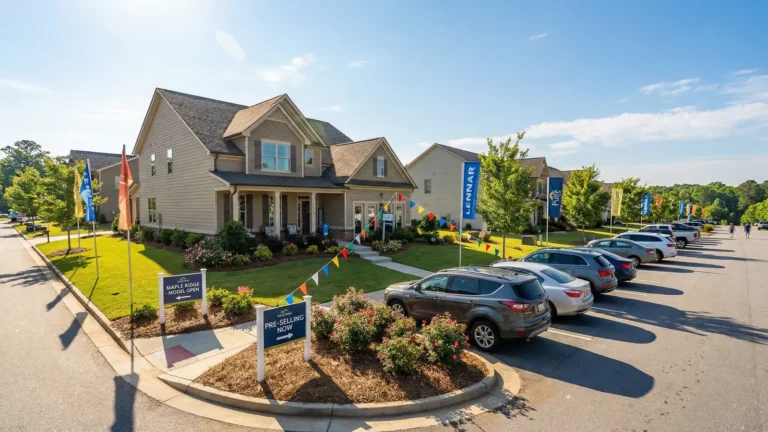
Close-out community management for builders is the operational phase nobody plans for carefully enough. The first 80% of a community sells with momentum, marketing, and the natural excitement of a new development. The last 20% sells against declining foot traffic, stale listing inventory, and the perception that the best lots and positions are gone. I’ve managed close-out phases for communities in Forsyth, Cherokee, and north Fulton counties, and the pattern repeats: the builder assumes the same approach that sold the first 60 homes will sell the last 15. It won’t.
The last 20% of inventory requires a fundamentally different sales strategy. Pricing changes. Incentive structures escalate. Marketing shifts from community awareness to inventory-specific promotion. And the timeline pressure increases, because every unsold home past the projected sellout date costs the builder $3,000 to $8,000 per month in carrying costs per unit.
What you need before you start
Before developing a close-out strategy, gather three data sets. First, a complete inventory of remaining lots and specs: lot numbers, positions, backing conditions, plan assignments, construction status, and any lot-specific issues (backs to road, irregular shape, proximity to amenities or nuisances). Second, a full competitive analysis of the submarket updated within the past 30 days, including any new communities that opened since your last review. Third, a carrying cost calculation per unit per month, including land carry, interest, insurance, HOA subsidies, model home maintenance, and onsite agent coverage costs.
That carrying cost number is the clock. It tells the builder exactly what each month of extended sellout costs and frames every incentive decision as a math problem, not a negotiation.
Why the last 20% is the hardest
Three factors converge during close-out that didn’t exist during active selling.
Selection diminishes. The best lots (cul-de-sac positions, premium views, larger homesites) sold early. What remains are the lots buyers passed over: those backing to roads, sitting near the entrance, or positioned next to community infrastructure. These lots need targeted pricing or enhanced incentive packages to overcome their positioning disadvantage.
Marketing fatigue sets in. The community has been advertised for 12 to 18 months. The buyers who were going to find it through Google, Zillow, or drive-by signage have already found it. The remaining buyer pool is either late-entering the market or has a specific objection that prevented an earlier decision.
Perception shifts. Realtors and buyers notice when a community has been open for a long time with remaining inventory. The question shifts from “What’s available?” to “What’s wrong with the ones that are left?” That perception requires proactive management through messaging, incentive positioning, and realtor communication.
The close-out pricing strategy
Across the communities I’ve managed through close-out, the pricing approach follows a three-tier escalation.
Tier 1: strategic lot premium adjustments (months 1 through 2)
Before touching base prices, adjust lot premiums. Lots that haven’t sold likely carry premiums that don’t reflect their actual market position. A $15,000 lot premium on a homesite backing to a retention pond may have been aspirational at launch. Twelve months later, the data says it should be $3,000. Reduce lot premiums on the specific lots that haven’t moved. This creates an effective price reduction without altering the base price that affects recorded sale prices and appraisals.
At one community in Canton, I reduced lot premiums on seven remaining lots by an average of $11,400. Five of those seven sold within 90 days. The base price held, which protected the appraisal environment for the 48 homes that had already closed.
Tier 2: enhanced incentive packages (months 2 through 4)
If lot premium adjustments don’t move inventory fast enough, escalate incentives. Close-out incentives are larger than active-selling incentives because the carrying cost math justifies them. If a spec home costs the builder $5,200 per month in carrying costs and an additional $8,000 incentive (on top of the standard package) closes the sale three months sooner, the builder saves $15,600 in carry while spending $8,000. The net benefit is $7,600.
Close-out incentive options include increased closing cost credits ($12,000 to $20,000, depending on price point), rate buydowns covering the full loan term (2-1 buydowns or permanent rate reductions), design center credits on completed specs (the cost to the builder is wholesale, but the perceived value to the buyer is retail), and appliance or technology packages that add perceived value at low incremental cost.
The builder incentive structuring article covers how to structure these packages to protect appraisal values while maximizing buyer impact.
Tier 3: base price reduction (months 4+)
If lots remain after four months of premium adjustments and enhanced incentives, base price reduction becomes necessary. At this point, the carrying cost calculation makes the case. A builder sitting on eight unsold specs at $5,200 per month carrying cost each is bleeding $41,600 per month. A $15,000 base price reduction that accelerates sellout by six months saves $249,600 in carrying costs while costing $120,000 in price concessions. The net savings is $129,600.
Base price reductions during close-out should be announced, not discovered. Realtors and buyers should know the community is in close-out pricing. Position it as a deliberate strategy, not desperation. “Final homes at close-out pricing” communicates controlled intent. Quietly reducing prices without announcement creates confusion and erodes trust.
Realtor bonus programs during close-out
Realtor engagement accelerates during close-out because the commission bonus can be meaningful enough to drive agent behavior. Standard co-op commission in metro Atlanta new construction is 2.5% to 3%. During close-out, adding a $2,000 to $5,000 bonus per contract for the referring agent creates urgency in the realtor channel.
Communicate the bonus directly. Send an email to every agent who has shown the community in the past 12 months (you have this data from your registration records). Send a separate email to the top 100 producing agents in the submarket. Include specific inventory (lot numbers, plan names, current pricing, the bonus amount) and a timeline (“Bonus available through [date] or until close-out is complete”).
In one Forsyth County close-out, I offered a $3,500 realtor bonus on the remaining nine units. Four of those nine sold through realtor referrals within 45 days. The $14,000 in bonuses paid accelerated the sellout by an estimated 2.5 months, saving the builder roughly $117,000 in carrying costs.
Standing inventory marketing
Close-out marketing shifts from community-level awareness to unit-level promotion. Each remaining home needs its own marketing package: professional photography of the actual home (not a rendering), a virtual tour if the home is complete, a detailed spec sheet, and a price sheet showing the all-in cost including any incentive packages.
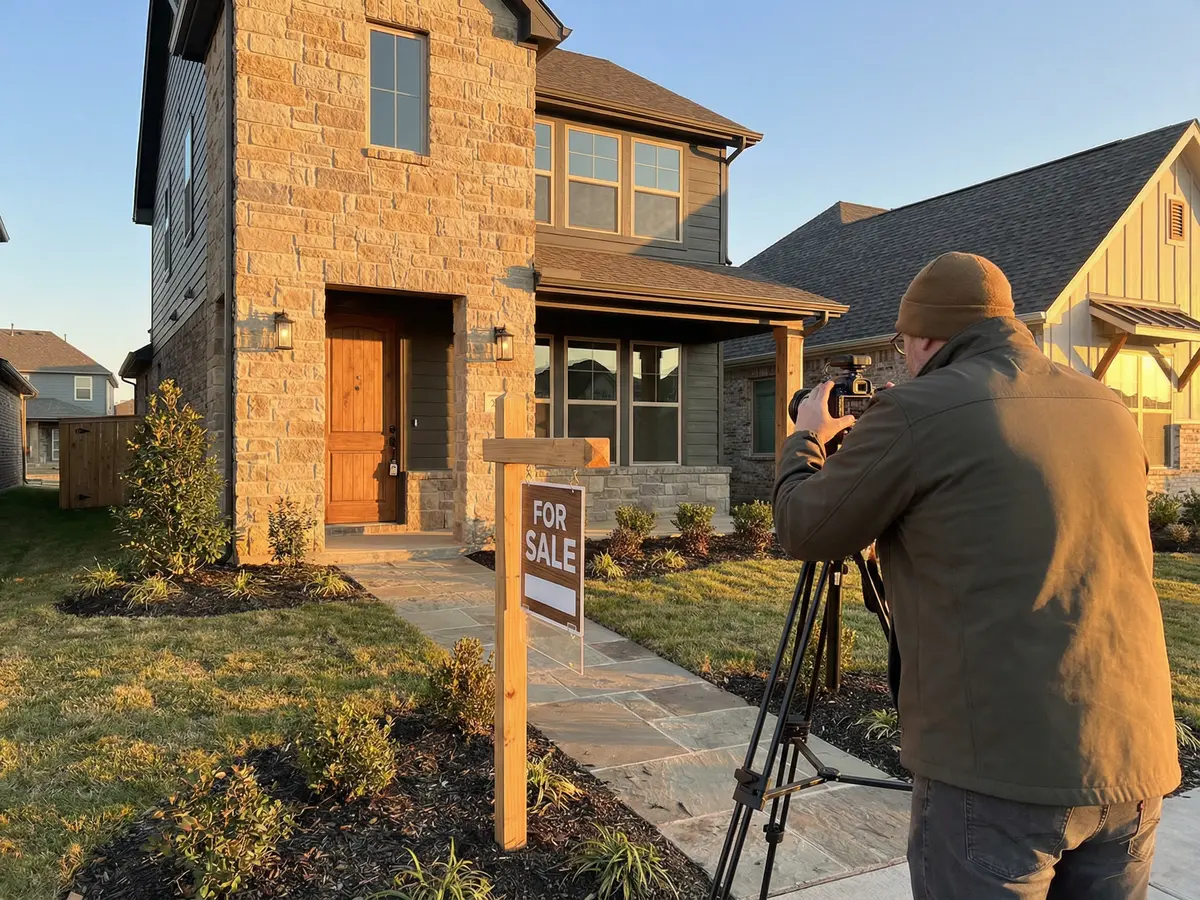
List each spec individually on GAMLS and FMLS with unique MLS entries. A community listing showing “homes from the $400s” does not generate the same engagement as an individual listing showing “4BR/3BA at 123 Oak Street, 2,847 SF, $472,900 with $15,000 closing cost credit.” Individual listings syndicate to Zillow and Realtor.com as distinct properties, which multiplies the community’s visibility during the phase when traffic naturally declines.
Social media during close-out should feature specific homes, not the community. “Only 7 homes remain” creates urgency. Individual home spotlights with pricing and incentive details generate direct inquiries.
Reducing carrying costs during close-out
While working to sell the remaining inventory, simultaneously reduce carrying costs where possible. Convert the model home to a spec for sale once the community drops below 10 remaining units (maintain a temporary sales office in one of the specs or a trailer). Reduce onsite coverage hours to match actual traffic patterns. If weekend traffic has dropped to four to six groups, full-time weekday coverage may not be justified. Renegotiate landscape maintenance and HOA subsidy schedules.
Every dollar saved in carrying costs during close-out drops directly to the builder’s bottom line on the project.
Download: close-out phase strategy checklist {#downloadable}
The Close-Out Phase Strategy Checklist is a two-page document covering the three-tier pricing escalation, realtor bonus program setup, standing inventory marketing tasks, and carrying cost reduction steps. Each item includes a timeline, responsible party, and completion checkbox.
Enter your name and email to download the checklist.
[Download the Close-Out Phase Strategy Checklist]
Where this connects
Close-out management is one phase within the broader onsite sales management for builders system. If your community is approaching close-out or has been in close-out longer than planned, the first step is an inventory assessment and carrying cost analysis. The absorption rate optimization article covers how to diagnose whether slowing pace is a market condition or an operational issue. Schedule a builder consultation to evaluate your close-out strategy.
—
Written by Itanza Johnson, Managing Broker at Velocity Real Estate. Georgia Tech industrial engineering graduate. Former Division Sales Manager at John Wieland Homes and VP of Sales and Marketing at Stonecrest Homes. $600M+ in cumulative residential sales across metro Atlanta.
Thinking about buying or selling in metro Atlanta?
Velocity Real Estate has closed more than $600M in new construction and resale across 19 metro Atlanta neighborhoods. Start with a conversation, not a commitment.
Book a consultationCall 678-278-9798