

Affordability in Atlanta suburbs: priced out in 2026?

Affordability in Atlanta suburbs: priced out in 2026?
Affordability in Atlanta suburbs has shifted faster than most buyers realize. A household earning $120,000 per year could comfortably qualify for the median-priced home in Alpharetta in 2020. That same household, at the same income, falls $47,000 short of qualifying for the median-priced new construction home in Alpharetta in 2026. The house did not change. The rates changed, and the prices followed.
The priced out conversation is the one I have most often with buyers right now. They come in with a target suburb, a budget range, and a list of communities they found on Zillow. Within 20 minutes of running the numbers, about 40% of them discover that their target suburb no longer fits their financial profile. The question is not whether they are priced out. The question is what they do next.
The affordability math: income-to-price ratios by suburb
I built the table below using Q4 2025 median new construction prices (from FMLS and GAMLS closed data), current 30-year fixed mortgage rates at 6.5%, 10% down payment, and standard debt-to-income qualifying ratios at 43%. The “required household income” column shows what a buyer needs to earn annually to qualify for the median-priced new construction home in each suburb, assuming no other significant debt.

| Suburb | Median new construction price | Required household income | Median household income (Census) | Gap |
|---|---|---|---|---|
| Milton | $785,000 | $198,000 | $152,000 | -$46,000 |
| Alpharetta | $625,000 | $158,000 | $118,000 | -$40,000 |
| Johns Creek | $610,000 | $154,000 | $127,000 | -$27,000 |
| Roswell | $585,000 | $148,000 | $112,000 | -$36,000 |
| Dunwoody | $560,000 | $142,000 | $105,000 | -$37,000 |
| Woodstock | $495,000 | $125,000 | $96,000 | -$29,000 |
| Holly Springs | $485,000 | $123,000 | $94,000 | -$29,000 |
| Canton | $445,000 | $113,000 | $88,000 | -$25,000 |
| Dacula | $435,000 | $110,000 | $92,000 | -$18,000 |
| Tucker | $475,000 | $120,000 | $82,000 | -$38,000 |
Every suburb on this list has a negative gap, meaning the median household income falls below the income required to buy the median new construction home. That was not the case in 2020, when rates sat near 3% and five of these suburbs had positive or neutral gaps.
The gap is smallest in Dacula ($18,000), Canton ($25,000), and Johns Creek ($27,000, where higher local incomes partially offset higher prices). The gap is widest in Milton ($46,000) and Alpharetta ($40,000), where prices have appreciated fastest. For detailed home affordability strategies, see our home affordability guide.
How builder incentives change the math
The table above uses sticker prices. Builders know about the affordability gap. Their response: incentive packages designed to bridge it.
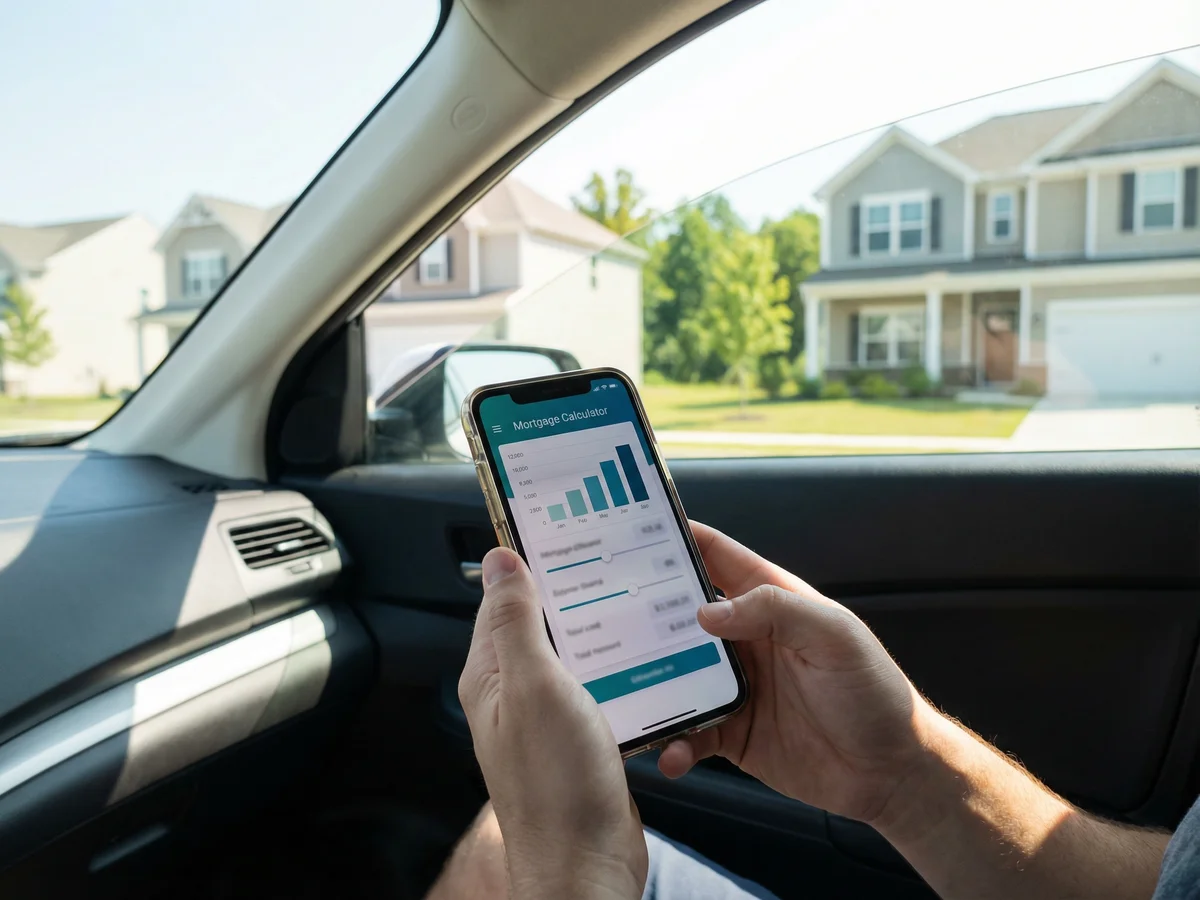
A $14,000 closing cost credit does not change the purchase price, but it reduces the cash a buyer needs at closing. A 2-1 rate buydown (where the builder pays to reduce the buyer’s rate by 2% in year one and 1% in year two) drops the monthly payment by $350 to $450 in the first year. That buydown can close the qualifying gap for buyers who are close to the threshold.
I ran the numbers last month for a couple targeting Holly Springs. Their household income: $108,000. At the median price of $485,000 and a 6.5% rate, they fell $15,000 short on qualifying income. The builder they were considering offered a 2-1 buydown plus $10,000 in closing cost credits. The buydown dropped their qualifying rate to 4.5% for year one. At that rate, they qualified with $4,000 of room to spare.
The catch (and buyers need to understand this) is that the buydown is temporary. Year three reverts to the full rate. If their income does not grow by then, the payment jumps. I make sure every buyer I work with models the year-three payment before signing the contract. The incentive gets you in the door. Your income trajectory determines whether you stay comfortable.
The affordability migration: where priced-out buyers are going
The movement pattern is clear in the data. Buyers priced out of Alpharetta move to Holly Springs or Canton. Buyers priced out of Johns Creek move to Dacula or Suwanee’s outer edges. Buyers priced out of Roswell move to Woodstock or Canton. Buyers priced out of Buckhead and Sandy Springs move to Tucker or Smyrna.
This migration follows a predictable formula: the buyer identifies the next suburb outward along their commute corridor where the median price drops by $80,000 to $120,000. That price difference, in monthly payment terms, translates to $500 to $750 per month at current rates. For a household earning $110,000, that is the difference between stretching and breathing.
The suburbs absorbing the most affordability migration in 2026 are Holly Springs, Dacula, and Tucker. Holly Springs and Dacula are absorbing buyers from the north Fulton and Gwinnett corridors, respectively. Tucker is absorbing buyers from the Brookhaven, Decatur, and Emory corridor who want proximity without the $600,000+ entry point. Read more about why these three markets are accelerating in the fastest growing suburbs analysis.
Three suburbs most buyers overlook
Here is where my local knowledge diverges from what shows up on Zillow’s trending searches.
Dacula consistently gets skipped by buyers who assume Gwinnett County means Suwanee or Peachtree Corners. Dacula’s school cluster has improved significantly over the past five years, and the median new construction price of $435,000 is $175,000 below Johns Creek for a product that is comparable in square footage and finishes. The Dacula growth corridor has more runway than most buyers expect.
Tucker gets overlooked because it does not have the master-planned community feel of a Woodstock or Holly Springs. But Tucker’s proximity to employment centers (Emory, CDC, Midtown, Buckhead) is unmatched on this list. A $475,000 townhome in Tucker puts you 20 minutes from Midtown without touching GA-400.
Canton gets dismissed as “too far north.” For buyers who work remotely three or more days per week (and that describes a growing share of the metro Atlanta workforce), Canton’s pricing advantage of $140,000 to $180,000 over Roswell and Alpharetta is significant enough to reconsider the commute math entirely.
The question behind the question
When a buyer tells me they are priced out, they are usually asking something deeper. They are asking whether their financial reality has permanently separated them from the neighborhood they imagined living in. Sometimes the answer is yes, at least at this interest rate environment. More often, the answer is that the target just needs to shift.
The suburbs where families build strong communities, where schools perform well, where property values appreciate, those suburbs are not limited to the five names everyone knows. The data shows that clearly. For a broader look at how these affordability dynamics connect to pricing trends, see our suburbs comparison guide and the metro Atlanta real estate market report.
Affordability is a math problem. Math problems have solutions. The solution is not always the suburb you started with, but it is often a suburb you had not considered yet.
Download the Atlanta suburb affordability comparison sheet
The Atlanta Suburb Affordability Comparison Sheet is a one-page printable with the full affordability table (15 suburbs, not just the 10 shown above), income qualification thresholds at three different down payment levels (5%, 10%, 20%), and a blank column for you to plug in your own household income and see where you qualify.
One page. Printable. Designed to replace guesswork with numbers.
Enter your name and email to download.
[Download: Atlanta Suburb Affordability Comparison Sheet]
—
Written by Itanza Johnson, Managing Broker at Velocity Real Estate. Georgia Tech industrial engineering graduate. Former Division Sales Manager at John Wieland Homes and VP of Sales and Marketing at Stonecrest Homes. $600M+ in cumulative residential sales across metro Atlanta.
Thinking about buying or selling in metro Atlanta?
Velocity Real Estate has closed more than $600M in new construction and resale across 19 metro Atlanta neighborhoods. Start with a conversation, not a commitment.
Book a consultationCall 678-278-9798


