ADU regulations in metro Atlanta
ADU regulations in metro Atlanta
ADU regulations in Atlanta vary by city, county, and zoning district, and the differences are significant enough to determine whether your backyard rental unit is a $1,600/month income stream or a code violation with a demolition order. I’ve worked with homeowners across north metro Atlanta who assumed building an accessory dwelling unit was as simple as hiring a contractor. In several cases, the zoning restrictions killed the project before the architect finished the first sketch. In others, the rules were far more permissive than the homeowner expected.
This article covers the ADU regulations across the major metro Atlanta jurisdictions, including the City of Atlanta, Roswell, Alpharetta, Milton, Johns Creek, and unincorporated Fulton and Forsyth counties. I’ll walk through permitting costs, construction timelines, and rental income potential so you can determine whether an ADU makes financial sense on your property.
What qualifies as an ADU in Georgia
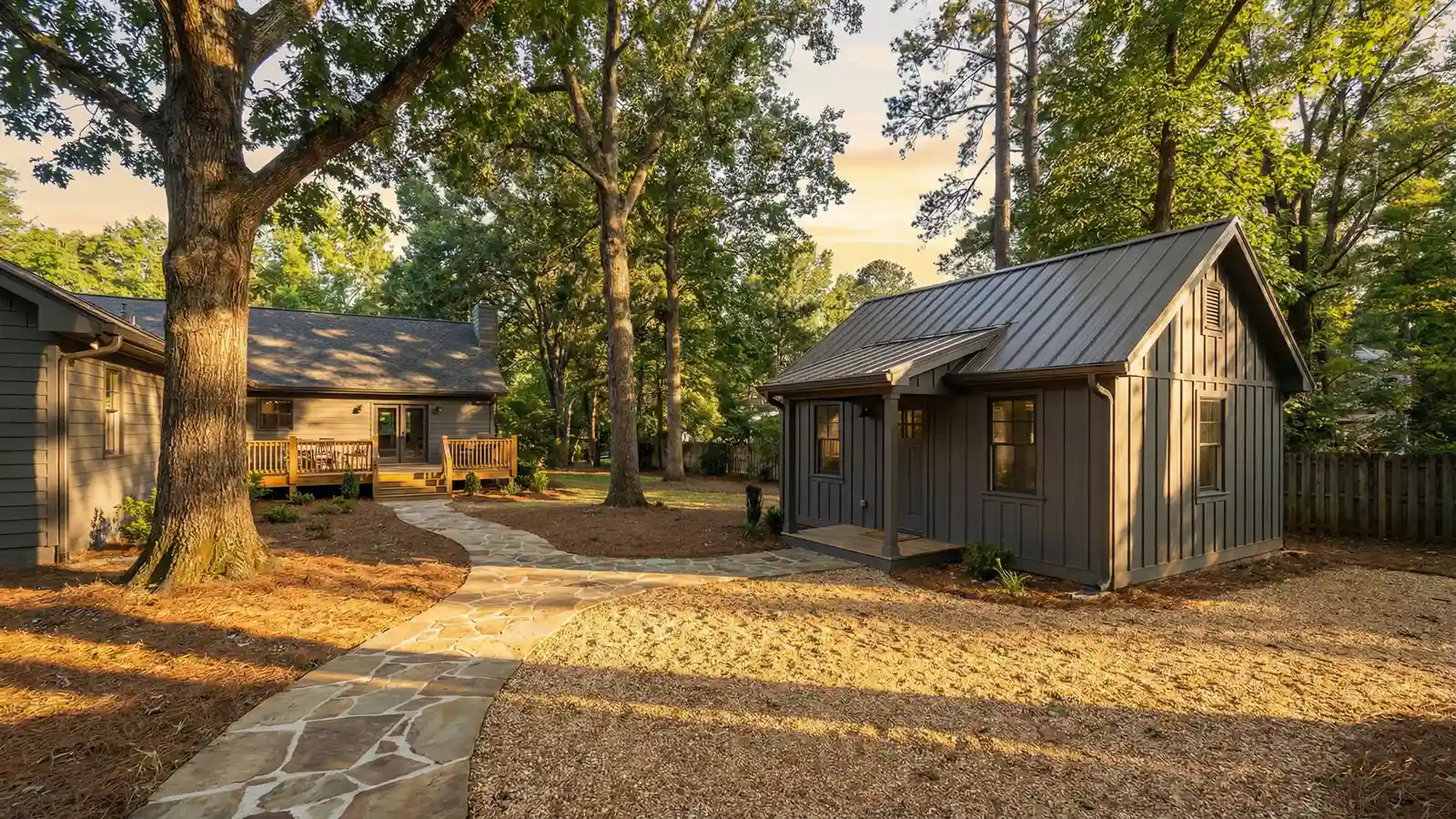
An accessory dwelling unit is a secondary residential unit on a single-family lot. It can be a detached structure (a guest house, a converted garage, a backyard cottage), an attached addition, or an interior conversion (a finished basement with a separate entrance and kitchen). Georgia does not have a statewide ADU statute. Regulation happens entirely at the local level, which means each city and county sets its own rules for size, setback, parking, and owner occupancy.
The terminology varies too. Some jurisdictions call them “accessory apartments.” Others use “secondary dwelling units” or “carriage houses.” When you call the planning department, use whatever term their zoning code uses. It speeds up the conversation.
City of Atlanta ADU ordinance
The City of Atlanta passed its updated ADU ordinance in 2023, and it is one of the most permissive in the Southeast.
Detached ADUs are allowed on most single-family lots in all residential zoning districts (R-1 through R-5, and all PD districts). Maximum size is 750 square feet or 50% of the primary dwelling’s heated square footage, whichever is smaller. On a 2,400-square-foot home, you could build up to a 750-square-foot ADU. On a 1,200-square-foot home, the cap drops to 600 square feet.
Height limit: one story, maximum 20 feet to the roofline. Setbacks follow the same rules as an accessory structure (typically 5 feet from the side and rear lot lines, but check your specific zoning district). No additional parking is required beyond what the primary residence already provides.
The City of Atlanta does not require owner occupancy in the primary residence for detached ADUs. This is a major distinction. It means you can rent out both the primary home and the ADU, which opens the door for investor-owned properties. Most other metro jurisdictions require the owner to live in the primary dwelling.
Permitting takes 4-8 weeks for a straightforward project. Construction costs for a detached 600-750 square foot ADU in Atlanta run $115,000-$165,000, depending on finishes, site conditions (slope, utility connections, tree removal), and foundation type (slab vs. pier). Current rental rates for ADUs in popular City of Atlanta neighborhoods (Grant Park, East Atlanta Village, Kirkwood, Old Fourth Ward) range from $1,400-$2,100/month depending on size and finishes.
Roswell ADU rules
Roswell updated its ADU provisions in late 2023 and now allows accessory dwelling units in most single-family residential zones, subject to a conditional use permit.
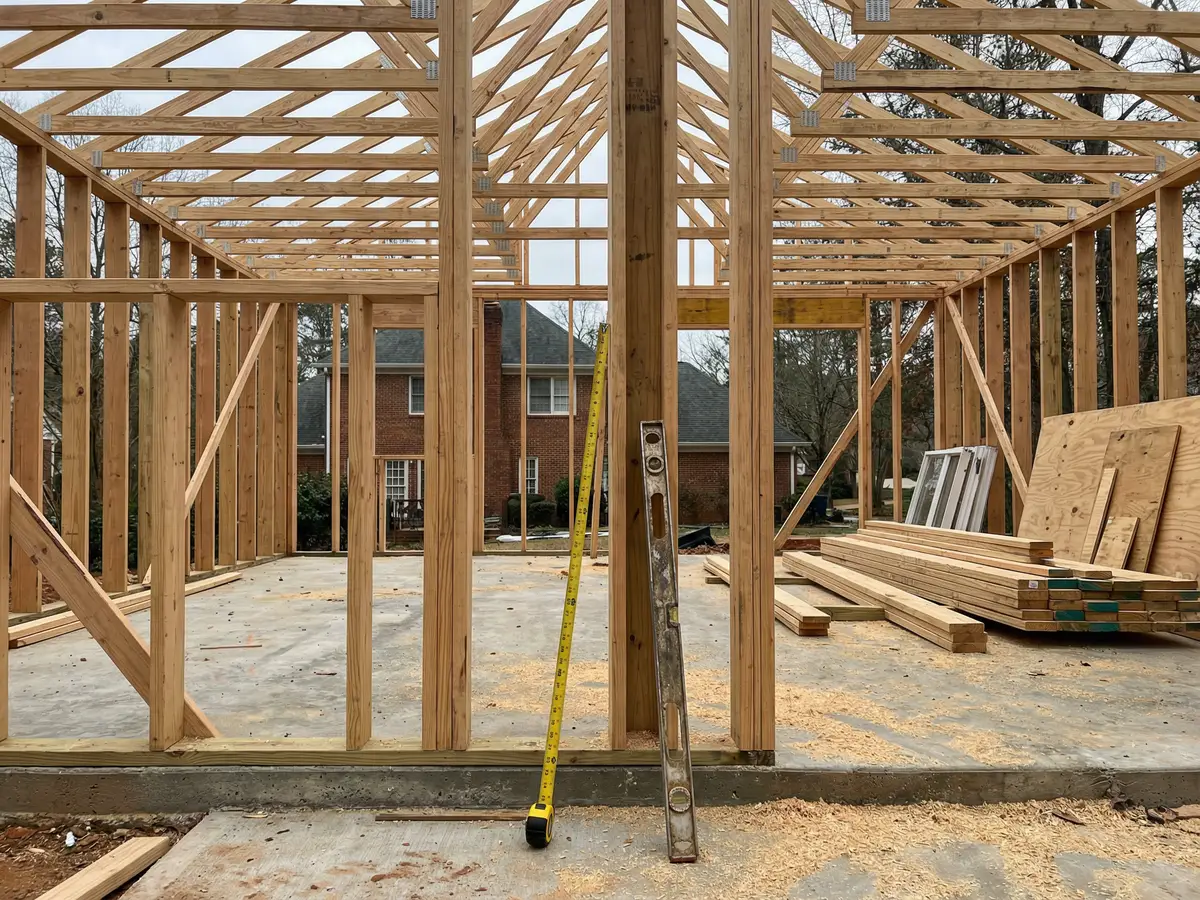
Maximum size: 800 square feet. The ADU must be subordinate in appearance to the primary dwelling (matching or complementary exterior materials and roofline). Roswell requires owner occupancy in either the primary residence or the ADU, meaning the property owner must live on-site. No short-term rentals (Airbnb/VRBO) allowed for the ADU.
Setbacks: 10 feet from rear lot line, 7.5 feet from side lot lines. The ADU cannot be in the front yard. Additional parking: one off-street space is required for the ADU beyond the primary residence’s parking.
Permitting process: apply for a conditional use permit through the Community Development Department. The application goes to the Planning Commission for review, which adds 6-10 weeks to the timeline beyond standard building permit processing. Total timeline from application to certificate of occupancy: 5-8 months for a new detached ADU.
Construction costs in Roswell run slightly higher than Atlanta city proper due to the conditional use process (additional architectural and site plan costs) and Roswell’s design review standards. Budget $135,000-$180,000 for a 650-800 square foot detached unit. Rental income for ADUs in Roswell neighborhoods runs $1,500-$1,900/month. The strongest demand comes from young professionals working in the Alpharetta tech corridor who want a Roswell address without paying for a full house.
I helped a homeowner on Mimosa Boulevard apply for the conditional use permit in early 2024. Her lot was 0.6 acres with a sloped backyard that made the ADU foundation more complex than a flat site. Total construction cost came in at $158,000. She rented the 720-square-foot unit for $1,650/month within three weeks of listing it on Zillow Rentals. That income covers 62% of her primary mortgage payment.
Alpharetta and Milton: more restrictive
Alpharetta and Milton have taken a more cautious approach to ADUs. As of early 2026, neither city has a standalone ADU ordinance comparable to Atlanta or Roswell.
In Alpharetta, accessory apartments are permitted only as interior conversions within the existing footprint of the primary dwelling. That means a finished basement apartment with a separate entrance qualifies, but you cannot build a detached structure specifically for rental use. The basement must have a full kitchen, a bathroom, and a separate entrance. Maximum occupancy: two people. The property owner must live in the primary residence.
Milton is similar but even more restrictive on lot coverage. Milton’s large-lot zoning (most residential lots are 1+ acres) means there’s physical space for a detached ADU, but the zoning code does not explicitly permit them. Some homeowners in Milton have obtained variances through the Board of Zoning Appeals, but variance approval is case-by-case and not guaranteed.
If you own property in Alpharetta or Milton and want to generate rental income, the basement apartment approach is your most reliable path. Construction costs to finish a basement apartment (assuming the basement already has concrete floors, ceiling height of 8+ feet, and access to plumbing) range from $45,000-$85,000. Rental rates for basement apartments in Alpharetta run $1,200-$1,800/month depending on size and finishes.
Johns Creek and unincorporated Fulton County
Johns Creek follows Fulton County zoning for most residential properties. Accessory structures are allowed, but the zoning code does not explicitly address habitable ADUs as distinct from accessory structures (sheds, garages, workshops). The gray area means some homeowners have built guest houses with kitchens that function as ADUs, but the legal footing is uncertain.
Unincorporated Fulton County (areas outside any city limits) has adopted a more permissive stance than most of the incorporated cities in north Fulton. Accessory dwelling units are permitted on lots of one acre or more in agricultural and residential districts. Maximum size: 50% of the primary dwelling’s gross floor area. Owner occupancy required. The permitting process is handled by the Fulton County Department of Land Development.
Forsyth County rules
Forsyth County (Cumming and unincorporated Forsyth) has emerged as an ADU-friendly jurisdiction, partly in response to the county’s rapid population growth and housing affordability pressures. Accessory dwelling units are permitted on lots of 0.75 acres or more in residential districts.
Maximum size: 850 square feet. Must be detached from the primary residence. Height: one story. Owner occupancy required in the primary dwelling. No short-term rentals.
The permitting process is relatively streamlined compared to cities with conditional use permit requirements. Standard building permit application, plan review (3-4 weeks), and inspection. Total timeline: 3-5 months from permit application to certificate of occupancy.
Construction costs in Forsyth County are competitive due to lower land costs and a deep contractor pool serving the county’s construction boom. Budget $110,000-$155,000 for a 700-850 square foot detached ADU. Rental income: $1,400-$1,750/month, with the strongest demand near GA-400 and Halcyon.
Financing your ADU
Most homeowners finance ADU construction through one of three methods.
A home equity line of credit (HELOC) is the most common. Current HELOC rates in metro Atlanta run 8.5-10.5%, and most lenders will extend up to 80-85% combined loan-to-value. If your home is worth $600,000 and you owe $350,000, your available HELOC could be up to $130,000 (80% of $600,000 minus $350,000).
A cash-out refinance works if you have substantial equity and can improve on your current rate (unlikely in the current rate environment, but viable for homeowners with rates above 7%).
Construction loans are available through community banks and credit unions. These are typically 12-18 month interest-only loans that convert to a permanent mortgage or are paid off with a HELOC at completion. Rates are higher (9-11%) and require more documentation, but they work for homeowners who don’t have enough equity for a HELOC.
Some homeowners use personal savings or a combination of savings and a small HELOC. The 100% cash route avoids interest costs entirely and puts you in positive cash flow from month one.
Is an ADU worth it? The break-even math
Take a $140,000 ADU construction cost financed with a HELOC at 9.5%. Monthly payment on that HELOC: approximately $1,108 (interest-only) or $1,680 (15-year amortization). If the ADU rents for $1,650/month, you break even on interest-only payments immediately and are cash flow positive by $542/month on a principal-reducing schedule after 15 years.

But the calculation goes deeper than monthly cash flow. The ADU adds appraised value to your property. In my experience across north metro Atlanta, a well-built detached ADU adds 55-70% of its construction cost in appraised value immediately, and 80-100% within three years as the income stream is established and comparable ADU sales enter the market. That means your $140,000 ADU adds $77,000-$98,000 in home equity on day one.
The combination of rental income, equity creation, and mortgage offset makes ADUs one of the highest-return residential real estate investments available to homeowners in metro Atlanta. The real estate wealth building in Atlanta pillar article covers how ADU income fits into a broader wealth-building strategy alongside appreciation, tax advantages, and investment property acquisition.
Download: ADU feasibility checklist
The Velocity Real Estate ADU Feasibility Checklist walks you through the 14 questions you need to answer before committing to an ADU project: zoning eligibility, lot size requirements, utility access, setback measurements, owner occupancy rules, short-term rental restrictions, estimated construction cost, financing options, projected rental income, and break-even timeline. Two pages, printable, with space to fill in your property-specific numbers.
Enter your name and email to download the checklist.
[Download the ADU Feasibility Checklist]
If your property might qualify for an ADU and you want a professional assessment, schedule a consultation or call 678-809-5860. I’ll review your lot dimensions, zoning district, and local regulations before you spend a dollar on architectural plans.
—
Written by Itanza Johnson, Managing Broker at Velocity Real Estate. Georgia Tech industrial engineering graduate. Former Division Sales Manager at John Wieland Homes and VP of Sales and Marketing at Stonecrest Homes. $600M+ in cumulative residential sales across metro Atlanta.
Thinking about buying or selling in metro Atlanta?
Velocity Real Estate has closed more than $600M in new construction and resale across 19 metro Atlanta neighborhoods. Start with a conversation, not a commitment.
Book a consultationCall 678-278-9798