Buying new construction in Atlanta guide

Buying new construction in Atlanta guide
A couple from Denver called me last October. Both engineers, both spreadsheet people. They had relocation packages, a school-zone shortlist, and a budget that put them squarely in the $550K to $700K range across north Fulton and Cherokee counties. They had also spent four months browsing Zillow, where every listing looked the same: a rendering, a base price, and the phrase “from the low $500s.” What they did not have was any idea how buying new construction in Atlanta actually works.
That gap between browsing and buying is where most people get stuck. The new construction process in Georgia has its own contract structure, its own financing incentives, its own inspection timeline, and its own negotiation playbook. None of it maps cleanly onto the resale home experience. And the information online is either builder marketing (optimistic) or forum chatter (terrifying).
This guide covers everything from your first community visit to your final walkthrough. I wrote it from the builder side and the buyer side because I have sat in both chairs. Before I opened Velocity Real Estate, I ran neighborhood sales programs for John Wieland Homes and led the sales and marketing division at Stonecrest Homes. That experience showed me every place a new construction deal can go right and every place it quietly goes wrong. The numbers, timelines, and strategies here come from $600M+ in cumulative residential sales across metro Atlanta.
Why new construction appeals to Atlanta buyers
Metro Atlanta permitted 38,400+ new residential units in 2024, putting the region among the top five in the country for new construction activity. That pipeline keeps expanding. Cherokee, Forsyth, and Gwinnett counties each added double-digit percentage growth in builder permits between 2023 and 2025.
The appeal is straightforward. New construction gives buyers a home built to current energy codes (Georgia adopted the 2021 IECC with amendments), current electrical standards (no aluminum wiring, no Federal Pacific panels), and current structural practices. You get a builder warranty instead of a home inspection report full of deferred maintenance. You also get the ability to choose a floor plan, select finishes, and in many cases pick the exact lot orientation that determines your backyard privacy, morning sun exposure, and proximity to the community amenities.
Price is the other factor. In several north metro submarkets, new construction base prices now compete directly with resale. A resale four-bedroom in Alpharetta listed at $575K may need $40K in updates (roof, HVAC, kitchen surfaces) to match the condition of a new home at $590K from a production builder offering $15K in closing cost credits. The math works differently than most buyers expect.
Current new construction inventory across metro Atlanta
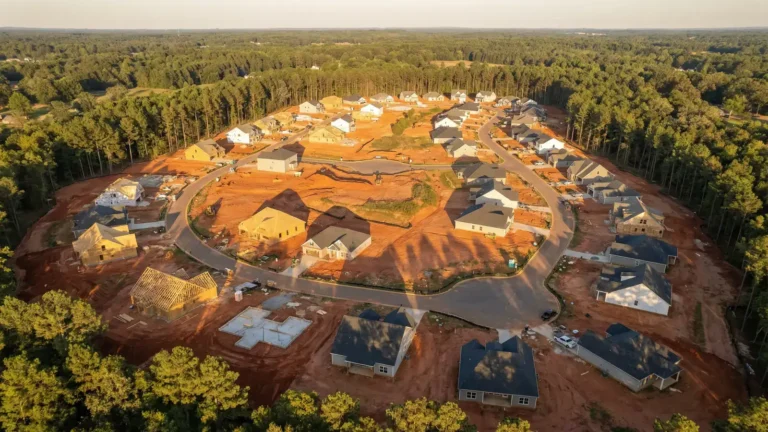
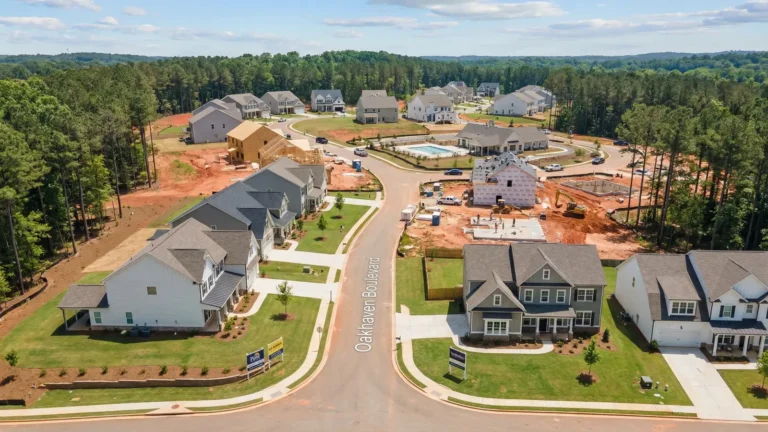
As of early 2026, active new construction communities in the metro Atlanta area number above 400. The heaviest concentration runs along the GA-400 corridor from Sandy Springs through Cumming, the I-575 corridor from Woodstock through Canton, and the I-85 northeast corridor through Gwinnett County into Barrow and Jackson counties.
Price entry points vary by county. Cherokee County (Woodstock, Canton, Holly Springs) offers new construction starting in the mid-$300s for townhomes and low $400s for detached single-family. North Fulton (Alpharetta, Milton, Johns Creek) starts in the mid-$500s for production builders and climbs past $1.5M for custom homes on estate lots. Forsyth County (Cumming and surrounding areas) sits in between, with strong activity in the $450K to $700K range.
I track active communities, incentive packages, and pricing shifts across these submarkets weekly. The data changes fast enough that a listing you saw three weeks ago may have increased its base price $10,000 or added a rate buydown that wasn’t there before. That tracking is part of what Velocity provides before you ever walk into a model home.
How to choose your location in metro Atlanta
Location selection for new construction is different from resale shopping. With resale, you find the house you want and live with the location. With new construction, you pick the location first, then find the community, builder, and floor plan that fits. The location decision locks in your school district, your commute, your property tax rate, and a significant portion of your long-term appreciation trajectory.

North Fulton vs. Cherokee vs. Forsyth County for new construction
North Fulton County (Alpharetta, Milton, Johns Creek, Roswell) carries the highest price points but also the strongest school ratings and the shortest commute to the Perimeter business district. The median new construction price in Alpharetta crossed $625K in late 2025. Milton runs higher, with the median above $800K, driven by minimum one-acre lot zoning in much of the city. If your budget supports it and your workplace is along the GA-400 corridor, North Fulton is the default recommendation for families prioritizing schools and resale value.
Cherokee County (Woodstock, Canton, Holly Springs) is where the value conversation gets interesting. The median new construction price in Cherokee ran roughly $430K through 2025, nearly $200K below North Fulton. Cherokee County schools have improved significantly over the past decade, with several high schools earning top-quartile ratings statewide. The I-575 commute to Midtown Atlanta runs 45 to 55 minutes in morning traffic from Woodstock, 55 to 70 minutes from Canton.
Forsyth County offers a middle path. Strong schools (Forsyth County Schools consistently ranks among Georgia’s top three districts), a median new construction price around $520K, and a commute that splits the difference between Cherokee and North Fulton. Cumming has absorbed a large share of metro Atlanta’s new construction growth over the past five years, which means more community options but also more inventory competition among builders. That competition translates to better incentive packages for buyers.
For a complete side-by-side breakdown of these areas, the north Atlanta suburbs comparison guide covers median prices, school rankings, commute times, and new construction availability for every major suburb.
School districts that drive new construction demand
Builders pick their land based on school zones. They know that 60% or more of their buyer pool will have school-age children or plan to within five years. The top school clusters driving new construction demand in metro Atlanta include Cambridge High School in Milton (Fulton County Schools), Alpharetta High School and Forsyth Central High School clusters, and Creekview High School in Canton (Cherokee County Schools).
School-zone boundaries shift. Fulton County redistricted portions of the Alpharetta and Milton zones in 2023. Cherokee County added a new elementary school feeding into Creekview in 2024. Before you commit to a community based on school assignment, verify the current zone with the county school district office. Builder sales agents will tell you the zone, but they are not the authoritative source. I have seen zone changes happen between a buyer’s contract signing and their closing date.
A detailed breakdown of school districts across north Atlanta’s suburbs covers ratings, feeder patterns, and how zone boundaries affect home values.
How to select the right builder in Atlanta
Not all builders are the same, and the differences extend well beyond the look of the model home. Production builders (Pulte, Lennar, Meritage, DR Horton, Smith Douglas) build from a set menu of floor plans with a defined list of structural options and finish selections. Semi-custom builders (Ashton Woods, David Weekley, Toll Brothers at certain price points) offer more floor plan flexibility, structural modifications, and design center latitude. Custom builders work from architectural plans specific to your lot and vision, with pricing that reflects that level of personalization.

Your builder selection should match your budget, your timeline, and your tolerance for decision-making. A production builder can have you under contract and closing in five to seven months. A custom builder on an estate lot may take 14 to 18 months from contract to completion.
The Atlanta home builders guide provides a full comparison framework for evaluating builders by quality tier, warranty terms, and pricing structure.
Researching builder reputation in Georgia
Georgia requires builders to be licensed through the Georgia Secretary of State. You can verify a builder’s license status, check for disciplinary actions, and review their corporate registration online. Beyond licensing, check the Better Business Bureau for complaint patterns (not just the star rating, but the actual complaint text), search the builder’s name plus “warranty issues” or “construction defects” on Reddit and local forums, and talk to homeowners in the builder’s existing communities.
I walk every community I recommend before sending a buyer there. That means walking finished homes, homes under construction, and the model. You learn things from a construction site that the sales center will never tell you. How clean is the site? Are the subcontractors organized? Is the framing crew cutting corners on spacing? Those observations come from years of watching homes go up across dozens of communities.
For the full process of researching a builder before signing in Georgia, the supporting article walks through every verification step.
Floor plans, homesites, and the design center process
The selection process in a new construction community follows a specific sequence: floor plan, then homesite (lot), then design center selections. Some buyers want to start with the lot, and that can work if the community offers flexibility on which plans go where. Many production builders assign specific plans to specific lots based on setback requirements and lot width, so the lot and plan decision may be interconnected.
Lot selection strategy for new construction
Lot selection is where I see the biggest mistakes. Buyers fixate on the view from the lot today and forget to ask what will be behind them, beside them, or across the street in 18 months. A lot backing to trees is only valuable if those trees are in a conservation buffer or sit on land that cannot be developed. I have walked buyers through communities where the “wooded view” was the future Phase 3, which means 24 months of construction equipment, dust, and framing crews outside the back windows.
Ask the builder’s sales agent for the full site plan, including all future phases. Ask about easements, detention ponds, and any planned amenity locations. A lot adjacent to the future pool may seem appealing until you realize the pool construction and the associated traffic will start six months after you close.
Corner lots carry larger lot premiums ($5,000 to $25,000 depending on the community) but also carry higher maintenance responsibility in some HOAs, more road frontage, and less backyard depth. Interior lots with cul-de-sac placement or backing to permanent green space typically hold resale value most consistently.
Which builder upgrades add resale value in Atlanta
The design center is where the budget conversation gets real. Builders present upgrade options across every finish category: flooring, countertops, cabinetry, lighting, appliances, bathroom fixtures, and structural options like additional bedrooms, expanded garages, or covered outdoor living spaces.
Not all upgrades return their cost at resale. Structural upgrades (additional bedrooms, expanded garage bays, screened porches) tend to return 60% to 80% of their cost because they change the home’s functional footprint. Finish upgrades (premium countertops, upgraded tile, hardwood stairs) return 30% to 50% because buyers at resale expect a certain finish level and won’t pay a dollar-for-dollar premium above that expectation.
The upgrades I recommend most consistently: hardwood or luxury vinyl plank on the main level (buyers notice flooring first), a covered rear patio or screened porch (outdoor living adds functional square footage), and a gas line to the backyard (for grills and future outdoor kitchens). The upgrades I talk buyers out of most often: premium light fixtures (easy to swap later), upgraded carpet padding in secondary bedrooms (no resale visibility), and decorative tile backsplashes that reflect a specific taste.
For the full breakdown of which builder upgrades are worth the money in Atlanta’s market, the supporting article covers every category with current pricing ranges.
Understanding new construction contracts in Georgia
New construction contracts in Georgia differ from resale purchase agreements in several structural ways. The builder’s contract is the builder’s document, not a standard Georgia Association of Realtors form. It is written to protect the builder’s interests. That is not inherently adversarial, but it means the default terms favor the builder on timelines, specifications, and dispute resolution.

Escalation clauses and completion timelines
Most builder contracts include a completion date that is an estimate, not a guarantee. The contract language typically gives the builder the right to extend that date with written notice, sometimes by 30 days, sometimes by 90 days, and sometimes with no cap. Supply chain delays, weather, subcontractor scheduling, and permitting slowdowns all contribute to extended timelines.
I flag the extension clause on page one of every contract review. The practical impact is this: if your rate lock is based on a January closing and the builder extends to March, your rate lock expires. If your lease ends in January and the builder extends to March, you need interim housing. I build the financial timeline around the builder’s realistic delivery date, not the optimistic one printed in the sales brochure.
During my years at John Wieland Homes, I learned that the first five closings in a new community set the operational cadence for the entire project. Those early buyers absorbed every supply chain hiccup and permitting delay that the builder encountered while ramping up a new job site. The lesson for buyers: if you are buying in Phase 1 of a brand-new community, build at least 60 additional days of buffer into your personal timeline.
Builder contract red flags to watch for
Watch for contracts that allow the builder to substitute materials without buyer approval (standard practice, but the contract should specify a quality-equivalency standard). Watch for contracts that require the buyer to use the builder’s preferred lender and title company without offering a meaningful incentive in return. Watch for contracts that restrict your ability to conduct an independent pre-drywall inspection or final walkthrough with your own inspector.
Details on how to negotiate with a home builder in Atlanta cover every negotiable contract term and the leverage points that work in the current market.
The build process: timelines, walkthroughs, and inspections
A production home in metro Atlanta takes five to eight months from contract to closing under normal conditions. Semi-custom builds run seven to ten months. Custom homes on private lots can take 12 to 18 months. These ranges assume no major supply chain disruptions or permitting delays.
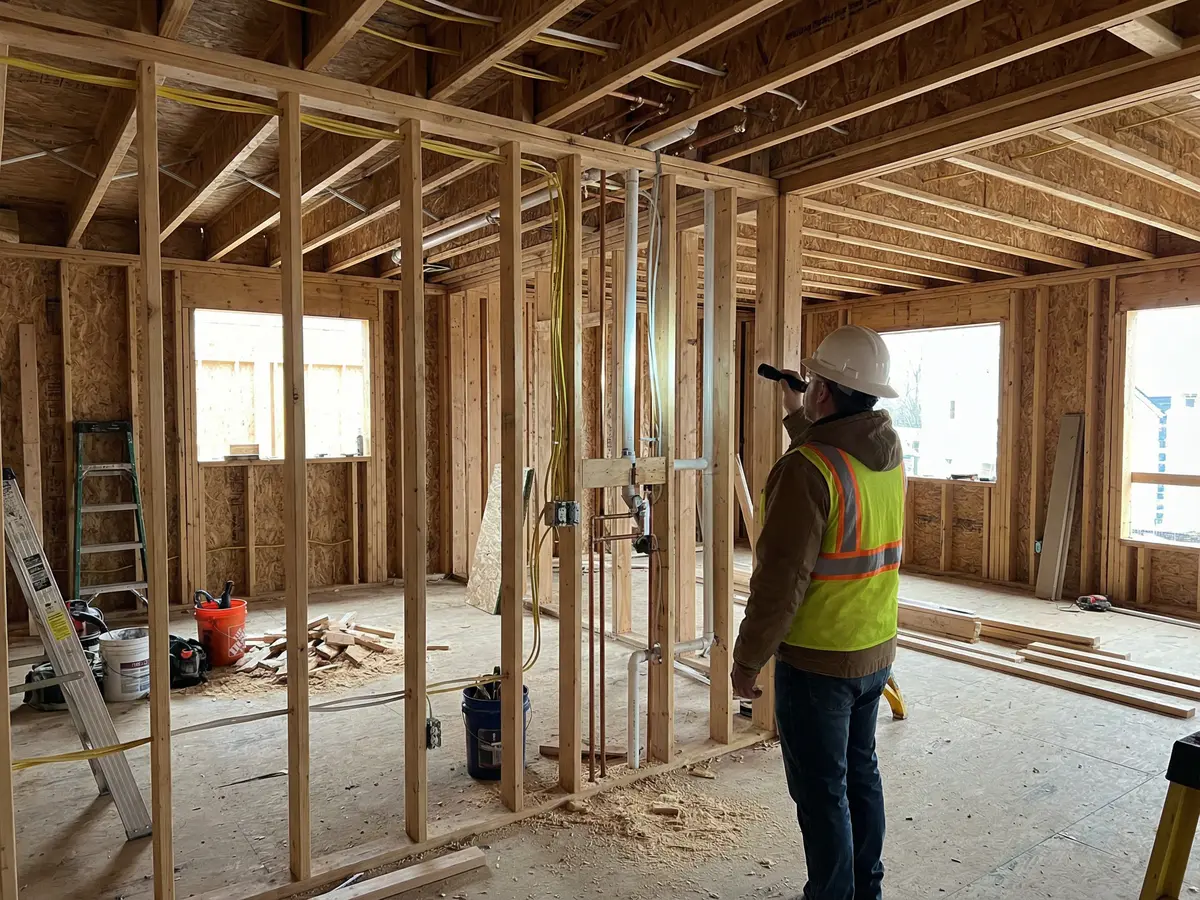
The build moves through phases: site preparation and foundation, framing, rough-in (plumbing, electrical, HVAC), insulation, drywall, interior finish, exterior finish, landscaping, and final inspection. Each phase has a corresponding county inspection. The two inspections that matter most to you as the buyer are the pre-drywall inspection and the final walkthrough.
Pre-drywall inspection for new construction in Atlanta
The pre-drywall inspection happens after framing, rough plumbing, rough electrical, and HVAC installation are complete but before the drywall goes up. This is the only time you can see the bones of the house: the framing connections, the plumbing runs, the electrical panel location, the HVAC duct routing, and the insulation coverage.
Hire an independent inspector (not the builder’s inspector, not the county inspector) to walk the house at this stage. The cost runs $350 to $500 for a standard production home. It is the single best investment in the entire transaction. I have seen pre-drywall inspections catch misplaced plumbing stacks (requiring a $2,000 fix before drywall that would have been a $12,000 fix after), improperly sized HVAC returns, and framing headers that did not meet structural specifications.
The full process for scheduling and preparing for a pre-drywall inspection covers what to expect, what to look for, and how to handle findings with the builder.
Realistic build timelines for Atlanta production builders
I track construction timelines across the communities in our coverage area. The average production builder in north metro Atlanta is delivering homes in six to seven months from contract as of early 2026. That is an improvement from the eight-to-ten-month average during the supply chain disruptions of 2022-2023, but still longer than the five-month timelines builders were hitting pre-pandemic.
The variable that moves the timeline most is the framing crew schedule. Georgia builders use subcontracted framing crews, and the best crews are booked three to four weeks out. A builder starting a new phase with 12 homes releasing simultaneously may have all 12 foundations poured within two weeks but spread the framing starts across six to eight weeks based on crew availability.
For a deeper look at construction timelines and what affects them in Atlanta, the supporting article breaks down each build phase with current duration ranges.
Closing on new construction in Georgia
Closing on a new construction home in Georgia follows the same basic legal process as a resale closing but with a few notable differences. The builder typically selects the closing attorney (this is standard practice in Georgia, where attorneys handle closings rather than title companies as in some other states). The builder’s contract may require you to close within a specific window after the certificate of occupancy is issued, often 10 to 15 business days.
New construction closing costs in Georgia
Buyer closing costs on new construction in Georgia typically run 2% to 3% of the purchase price. On a $550,000 home, that is $11,000 to $16,500. The largest line items are the loan origination fee, title insurance, attorney fees, prepaid property taxes, prepaid homeowners insurance, and escrow establishment.
Builder incentives often offset a significant portion of these costs. The most common incentive structure in metro Atlanta as of early 2026 is $10,000 to $15,000 toward closing costs paired with a rate buydown (typically a 2-1 buydown that reduces the interest rate by two percentage points in year one and one point in year two). These incentives are usually conditional on the buyer using the builder’s preferred lender. The preferred lender incentive is negotiable, but you need to run the numbers: compare the total cost of the builder’s lender (including the incentive) against your own lender’s rate and fees without the incentive. The builder’s package wins roughly 60% of the time in my experience, but the other 40% is real money left on the table if you do not compare.
For the full analysis of using the builder’s lender vs. your own lender in Atlanta, the comparison article walks through the math with current rate scenarios.
Property tax realities after buying new construction
New construction buyers in Georgia face a property tax surprise that catches nearly everyone off guard. When you buy a new construction home, the county tax assessor initially values the property based on the land value plus whatever improvements existed at the time of the last assessment. If you close in August and the previous January assessment valued the property as a vacant lot at $85,000, your first year’s property tax bill is based on $85,000, not the $550,000 you paid.
The reassessment to full value typically hits in the following January. Your second year’s tax bill reflects the full purchase price (or the assessor’s estimate of fair market value). That can mean a property tax increase of 300% to 500% from year one to year two. Your mortgage escrow account was funded based on the low first-year estimate, so the escrow analysis in year two will show a shortage. Your monthly payment jumps.
I walk every new construction buyer through this math before they sign a contract. Forewarned is not the same as pain-free, but it prevents the phone call in February of year two that starts with, “My mortgage payment just went up $400 a month and nobody told me.”
A full explanation of how new construction property taxes work in Georgia covers the assessment timeline, exemption filings, and escrow management strategy.
Why a buyer’s agent matters for new construction
The builder’s onsite sales agent works for the builder. Their commission is paid by the builder. Their job performance is measured by the builder. They will be helpful, professional, and knowledgeable about the community. They will also recommend the builder’s preferred lender, the builder’s closing attorney, and the builder’s contract terms. They cannot advise you on whether the builder’s pricing is competitive relative to other communities, whether the incentive package is strong or weak for the current market, or whether the contract terms contain clauses that could cost you money.
Your buyer’s agent represents your interests. In Georgia, buyer’s agent compensation on new construction is paid by the builder (typically 2% to 3% of the purchase price, built into the builder’s cost structure). Using a buyer’s agent does not increase the price you pay. Not using one does not decrease it.
What Velocity provides specifically: a comparative market analysis against competing communities before your first visit, builder incentive tracking data showing how the current offer compares to what the same builder offered last quarter, contract review with attention to the timeline, extension, and specification clauses, independent inspection coordination, and closing cost analysis comparing the builder’s lender package against outside lender options.
For a thorough look at whether you need a buyer’s agent for new construction in Atlanta, the supporting article addresses every common question and misconception.
If you are a first-time buyer, the first-time home buyer guide for metro Atlanta covers pre-approval, down payment assistance programs, and the unique advantages of new construction for first-time purchasers.
Builder incentives, rate buydowns, and upgrades worth paying for
Builders rarely drop base prices. What they adjust is the incentive package: closing cost credits, interest rate buydowns, free upgrades, or some combination. The base price stays fixed because it protects the appraisal values of homes that already closed in the same community. If a builder drops the base price by $20,000, every homeowner who closed in the previous six months sees that reduction reflected in their comp set. Builders avoid that scenario aggressively.
I track incentive packages across 40+ active new construction communities in our coverage area. The tracking started as a personal habit during my Wieland days and has become one of Velocity’s most valuable buyer tools. When a builder in Forsyth County bumps its closing cost credit from $10,000 to $15,000 on a Tuesday, we know about it by Wednesday morning. That timing matters because incentive increases usually signal a builder that needs to move inventory before the end of a quarter, a fiscal year, or a construction phase.
The distinction between a genuine incentive and a recycled price increase is something most buyers miss. Example: a builder raises the base price $15,000 in January, then offers a “$15,000 closing cost credit” promotion in February. The net price is unchanged. The buyer feels like they received $15,000 in value. The builder maintained its pricing trajectory. I flag these patterns for every buyer before they visit the model home.
How to negotiate with a home builder in Atlanta
Negotiation with builders follows different rules than resale negotiation. You are not negotiating against an emotional homeowner. You are negotiating with a corporation that has a pricing model, an absorption target, and a quarterly reporting structure.
The leverage points: end of quarter (builders want to report strong closing numbers), end of a community phase (the last three to five lots in a phase carry the most flexibility), and slow traffic periods (January through mid-February and the weeks surrounding Thanksgiving). The non-leverage points: peak spring selling season (March through May) and the first phase of a new community when demand exceeds supply.
What is negotiable: closing cost credits, rate buydown enhancements, design center credits (free or discounted upgrades), extended rate lock assistance, and post-closing warranty terms. What is rarely negotiable: base price, lot premium, and structural specifications.
Full details on negotiating with a home builder in Atlanta cover specific tactics and current market leverage dynamics.
New construction warranties in Georgia
Georgia requires builders to provide a one-year warranty on workmanship, a two-year warranty on mechanical systems (plumbing, electrical, HVAC), and a ten-year warranty on structural defects. Most production builders in metro Atlanta use third-party warranty companies (2-10 Home Buyers Warranty and StrucSure are the most common) to administer these warranties.
The warranty sounds comprehensive on paper. The practical reality requires attention. Workmanship claims (nail pops, drywall cracks, grout separation, paint touch-ups) must be documented and submitted within the first year. Most builders conduct an 11-month warranty walkthrough where a builder representative walks the home with the homeowner and documents items for repair. Do not skip this walkthrough. Do not let the builder “forget” to schedule it. Put it on your calendar at month 10 and initiate the request yourself.
The structural warranty (years 3 through 10) covers defects in load-bearing components: foundation, framing, roof structure. It does not cover cosmetic issues, appliances, landscaping, or anything categorized as “normal wear.” Filing a structural claim requires documentation, an independent engineering assessment in many cases, and patience. The warranty company, not the builder, adjudicates structural claims after year two.
For the complete breakdown of new home warranties in Georgia, including what qualifies as a structural defect and how to file claims effectively, the supporting article covers every scenario.
Builder construction methods in Atlanta
One of the most common questions I hear from buyers relocating from Florida, Texas, or the Northeast is about construction materials. Atlanta’s new construction is predominantly wood-frame construction, even in the luxury price ranges. This surprises buyers from markets where concrete block (Florida) or full brick (parts of the mid-Atlantic) is standard.
Wood-frame construction with a brick, stone, or fiber cement (HardiePlank) exterior is the standard building method in metro Atlanta. The structural frame is dimensional lumber (2×4 or 2×6 walls), with the exterior cladding providing weather protection and aesthetics. “Four-sided brick” is a term you will hear frequently, and it means the brick veneer covers all four exterior walls rather than just the front elevation. Four-sided brick adds $15,000 to $40,000 to the cost of a home depending on size and brick selection.
Wood-frame construction performs well in Georgia’s climate. The key concerns are moisture management (proper house wrap installation, flashing at windows and roof transitions) and termite protection (Georgia requires termite treatment and bond for new construction). Both should be verified during your pre-drywall inspection.
For buyers weighing this decision, the comparison of wood frame vs. brick construction in Atlanta addresses structural performance, insurance implications, and long-term maintenance costs.
Pre-construction access and Phase 1 pricing
Buying in Phase 1 of a new community offers one specific financial advantage: price. Builders typically price Phase 1 lots 5% to 12% below what they plan to charge in Phase 2 and beyond. That pricing strategy is intentional. The builder needs early sales to satisfy lender requirements, establish community momentum, and generate closing revenue to fund infrastructure improvements (roads, amenities, model home construction).
Phase 1 buyers absorb the most construction disruption (the community is a job site during your first year of occupancy) and the most timeline risk (builders are still working out subcontractor schedules and permitting cadence for a new site). In exchange, you get the lowest prices the community will ever see and typically the best lot selection.
Velocity maintains relationships with builders across metro Atlanta that provide early notification when new communities are coming to market. In several cases, we can arrange pre-construction access, lot reservations, and pricing information before the community opens to the general public. That early access comes from years of institutional relationships built during my time at John Wieland Homes and Stonecrest Homes, and maintained through Velocity’s ongoing builder partnership work.
Details on how pre-construction reservations work and how to access Phase 1 pricing in Atlanta cover the reservation process, deposit structures, and what early buyers receive.
Download the Velocity new construction buyer workbook
The Velocity New Construction Buyer Workbook is a 12-page resource designed to organize your new construction purchase from first community visit to closing day. Inside:
- Community comparison worksheet (side-by-side evaluation of up to five communities)
- Builder incentive tracker (document and compare incentive packages across builders)
- Design center budget planner (track upgrade selections against your total budget)
- Contract review checklist (key clauses to review with your agent before signing)
- Inspection timeline planner (schedule pre-drywall, final walkthrough, and independent inspections)
- Property tax projection worksheet (calculate your year-one and year-two tax exposure)
- Closing cost estimator (estimate your out-of-pocket costs with and without builder incentives)
Enter your name and email to download the workbook. The PDF is form-fillable and prints on standard letter paper.
[Download the Velocity New Construction Buyer Workbook]
Where the Atlanta new construction market is heading
Builder permit activity in metro Atlanta’s northern arc counties (Fulton, Cherokee, Forsyth, Gwinnett) increased 11% year over year through the first three quarters of 2025. Mortgage rates have stabilized in the high-6% range after the volatility of 2023-2024, and builders have responded by expanding incentive packages rather than cutting base prices. The net effect: buyers who closed in Q4 2025 paid roughly the same out-of-pocket as buyers who closed in Q2 2024, despite a 4% to 6% increase in base prices, because the incentive packages grew proportionally.
Inventory is building in some submarkets. Forsyth County has the most speculative inventory (homes started without a buyer under contract) among the north metro counties, which gives buyers more leverage in that market than in Cherokee or North Fulton. Cherokee County’s new construction pipeline is expanding fastest on the I-575 corridor north of Woodstock, where three new communities broke ground in the second half of 2025.
For buyers entering the market in 2026, the window for strong incentive packages remains open. Builders still need to sell through existing inventory before releasing new phases. That dynamic favors buyers who know how to read the market signals, track the incentive cycles, and time their contract to capture the best terms.
Schedule a market consultation with Velocity Real Estate at 678-278-9798 or book a new construction consultation online. We cover every active community in the north metro coverage area and will have your competitive analysis ready before your first model home visit.
—
Written by Itanza Johnson, Managing Broker at Velocity Real Estate. Georgia Tech industrial engineering graduate. Former Division Sales Manager at John Wieland Homes and VP of Sales and Marketing at Stonecrest Homes. $600M+ in cumulative residential sales across metro Atlanta.
Thinking about buying or selling in metro Atlanta?
Velocity Real Estate has closed more than $600M in new construction and resale across 19 metro Atlanta neighborhoods. Start with a conversation, not a commitment.
Book a consultationCall 678-278-9798